







My oldest son's first job in high school was behind the counter at an In-N-Out Burger. They paid him better than the kids working down the street and earned his loyalty for life. He flies Blackhawk helicopters for the Army now, and there is still an In-N-Out patch on his flight helmet. That is why Saturday's news hit my family harder than most crime stories do.
This weekend, a gunman opened fire with an AR-style rifle near the drive-thru of the brand-new In-N-Out on Blue Lakes Boulevard in Twin Falls, Idaho, a store that had been open barely a week. He fired at the restaurant, into traffic, and at a parked Tesla while people ran for their lives. Three people died, and seven more were hurt, including an In-N-Out associate. Police say the shooter died of a self-inflicted gunshot wound and are confident he acted alone. In-N-Out president Lynsi Snyder said the company lost one of its own, a young woman "taking care of our most important asset," her customers. It's a gut punch, and I have no interest in dressing that part up.
But here's what actually slowed the bleeding, and it wasn't a task force. Witness Lane Koehn told reporters he watched a man carrying the rifle emerge near the drive-thru, then watched another man draw a pistol and open fire on him, forcing the gunman to take cover before he stayed behind to help drag a wounded employee to safety until paramedics arrived. Twin Falls Police Chief Matthew Hicks confirmed at a Sunday press conference that an off-duty state trooper and an armed citizen both returned fire on the shooter, and that their actions "helped drive the suspect away from the scene, preventing further casualties." Neither man has been named publicly. That is now an official police statement, not a rumor pulled off a shaky cellphone video, and most of the national coverage still buried it well below the fold. Watch how fast that would have changed had the story run the other direction.
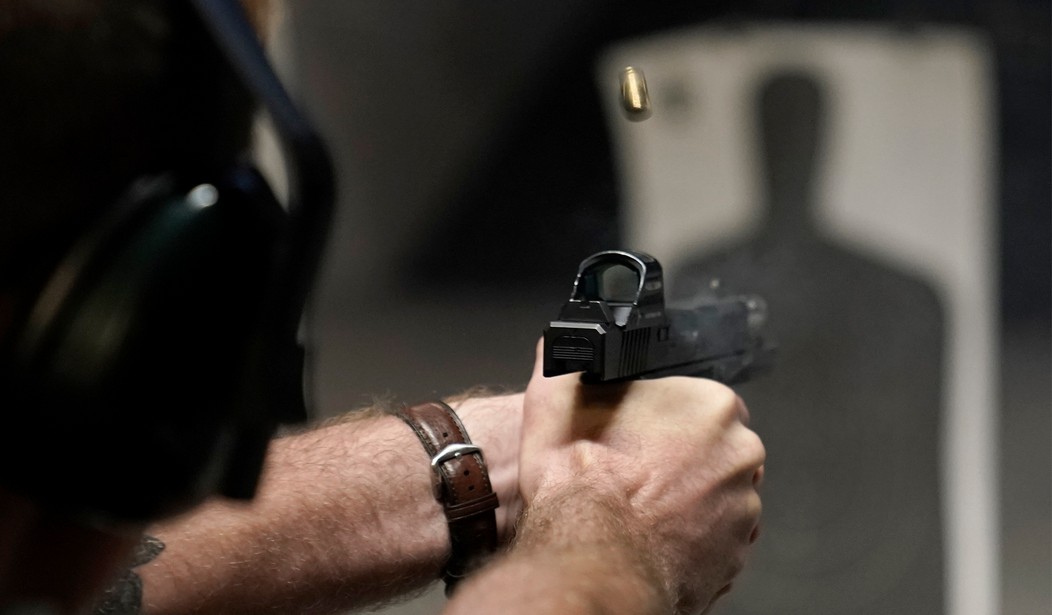
Idaho makes this kind of split-second response legally simple. Under the state's constitutional carry law, any U.S. citizen 18 or older who isn't otherwise disqualified can carry a concealed handgun without a permit, on their person or in their vehicle, anywhere in the state. I spent years doing private security and close protection work before I ever sat for a securities license, and I can tell you from experience that the gap between spotting a threat and a shot being fired is measured in seconds. A permit application doesn't help you in that window. A holstered handgun does.
The numbers back this up more than the evening news lets on. Economist John Lott's Crime Prevention Research Center (CPRC) reviewed active shooter cases from 2014 through 2024 using the FBI's own definitions and found 561 qualifying incidents, 202 of them stopped by an armed citizen, or 36 percent. Strip out the gun-free zones, where the law-abiding get disarmed by policy and the criminal doesn't, and that stop rate climbs past half. The FBI's own tally credits armed citizens with only a handful of those stops, a gap Lott attributes to miscoded incidents and cases the bureau never logged at all. A separate CPRC comparison found that when police stop an active shooter, victims get shot at nearly seven times the rate they do when an armed civilian stops one. That's not a knock against cops. It's a fact about proximity. The man already standing in the parking lot gets there faster than the cruiser that has to drive there.
To be sure, gun control researchers dispute Lott's methodology and argue his figures run too high, and Twin Falls police still haven't released the names of the trooper or the citizen who fired back. Fair enough, on both counts. But notice that even Lott's harshest critics never argue that armed citizens never stop these attacks, and Twin Falls police themselves just said, on the record, that two armed people stopped this one. The fight is only over the exact percentage, which is a much narrower argument than the one gun-free-zone advocates would prefer to have.
I went through Marine Corps OCS in 1988, and one lesson has followed me through every job since, from bodyguard work to expert witness testimony in federal court: hesitation is the expensive mistake. Discipline isn't a slogan you hang on a locker room wall. It's what separates the guy who trains with his sidearm on an ordinary Tuesday from the one who freezes when the Tuesday that matters finally shows up. I have coached teenagers on the rugby pitch for years, and I tell them the same thing every season: the moment doesn't build your character, it just reveals whatever you already built beforehand. Twin Falls had every kind of man in that parking lot on Saturday, and it was the off-duty trooper and the armed citizen who had already done the work.
Twin Falls already reminded the country that some companies still treat their people like family. Lynsi Snyder's statement made that clear. It also handed the country a reminder the gun-control lobby would rather skip: the first line of defense against a mass shooter usually isn't a policy memo or a task force. It's the off-duty trooper and the private citizen standing in that parking lot, each of whom had already decided, long before Saturday, that he wasn't going to be a bystander. We should learn their names, thank them in public, and stop treating "good guy with a gun" like a punchline instead of a documented fact, one the Twin Falls Police Department itself just confirmed. The next drive-thru might be yours.
Jay Rogers is a financial professional with more than 30 years of experience in private equity, private credit, hedge funds, and wealth management. He has a BS from Northeastern University and has completed postgraduate studies at UCLA, UPENN, and Harvard. He writes about issues in finance, constitutional law, national security, human nature, and public policy.
Editor’s Note: The radical Left will stop at nothing to enact their radical gun control agenda and strip us of our Second Amendment rights.
Help us continue to report on and expose the Democrats’ gun control policies and schemes. Join Townhall VIP and use promo code FIGHT to receive 60% off your membership.
Join the Conversation
VIP members get the ability to comment on articles.