





I've spent 30 years as a fiduciary, which mostly means telling people why they can't do the thing they want to do. When a trustee wants to make a distribution the trust document doesn't authorize, there are two honest answers. Amend the document, or don't make the distribution.
What you don't do is rewrite the beneficiary definition until the distribution qualifies, book it, and hope nobody opens the file for 20 years.
About 14 states took the third option on college tuition. Somebody finally opened the file.
On July 24, Judge David Dugan of the Southern District of Illinois struck down the state's in-state tuition rules, its RISE Act, and its DREAM Act as unconstitutional for illegal aliens. A day earlier, the Justice Department sued Colorado, the 14th such case. Texas, Kentucky, Oklahoma, and Nebraska have already surrendered; suits are pending against a dozen more, including California and Virginia. Roughly 20 states plus the District of Columbia still offer some version of this benefit, built on the same legal theory.
The statute isn't ambiguous and isn't new. Congress passed 8 U.S.C. Section 1623(a) in 1996. An alien not lawfully present can't be eligible, on the basis of state residence, for any postsecondary benefit unless a U.S. citizen is eligible for that same benefit in no less an amount, duration, and scope, regardless of where that citizen lives.
That's arithmetic, not ideology. A state can be as generous as it likes, but it can't favor someone here illegally on residency grounds while charging a citizen from another state more for the same seat. Congress banned the preference, not the benefit. About 14 years earlier, Plyler v. Doe held that states can't deny K-12 schooling to children here illegally, and Congress left that floor alone. What it refused to do was carry the subsidy past 12th grade for one class of residents only.
States that wanted more built a workaround: key eligibility to an in-state high school diploma instead of residency. Same students, same result, different nouns. California's Supreme Court blessed that structure in 2010, and it held for 15 years.
Illinois ran the standard version: three years in-state, graduation, a pledge to seek permanent residency when eligible. The court wasn't persuaded. Citizens must be treated no worse than illegal aliens, it wrote, granting the government summary judgment and permanently enjoining the state. Illinois enacted its tuition law in 2003, seven years after Section 1623 became federal law.
The money isn't theoretical. Tuition at the University of Illinois runs roughly $18,000 for residents and $38,000 for nonresidents. A citizen from Gary, Indiana, 30 miles from the state line, pays about $20,000 a year more than a classmate with no lawful status. Four years of that spread is $80,000.
This survived two decades not because legislators are villains but because nobody with standing had a reason to sue. Legislators collected credit for compassion, universities collected enrollment, and the cost scattered across people who couldn't see it. Diffuse costs, concentrated benefits, no enforcement.
Colorado's ASSET Act, passed in 2013 with bipartisan support and co-sponsored by then-state Sen. Michael Johnston, now Denver's mayor, is the tell. Nobody in that chamber thought of himself as reckless. They answered the incentives in front of them, and federal enforcement just changed the incentives.
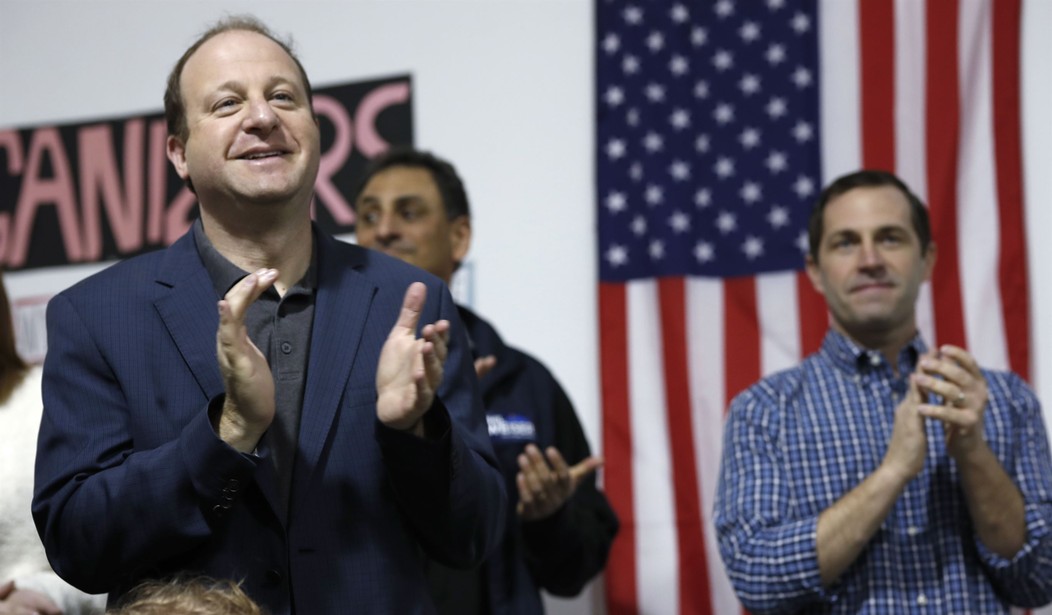
Governor Jared Polis made the best version of the other case last weekend on Fox and Friends Weekend, defending Colorado's authority to define residency and arguing the state wants the kids who grew up there. He's right; the money is small: of 350,000 students in Colorado's colleges, an estimated 6,681 are here illegally. That's why complaints leading with cost are on weaker ground. But Polis also conceded the case, blaming Washington for failing to secure the border. Take that seriously, and it concedes immigration is a federal power, which means a state can't invoke federal failure and then draft its own remedy around a federal statute.
Three things should happen. States still litigating should repeal the preference rather than lose public money fighting it; Nebraska scrapped its law within hours of the ruling. Donors who believe in the cause should fund private scholarships, like Illinois's DREAM Fund, rather than lobby for statutes that fail a plain reading. And every state offering these benefits should publish the annual cost, by institution. A policy that survives disclosure has earned its place; most have never been priced in public.
Washington reached the same conclusion elsewhere. In July 2025, the Department of Education rescinded a 1997 Clinton-era guidance letter, reclassifying career and technical education programs as federal public benefits subject to citizenship verification.
Here's the verdict, and it isn't really about immigration. State legislatures took a clear federal rule, drafted around it, and never told the people footing the bill. A trustee who did that would be removed and sued. About 14 states did it in the open for 20 years, and it took the Justice Department to finally notice.
Jay Rogers is a financial professional with more than 30 years of experience in private equity, private credit, hedge funds, and wealth management. He has a BS from Northeastern University and has completed postgraduate studies at UCLA, UPenn, and Harvard. He writes about issues in finance, constitutional law, national security, human nature, and public policy.
Editor’s Note: Do you enjoy Townhall’s conservative reporting that takes on the radical Left and woke media? Support our work so that we can continue to bring you the truth.
Join Townhall VIP and use promo code FIGHT to receive 60% off your membership.


Join the Conversation
VIP members get the ability to comment on articles.