





On March 15, 2020, two days after then-President Donald Trump declared a national COVID-19 emergency, Cornell law professor Michael Dorf urged Congress to impose a nationwide lockdown and suspend the writ of habeas corpus. Congress never took either of those constitutionally dubious steps, which Dorf said were necessary to "save the nation."
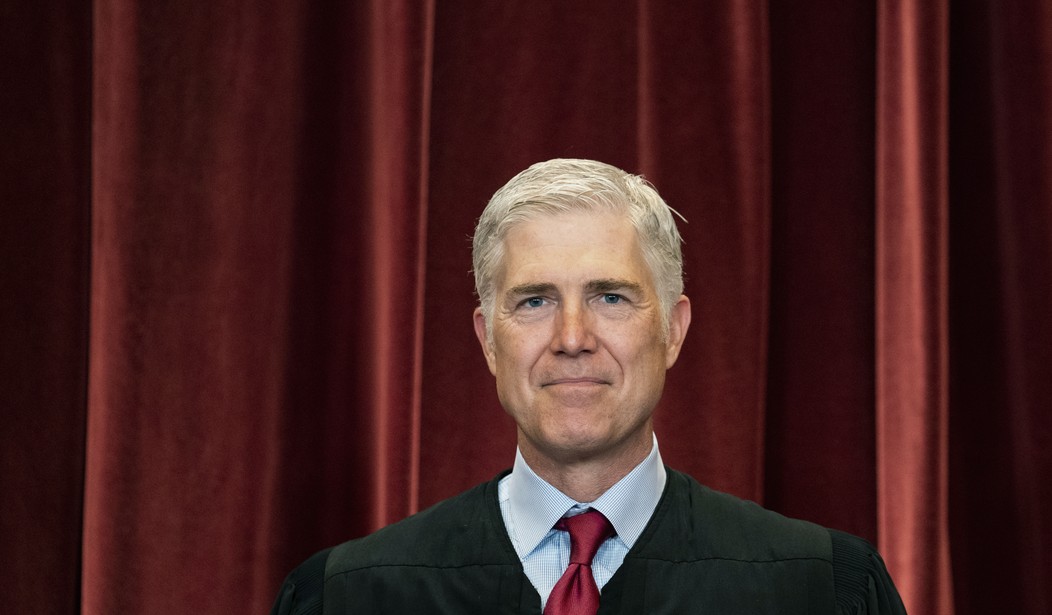
Instead, as Supreme Court Justice Neil Gorsuch noted last week, "executive officials across the country issued emergency decrees on a breathtaking scale," amounting to one of "the greatest intrusions on civil liberties" in U.S. history. That experience made it clear that legislators needed to reconsider the definition of emergencies and impose limits on the powers they confer.
The context of Gorsuch's comments was a case involving public health orders that allowed immediate expulsion of unauthorized immigrants, including asylum seekers, ostensibly based on the fear that they would exacerbate the COVID-19 epidemic in the United States. The Centers for Disease Control and Prevention issued the first such order in March 2020, citing the authority granted by 42 U.S. Code Section 265, and the policy was repeatedly extended by the Trump and Biden administrations.
Those Title 42 orders inspired litigation by opponents and supporters, resulting in conflicting district court decisions. Meanwhile, the public health rationale for the orders, never very persuasive, became steadily less credible.
Ultimately, it became clear that maintaining the orders had nothing to do with curtailing the spread of COVID-19. As Gorsuch remarked in December at an earlier stage of this case, "the current border crisis is not a COVID crisis," and "courts should not be in the business of perpetuating administrative edicts designed for one emergency only because elected officials have failed to address a different emergency."
The COVID-19 connection was likewise debatable when the CDC imposed a nationwide eviction moratorium in September 2020 and repeatedly extended it, citing another section of Title 42. That startling power grab, the Supreme Court eventually ruled, was beyond the authority that Congress had granted the agency.
The Court reached a similar conclusion when it considered the vaccine mandate that the Biden administration tried to impose by treating COVID-19 transmission as a workplace hazard. Meanwhile, however, local and state officials had ordered sweeping, long-lasting restrictions on social and economic activity, impeded only occasionally by judicial intervention.
Those orders often involved scientifically senseless rules and arbitrary distinctions between "essential" and "nonessential" businesses. They impinged on fundamental rights, including freedom of movement, freedom of association, the free exercise of religion, and the right to armed self-defense.
Worse, all of these restrictions had the force of law, sometimes backed by criminal as well as civil penalties, even though the elected representatives charged with lawmaking did not participate in formulating or approving them. The orders were based on statutes that granted governors vast powers during emergencies that they themselves declared and extended.
That end run, which became increasingly untenable as emergency declarations dragged on for many months, provoked a flurry of legislative activity in 2020, 2021 and 2022. According to a tally by the National Conference of State Legislatures, in 2021 at least 47 states considered limits and conditions on governors' emergency powers, and more than two dozen approved them.
Some of those laws set time limits on emergency declarations, allow legislators to override them, and/or require legislative approval to extend them. Kentucky also imposed more specific constraints, barring emergency orders that interfere with prayer or protest.
The pandemic demonstrated that "states have these very broad emergency powers available to governors with very little in the way of limitations," Daniel Dew, director of legal policy at the Pacific Legal Foundation, told my Reason colleague Eric Boehm in 2021. Legislators who take their jobs seriously should address that hazard to freedom before the next emergency rolls around.
"If emergency decrees promise to solve some problems, they threaten to generate others," Gorsuch warns. "Rule by indefinite emergency edict risks leaving all of us with a shell of a democracy and civil liberties just as hollow."


Join the Conversation
VIP members get the ability to comment on articles.