





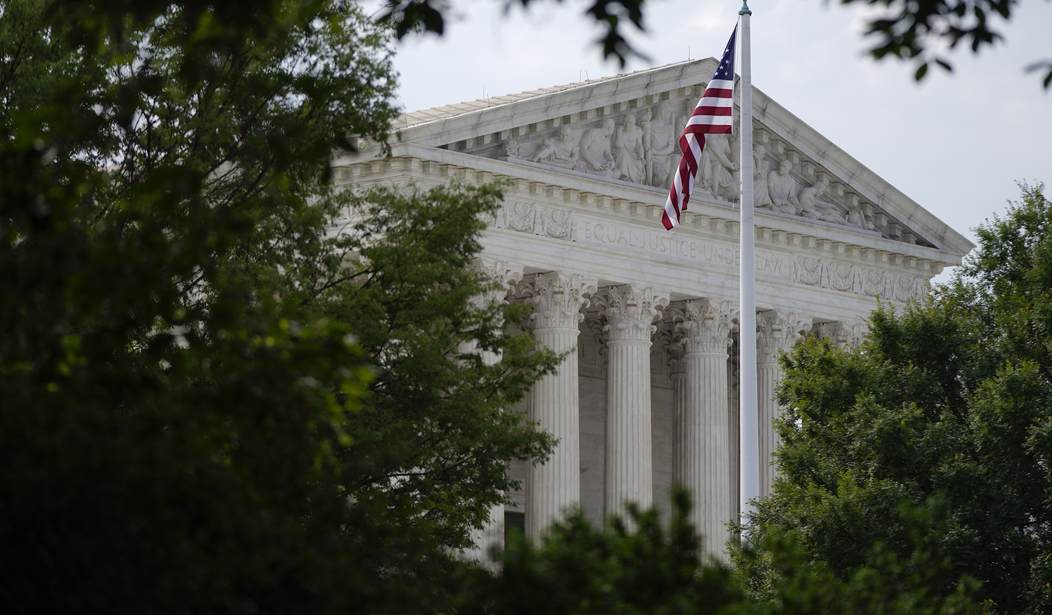
After the Supreme Court upheld the right to bear arms last month, some states promptly complied with the ruling by eliminating subjective requirements for carrying a gun in public. But other states are either dragging their feet or refusing to acknowledge the decision's implications.
The Court said New York had violated the Second Amendment by requiring "proper cause" to carry handguns for self-defense, a standard that gave local officials wide discretion to reject carry-permit applications. But anti-gun politicians have other tricks up their sleeves, including similarly vague standards and bans on firearm possession in specific locations, that will invite further litigation to vindicate a fundamental right guaranteed by the Constitution.
New York responded to the Court's rebuke with a law that eliminates the "proper cause" requirement but specifies a long list of "sensitive locations" where gun possession is a felony punishable by up to four years in prison. Those restrictions will make it impractical or legally perilous for many permit holders to actually exercise the right recognized by the Court.
In addition to listing myriad places where permit holders may not carry firearms, New York's law bans guns in all private establishments open to the public unless they post conspicuous signs announcing that they are deviating from the default rule, a step many business owners will be reluctant to take. A bill backed by California Gov. Gavin Newsom and Attorney General Rob Bonta takes a similar approach.
New York's law retains a requirement that permit applicants demonstrate "good moral character," an assessment that includes perusing their social media posts. Bonta likewise maintains that California's "good moral character" standard remains constitutional, and he suggests that controversial opinions could be disqualifying.
UCLA law professor Eugene Volokh, a First Amendment specialist, thinks such a wide-ranging inquiry is "clearly unconstitutional." Volokh notes that "the government can't restrict ordinary citizens' actions -- much less their constitutionally protected actions -- based on the viewpoints that they express."
Although Massachusetts dropped its "good reason" criterion for carry permits, it still requires that an applicant be "a suitable person to possess firearms," a standard that leaves considerable room for subjective judgments. The same vague requirement applies in Connecticut, where Attorney General William Tong has promised to resist any changes to the law.
Delaware requires that a carry-permit applicant demonstrate "good moral character" and "a good reputation for peace and good order." The National Shooting Sports Foundation, an industry group, reports that Delaware officials are taking a "wait and see" approach, meaning the law probably won't be changed without additional litigation.
In Rhode Island, the attorney general "may issue" a carry permit based on "a proper showing of need," while local licensing authorities "shall issue" a permit "if it appears" that the applicant is "a suitable person to be licensed" and either "has good reason to fear an injury to his or her person or property" or has "any other proper reason" to carry a handgun. Attorney General Peter Neronha seems to think his state's rules are sufficiently different from New York's that no reform is necessary.
By contrast, Hawaii Attorney General Holly Shikada last week said a concealed-carry applicant in that state will no longer be required to show he represents "an exceptional case" and has "reason to fear injury" to his "person or property." Maryland and New Jersey recently dropped similar requirements: "good and substantial reason" in Maryland and "justifiable need" in New Jersey.
Even before the Court's ruling, the vast majority of states either did not require permits for carrying firearms or had "shall issue" carry-permit laws, meaning applications generally were approved as long as gun owners met objective criteria. Those policies recognize, as the Court did, that "the right of the people to keep and bear arms" cannot be treated as a privilege for the lucky few.
Some politicians still seem determined to reject that point. They will not respect their constituents' rights until new constitutional challenges force them to do so.


Join the Conversation
VIP members get the ability to comment on articles.