





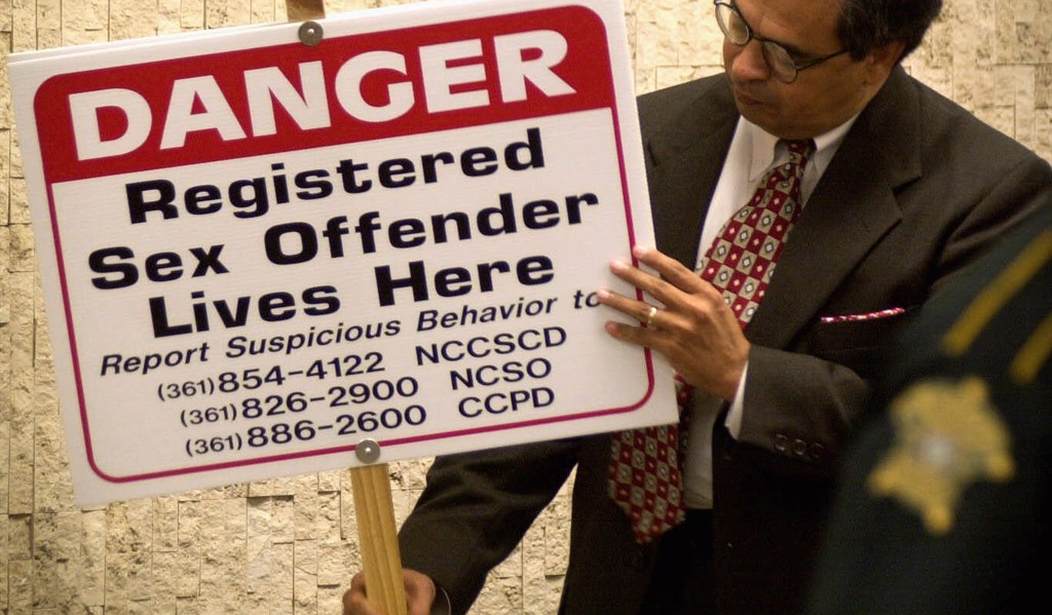
The three men who challenged Colorado's Sex Offender Registration Act were sentenced to probation. Two of them also served 90 days in jail. Their real punishment began later, when they found that appearing in the state's online registry of sex offenders made it impossible to lead a normal life.
Last week, a federal judge recognized what anyone dealing with the burdens, obstacles and dangers of life on the registry knows: Its punitive impact far outweighs any value it might have in protecting the public. In fact, as U.S. District Judge Richard Matsch concluded, registration can violate the Eighth Amendment by imposing what amounts to cruel and unusual punishment.
On the face of it, that judgment contradicts the 2003 decision in which the Supreme Court described Alaska's Sex Offender Registration Act as a "civil regulatory scheme" that only incidentally resulted in humiliation and ostracism. Since Alaska's statute was not punitive, the Court reasoned, it could be applied retroactively without violating the Constitution's ban on ex post facto laws.
Matsch argues that "the justices did not foresee the ubiquitous influence of social media," the proliferation of commercial websites peddling information from sex offender registries or the cheap scare stories that local news outlets would produce based on that information. Those developments have magnified the life-disrupting potential of registration, as illustrated by the experiences of the plaintiffs in this case.
David Millard, who pleaded guilty to second-degree sexual assault on a minor in 1999, has been employed by the Albertsons grocery chain since 2003. His job was jeopardized after a customer saw his name and photo on a sex offender website.
Millard was forced to move repeatedly after his status as a registered sex offender was revealed, once by police and once by a local TV station. The second time, he had to fill out about 200 rental applications before finding an apartment he could rent.
Millard later bought a house in Denver, which is periodically visited by police officers seeking to verify his address. "If he is not home when they visit," Matsch notes, "they leave prominent, brightly colored 'registered sex offender' tags on his front door notifying him that he must contact the DPD."
As you might imagine, this public shaming makes things more than a little awkward with the neighbors. Millard has experienced name-calling and vandalism, and he worries that worse may be coming. "Because of the fear and anxiety about his safety in public," Matsch writes, "Mr. Millard does little more than go to work, isolating himself at his home."
Eugene Knight was convicted of attempted sexual assault on a child in 2006 based on a crime he committed when he was 18. A "full-time father" because he has been unable to find work that pays well enough to cover the cost of child care, Knight is not allowed on school grounds to drop off his kids or attend school events.
Arturo Vega, who pleaded guilty to third-degree sexual assault as a juvenile but is listed in Colorado's public database because he failed to comply with registration requirements he did not understand, has tried twice to get off the registry. Both times, his petitions were rejected by magistrates who insisted he prove a negative: that he was not likely to commit another sexual offense.
These men completed their sentences and have stayed out of trouble for years -- almost two decades in Millard's case. But because of the registry, Matsch notes, they face "a known, real and serious threat of retaliation, violence, ostracism, shaming and other unfair and irrational treatment from the public...regardless of any threat to public safety based on an objective determination of their specific offenses, circumstances, and personal attributes."
By forcing sex offenders into this precarious situation, Matsch says, the state is punishing them. State or federal courts have reached the same conclusion in Alaska, Maine, Michigan, New Hampshire, Oklahoma and Pennsylvania. Maybe someday the Supreme Court will stop pretending otherwise.



Join the Conversation
VIP members get the ability to comment on articles.