





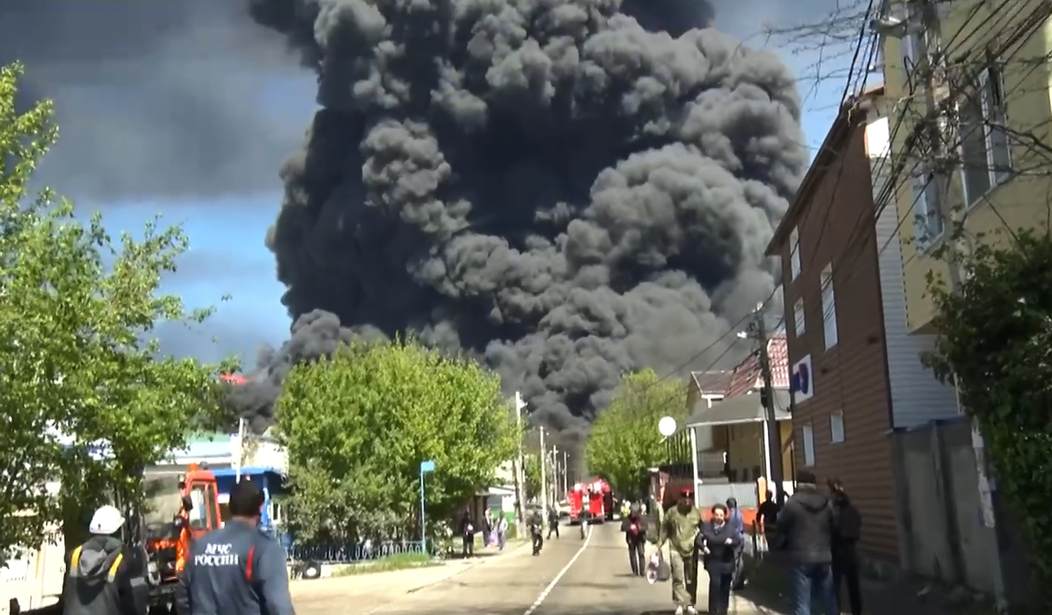
A low-cost first-person-view drone catches up with a tank or armored vehicle and destroys it. Another piece of expensive military equipment is lost, seemingly proving that unmanned systems now dominate the battlefield. After countless reports from the Russia-Ukraine war, this conclusion may appear convincing. But it can also be misleading.
Ukraine has truly revolutionized the use of unmanned systems. Drones have transformed reconnaissance, logistics, and precision strikes, from the front line to operational depth. However, the Ukrainian experience does not prove that drones have replaced artillery, armored vehicles, aviation, or air defense. It proves that no technological advantage remains unanswered for long.
The war in Ukraine has compressed the cycle of military innovation from decades into months. A new system or tactic can offer an edge, but rarely for long. The adversary observes, adapts, and develops countermeasures until yesterday’s innovation becomes today’s vulnerability. Then the cycle begins anew — a relentless contest of invention, adaptation, and response.
For Ukraine, which, unlike Russia, cannot treat personnel losses as an acceptable cost, that means replacing people with unmanned systems wherever possible. But it does not mean replacing every other weapon. The question for Ukraine, the United States, and NATO is not which technology will win, but how to build forces capable of adapting as quickly as warfare itself.
Drones can be cheap, precise, and deployed at scale, but electronic warfare, weather, terrain, and increasingly sophisticated countermeasures can limit their effectiveness. When a drone cannot see its target, loses its signal, or lacks the necessary warhead, another weapon must take its place.
Viral videos from the kill zone usually show the moment of impact. They rarely show an armored vehicle delivering troops, evacuating the wounded, or giving its crew a chance to survive a strike. The routine work of artillery is even less visible. But what is less visible is not necessarily less valuable.
As a Ukrainian manufacturer of armored vehicles and ammunition, we continue to see strong frontline demand for protected mobility and effective long-range artillery rounds. Drones may change how certain missions are performed, but they do not eliminate those missions.
Ukraine’s experience demonstrates the need for armor and artillery to evolve. FPV drones require armored vehicles to integrate detection systems, electronic warfare, additional protection, and new tactics. Professional U.S. Army publications likewise emphasize that armored forces will remain relevant only with organic counter-drone defenses and continuously updated doctrine.
Armor that fails to evolve becomes a target. Adapted armor remains essential for transporting personnel where unprotected vehicles cannot go. The same applies to artillery, which must respond to an increasingly transparent battlefield with greater range, faster deployment, and displacement, and closer integration with reconnaissance. The farther an artillery crew can fire, the harder it is to detect and strike.
The United States and its allies are investing billions in expanding 155 mm ammunition production. The U.S. monthly production increased from 14,400 rounds in 2022 to 40,000 in early 2025, while NATO has signed major contracts, including one worth $1.2 billion for approximately 220,000 artillery rounds. But quantity is not enough. The West must also ask what kind of artillery round it intends to mass-produce for the wars of the next decade.
The next artillery race will be a race for range. As the United States and NATO expand production, they should increase the share of long-range ammunition in procurement and stockpiles. The U.S. Army is already testing new 155 mm solutions offering increased range and trajectory correction.
Ukraine’s defense industry is moving in the same direction. UKR ARMO TECH has codified its own 155 mm artillery round and continues working to extend its range. Our objective is to develop rounds capable of effective engagement at approximately 25 and 31 miles, equivalent to 40 and 50 kilometers.
This requirement may seem less obvious to the United States, whose military has traditionally offset part of its need for ground-based fires through airpower. Ukraine has never had that luxury.
A future conflict with a technologically advanced adversary may unfold without guaranteed air superiority. China is building an integrated, multilayered air defense network, while Iran and North Korea also possess sophisticated systems. Russia, despite its aviation advantage, has been unable to operate freely over Ukraine while Ukrainian air defenses remain effective.
When aircraft cannot operate freely, the importance of long-range ground fires rises sharply. Artillery is not a relic. It is insurance against the assumption that the next war will follow a convenient and predictable scenario.
The most dangerous lesson the West could draw from Ukraine is that drones have replaced everything else. The real lesson is that no technology dominates forever. Drones and electronic warfare are essential, but so are protected mobility, artillery, and air defense.
The advantage will belong to the force that best combines old and new capabilities – and adapts before its latest advantage becomes its next vulnerability.
Editor’s Note: Do you enjoy Townhall’s conservative reporting that takes on the radical Left and woke media? Support our work so that we can continue to bring you the truth.
Join Townhall VIP and use promo code FIGHT to receive 60% off your membership.


Join the Conversation
VIP members get the ability to comment on articles.