





As American consumers and investors start souring on Environment, Social, and Governance (ESG) principles being injected into both the public and private sectors, its loudest defenders say a rebrand will salvage its toxic image.
Its dedicated followers reassure us the product they’re selling — forcibly aligning business values with progressive virtue signaling — is good and noble. They tell us, however, that it’s just not sold well, despite being a popular set of beliefs.
Conceived in October 2005 at a U.N. Who Cares Wins Conference, this pervasive movement has glitzy public relations campaigns along with huge financial and political backing. Alas, no rebrand can salvage ESG given its disastrous real-world impact, ruinous effects on businesses, and growing disapproval among the American public.
Notably, the scoring mechanism associated with ESG is flawed and corresponds to imminent economic decline. Wherever high scores are found, countries have experienced great political instability and corresponding financial ruin.
The nations of Sri Lanka, Ghana, and the Netherlands have all experienced turmoil and boast high ESG scores — 98.1, 97.1, and 90.7, respectively. All these nations, coincidentally, banned fertilizer.
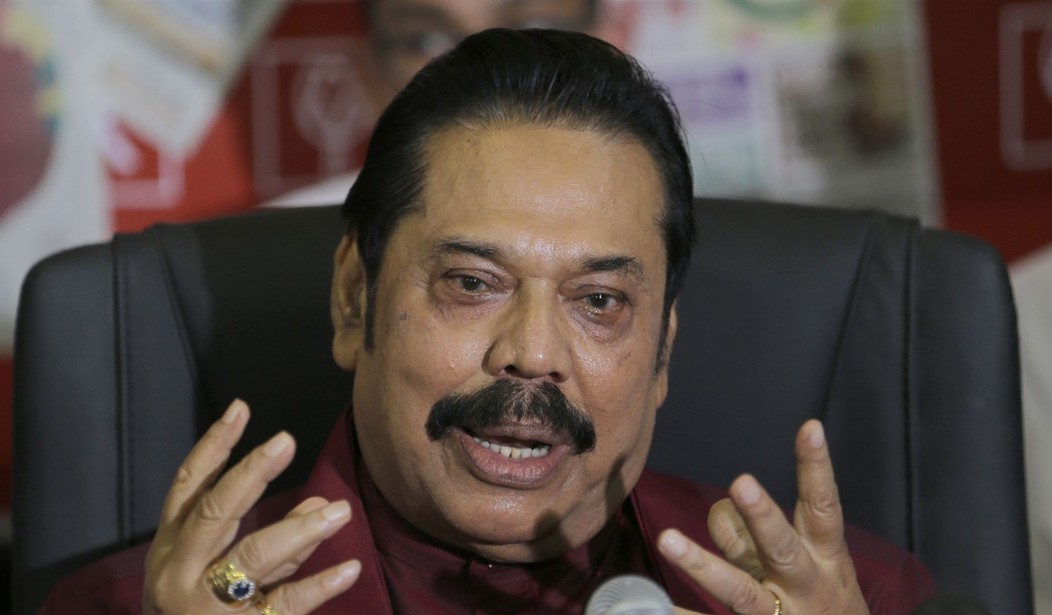
Sri Lanka was the poster child for ESG investment and has suffered the brunt of these principles. Their most recent prime minister just resigned in shame, following months of protests and unrest stemming from the country committing to net-zero carbon emissions by 2050 and halving its nitrogen use.
Ghana also took the “E” prong too much to heart, with its government agreeing to raise $5 billion with international capital with Green, Social and Sustainability (GSS) Bonds. Now experiencing runaway inflation, largely due to these GSS bonds, the country is hoping to be bailed out by the International Monetary Fund (IMF).
The Netherlands similarly adopted a new continent-wide Sustainable Finance Disclosure Regulation (SFDR) to boost ESG investment and is now experiencing one of the highest inflation rates in the European Union. This was precipitated by the Dutch government approving a multi-year $21 billion plan to sharply cut ammonia and nitrogen emissions 50% by 2030 which requires one-third of farmers to kill off their herds and shut down indefinitely.
As countries languish with the adoption of ESG policies, private companies should be skeptical of flirting with these high-risk values. All three prongs result in companies losing profit without any measurable social impact.
ESG funds generally “perform poorly.” An assessment by Columbia University and the London School of Economics of self-identified ESG mutual funds versus non-ESG mutual funds tracked from 2010 to 2018 determined the former had worse environmental, social, and governance metrics than non-ESG ones.
The report concluded, “We find no evidence that ESG funds’ portfolio firms outperform non-ESG funds’ portfolio firms with respect to most of the measures of stakeholder-centric behavior that we consider in this paper. In fact, we find that ESG funds’ portfolio firms have significantly more violations of labor and environmental laws and pay more in fines for these violations, relative to non-ESG funds issued by the same financial institutions in the same year.”
Imagine that. Prioritizing ESG performance over financial returns doesn’t pay dividends. Accordingly, consumers and investors are turning against this movement of woke corporatism.
The Brunswick Group found only 36% of voters “agree unequivocally that companies should speak out on social issues.” A May 2022 Daily Wire/Echelon Insights poll found investors overwhelmingly reject companies pushing social causes over profit. Of the 1,000 respondents polled, 66% of those polled said investors should opt out of ESG-style investments. Gallup similarly recorded that investors still largely prefer performance factors over political or social factors when considering investing opportunities.
Another May survey from Trafalgar Group found 87.1% of voters — spanning Republicans, Democrats, and independents — want corporations to not weigh in on politics.
The Economist called ESG “often well-meaning” but also “deeply flawed.” It even went so far to deem it an “unholy mess that needs to be ruthlessly streamlined.”
Other ESG supporters argue a rebrand — whether splitting ESG into two or ramping up regulation of so-called socially responsible investing — will help restore rapport with the American public and save the brand. This would be too little, too late as its negative impact wreaks disaster wherever it goes.
To put it plainly: ESG is damaged goods. It isn’t the glitzy branding that needs retooling; it’s the product that’s spoiled and rotten. The sooner corporations abandon ESG and readopt their original mission statement, the better off the American economy.
Gabriella Hoffman is a senior fellow with Independent Women’s Forum and host of the District of Conservation Podcast. Follow her on Twitter at @Gabby_Hoffman.

Join the Conversation
VIP members get the ability to comment on articles.