





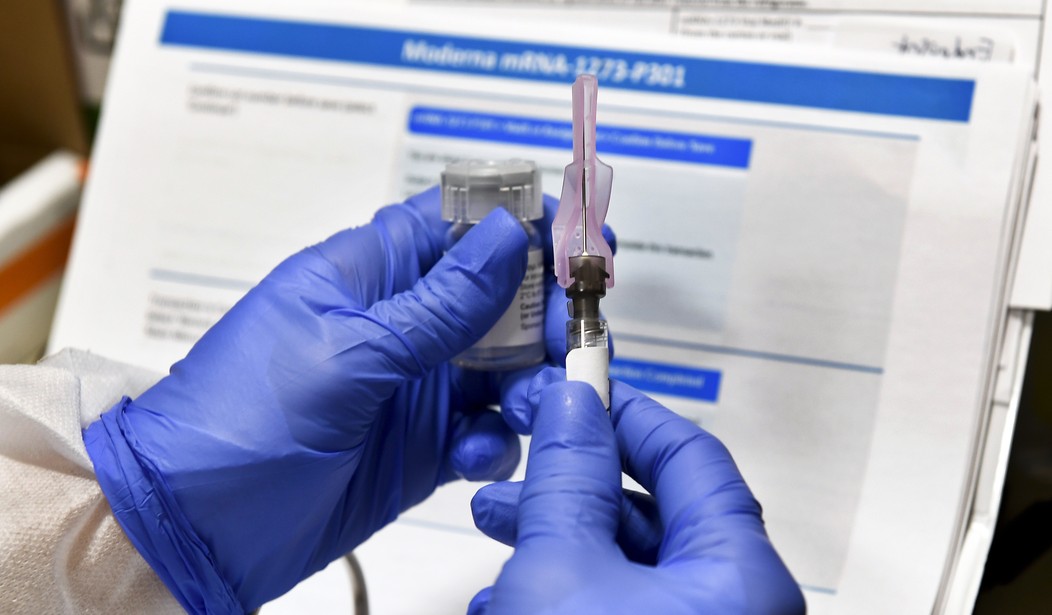
It has been an awful year as COVID-19 has spread across the globe infecting and killing millions of people. One of the few bright spots in 2020 has been the rapid development of a vaccine. Currently, there are multiple viable candidates poised to offer a serious glimmer of hope in record time. With any luck, these candidates will bring about a swift, successful end to the global pandemic and associated lockdowns. This success in vaccine development is a testament to the eradication of regulatory barriers at the U.S. at the Food and Drug Administration (FDA) and across the globe. Governments collectively stepped out of the way and gave private companies in the biopharmaceutical space the tools they needed to succeed.
Two vaccines come from Pfizer and Moderna, companies located in the United States (U.S.). The other vaccine being developed by AstraZeneca comes from the United Kingdom (U.K.). Besides sharing a common language, the U.S. and U.K. share something else, robust intellectual property (IP) protection. It is no small coincidence the U.S., U.K., and Germany are all ranked in the top four globally in terms of strength of IP protections. There is a reason companies from these nations were able to play an integral part in the development process.
Protecting IP and innovation isn’t limited to just vaccine production. Private companies across the American economy made a number of sacrifices and took various “pledges” to adjust to pandemic life. For example, almost all telecom companies took the “Keep Americans Connected” pledge in an effort to ensure continued broadband access. However, the “Open COVID Pledge,” to “make our intellectual property available free of charge for use in ending the COVID-19 pandemic and minimizing the impact of the disease,” gained no such traction. Again, this is not mere coincidence.
Not only did many biopharmaceutical companies refuse to sign on, but Pfizer CEO Albert Bouria called it both “nonsense” and dangerous.” This is because there is little to no evidence that IP protections are a barrier to vaccine development. The barriers that did exist were government-imposed or stemmed from the fact that researchers had almost no experience with this particular virus.
Stripping away IP rights would have created unprecedented uncertainty and likely moved the world to a place where “farther from ending our global health crisis,” according to Jon Soderstrom of Yale University. In fact, Jan Fischer, the former Prime Minister of the Czech Republic said that if a vaccine is developed, that “robust IP laws” would be a large reason why. Now, here we stand with three viable vaccines from nations with robust or rapidly improving IP regimes.
As always, present success should serve to inform future policymaking. With the focus on trade over the last four years, free trade agreements (FTAs) will no doubt play a sizable role in the Biden administration. The administration needs to prioritize global IP protections in any deals struck with other nations. Many nations have been capitalizing off of U.S. IP and the dollars American companies have poured into research and development have essentially served as a subsidy to drug development in other parts of the world.
Despite existing successes, there is still plenty to be done. Ensuring that U.S. investment is maximally efficient should be a goal at the forefront of future FTA negotiations. This will further incentivize the type of radical innovation we have seen during the coronavirus pandemic. It will also help deliver cures to Americans more quickly and at a more affordable price.
This is also important to consider as policymakers at the Department of Health and Human Services (HHS) are looking to implement a “most-favored nation” (MFN) proposal. This MFN policy, if enacted, would effectively implement foreign price controls on prescription drugs. Even Dr. Anthony Fauci has advised strongly against price controls on vaccines or other medicines.
The pandemic has demonstrated that IP protection – rather than price controls – is a far more effective solution. America needs to cut down on foreign free riding off of American IP, instead of trying to become free riders ourselves. This will make the type of breakthroughs we see today impossible in the future.
As the globe hopefully waves goodbye to the last days of the coronavirus pandemic, citizens from around the world will no doubt also be saying “thank you” to the workers who made it possible. However, we should also keep in mind the unsung hero of the pandemic, intellectual property. In all likelihood, without existing protections, we would still be searching for a cure.
David Williams is the president of the Taxpayers Protection Alliance.

Join the Conversation
VIP members get the ability to comment on articles.