





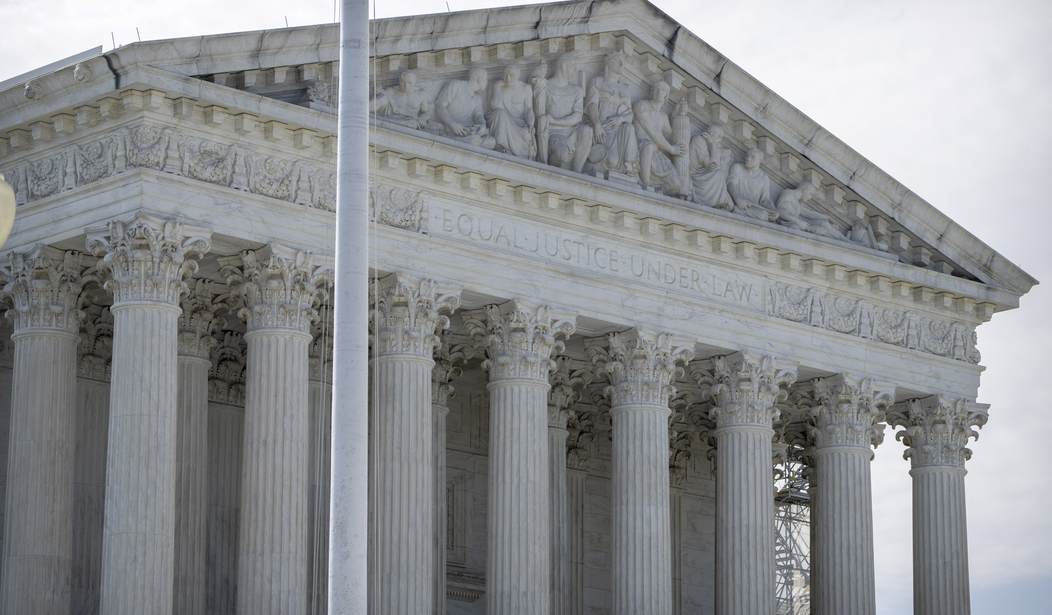
Progressive judges signal a supposed Trump crisis, when the real crisis resides in the judiciary itself
Former Federal Judge Mark Wolf made headlines in early November after he retired from the bench and subsequently aired his dirty laundry. Wolf knew he could not speak on these matters as an active judge, so he removed himself from the judiciary to get his fifteen minutes of fame. While he did get headlines for his effort, what he really did was expose the increasing hypocrisy within the federal judge ranks.
In an op-ed, Wolf detailed his grievances. A single quote reveals the flavor of his message: “The White House’s assault on the rule of law is so deeply disturbing to me that I feel compelled to speak out.” He then repeats the same news items that others have told.
But three news items that he mentions are striking as particularly hypocritical because they tangentially involve the courts. After all, he wrote the article and resigned, so that he could “advocate for the judges who cannot speak publicly for themselves,” implying he represents a segment of the judiciary.
He complains of the prosecutions of Letitia James and James Comey, but fails to mention the prosecution of Trump and members of the first Trump administration and reelection campaign. Why wasn’t Wolf concerned when lawfare occurred under a different political motivation? By finding fault in the prosecution of members of one party, but not the prosecution of members of the other party, is Wolf endorsing the use of the court system to punish Republicans only?
Wolf also complains about Trump’s executive orders. Wolf states that his judge colleagues are “admirably deciding a variety of cases generated by Trump’s many executive orders and other unprecedented actions,” as if the courts are performing mission-based work. How is a neutral court doing something “admirably” if the court’s only function is to interpret the law? How tone-deaf.
He goes on: “however, the Supreme Court has repeatedly removed the temporary restraints imposed on those actions by lower courts.” The Supreme Court has the ultimate say over matters of the Constitution and federal questions. Yet, when the lower courts see repeated examples of the Supreme Court overturning their orders and decisions, instead of interpreting these as rebukes and altering their behavior, they continue to issue wrongful orders and decisions. If the Supreme Court is letting many of the Executive Orders survive, are they unlawful? No.
Finally, he complains about deportations without due process. Of course, the focus of this claim is how to handle a 1798 law and what process is owed under that law. The required process under that law, which has been rarely used, was hardly settled. All parties, as described by the Supreme Court, agreed that due process is required, but disagreed on what constitutes sufficient notice and what timeline is required. The Supreme Court quickly clarified the necessary process. There is no indication that this process is not being followed now. It is misleading to tell the public that immigrants were being deported “without due process.” Indeed, even the courts agree with Trump on due process claims in more recent decisions.
However, the due process claims did expose the judiciary’s tendency to overreach. In the J.G.G. v. Trump case, where Judge Boasberg infamously ordered Trump to return the planes, the Supreme Court ruled that Boasberg did not even have jurisdiction over the matter. But this did not stop Boasberg, who continued to attempt to enforce his orders, even holding the administration in contempt, well after the Supreme Court’s order that rescinded the orders. Why would Wolf mention what he perceived as unlawful activity by the Trump administration, while ignoring a far clearer example of unlawful activity by the judge in that matter?
The Supreme Court’s actions demonstrate that Trump’s activities are often lawful, even when lower courts ruled against him. Of the 23 cases that received shadow docket rulings, 20 ruled for the Trump administration. This lends the question, why would so many lower courts be wrong?
The answer is forum shopping. In July, it was reported that five specific courts had issued 35 of the 40 nationwide injunctions against Trump: Maryland, Washington D.C., Massachusetts, California, and Washington state. The challenged actions are consistently brought in front of the nation’s most liberal jurisdictions. Perhaps not so coincidentally, Wolf’s former court is among the five.
Wolf accuses the White House of assaulting the rule of law. But the real assault on the rule of law is happening within the district courts. Judges must be viewed as ideologically neutral. But, based upon Wolf’s words, many other judges view the role of the judiciary in the same way as Wolf. They are not impartial. They are activists using the judiciary as their mission field. They are using the power of the courts as a vehicle for a political veto, despite the Constitution’s stated role for the judiciary. Wolf’s op-ed should be viewed as evidence of a judicial and constitutional crisis, created by the judges themselves.
Curtis Schube is the Director of Research and Policy at Center to Advance Security in America
Editor's Note: Unelected federal judges are hijacking President Trump's agenda and insulting the will of the people.
Help us expose out-of-control judges dead set on halting President Trump's mandate for change. Join Townhall VIP and use promo code FIGHT to get 60% off your membership.


Join the Conversation
VIP members get the ability to comment on articles.