





STRATFORD-UPON-AVON, England -- "Neither a borrower nor a lender be; for loan oft loses both itself and friend, and borrowing dulls the edge of husbandry." -- "Hamlet," Act I, Scene III
William Shakespeare is not known for his economic expertise, but the advice he gives through Polonius in "Hamlet" may be the best counsel ever offered for individuals and governments.
After years of debt (90.6 percent of GDP in 2013) and deficit spending, Britain's ruling Conservative Party is crowing about the latest economic figures that show the country has outpaced the developed world in its economic recovery. Reuters reports that the International Monetary Fund recently upgraded Britain's projected economic growth this year to 3.2 percent, leading "the world's big rich economies." According to UK's Office for National Statistics, Britain has recovered all of the ground lost during the recession.
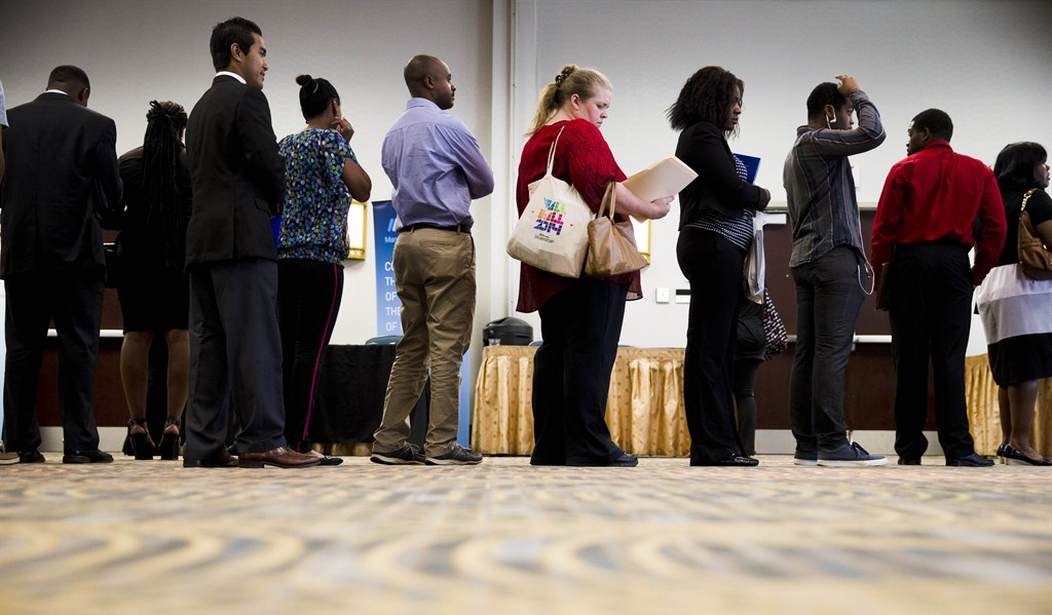
In America, the Obama administration is also crowing about the creation of 209,000 new nonfarm jobs in July. The July unemployment rate rose slightly to 6.2 percent from June's 6.1 percent, likely because more people stopped looking for work.
The British media have carried stories about the improved economy, but note it hasn't reached average people who continue to feel cramped by the recession's aftermath. These include higher than ever gas prices (roughly $8.50 a gallon), increased costs for food and higher housing prices in larger cities.
The average American household has lost income over the past decade. According to the Russell Sage Foundation, a leading social science research organization, as reported in The New York Times, median annual income declined from nearly $88,000 a decade ago, to just over $56,000 today, a 36 percent decline.
A Daily Mail Online editorial castigated the Labour Party for its heavy-handed criticism of Chancellor of the Exchequer George Osborne's austerity policies, which are demonstrating success.
The Daily Telegraph's assistant editor, Jeremy Warner, wrote a column praising Gov. Sam Brownback's (R-Kansas) economic program, which many Democrats and some newspaper editorials have criticized. While acknowledging that Kansas' revenue hasn't yet caught up with the governor's steep tax cuts, Warner writes, "Experience ... is already beginning to mirror what other low-tax states achieve. If we take the 15-year period between 1998 and 2013, the 50-state average for private-sector job creation was 8 percent. Yet for those states such as Texas, Florida and Nevada that don't impose income taxes at all, the rate of growth was 18.3 percent, against 5.6 percent for those that do. Tax competition, it seems, works in practice just as you might expect it to in theory."
In other words, Kansas is on the right track, if experience serves, and so is Britain, which might promote even faster and more widespread growth if it reduced its massive welfare budget and cut taxes (the top income tax rate is now 45 percent, plus a 20 percent Value Added Tax on virtually all goods and services). It might also reduce the fuel tax, now 61 percent of the cost per litre, the highest in the European Union. It costs me about $100 a fill-up, twice the U.S. cost.
Credit for any economic recovery must ultimately go to wage earners and businesses struggling against government intrusion that includes high taxes and stifling regulations. They would be recovering more quickly if government would get out of the way and allow its citizens the economic freedom that can lift more boats.
The philosophical battle continues between those who think government does a better job of spending other people's money (surely a discredited notion given the record of government misspending) and money earners who believe smaller government is better for both government and the governed.
This wisdom from the Bard of Avon might easily apply to national economies and elected leaders:
"There is a tide in the affairs of men,
Which, taken at the flood, leads on to fortune;
Omitted, all the voyage of their life
Is bound in shallows and in miseries." -- "Julius Caesar," Act 4, Scene III


Join the Conversation
VIP members get the ability to comment on articles.