





In his classic novel "1984," George Orwell warned about the evils of a totalitarian state dominated by a single ruling party with total power over its inhabitants. Oceania, his fictional superstate, is under complete surveillance by the authorities. The character known as "Big Brother" reminds everyone he is constantly monitoring the citizens of Oceania, mainly by "telescreen."
At the end of 2013, the federal government may not yet have telescreens, which in Orwell's imagination had the ability to eavesdrop on people's conversations and broadcast propaganda, but it does have the nonfiction equivalent -- data collection, drones and other technological invasions of privacy.
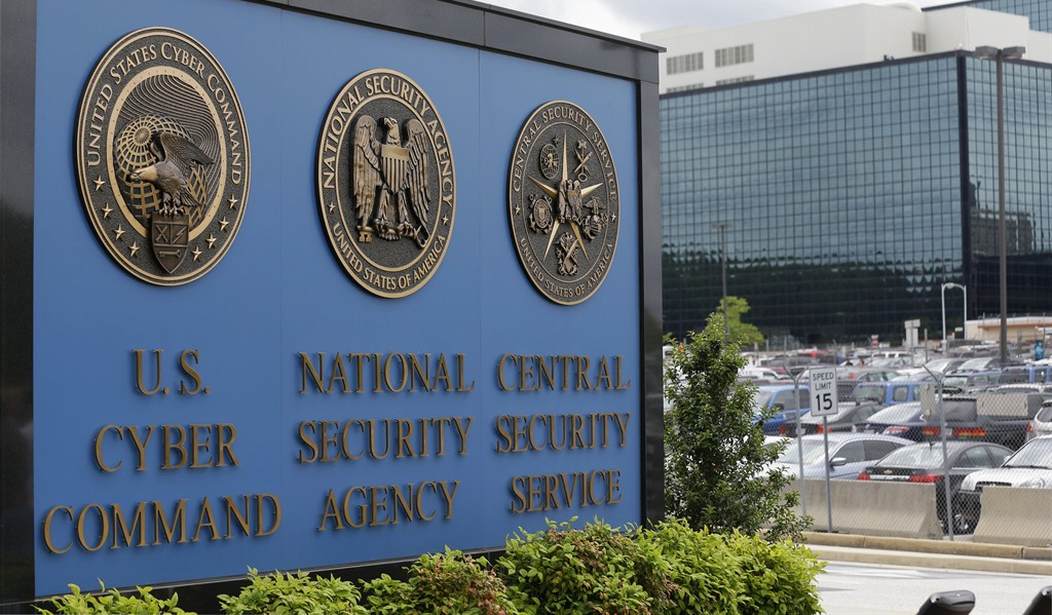
Our government does have the National Security Agency.
And because we have the NSA, and drones and all the rest, U.S. District Judge Richard Leon recently ruled, in an ongoing civil lawsuit, that it's "significantly likely" that the agency's wholesale collection of our phone records is unconstitutional -- a clear violation of the Fourth Amendment's protection against unreasonable searches and seizures. Judge Leon suspended his ruling to allow for appeals, but his objection to this information-vacuuming was clearly stated in his 68-page decision: "I cannot imagine a more indiscriminate and arbitrary invasion than this systematic and high-tech collection and retention of personal data on virtually every single citizen for purposes of querying and analyzing it without prior judicial approval. Surely, such a program infringes on that degree of privacy that the founders enshrined in the Fourth Amendment."
President Obama has said, "Nobody is listening to your telephone calls." He named a panel to review the NSA's methods and the balance between privacy and security. The draft report, expected to be released next month, seems to favor privacy over security. A recent Wall Street Journal editorial, "Disarming Surveillance," supports the NSA's actions and thinks the board Obama appointed is making recommendations that would make data collection impossible, and us more vulnerable.
The New York Times sees it differently. Its editorial Tuesday was headlined "A Powerful Rebuke of Mass Surveillance."
So which is it?
In Washington's tainted political atmosphere, you can be for maximum freedom and privacy ... until there is a terrorist attack. Then, the same people who argue for the Constitution to be taken literally when it comes to the Fourth Amendment (and who argue for a "living Constitution" on other issues) would demand to know why the government didn't do more to protect us.
How much privacy would Americans be willing to give up in exchange for a promise that the bargain will lead to more security? Our leaders regularly tell us they can't guarantee we won't be attacked again, so might this be a Faustian deal with the government "devil"?
NSA Director Keith Alexander claims 50 potential attacks were prevented because of the government's surveillance programs, but we only have his word for it. "If you like your privacy you can keep it" wouldn't sound any more credible coming from Alexander than it did coming from the president when he gave us his line about keeping our doctors.
Freedom is a precious commodity. Like virtue, once it is given up it is difficult, if not impossible, to regain. A government that regularly attempts to encroach on our right to privacy must be restrained by the people. Additional hearings should be held on this critical issue and they should be nonpartisan, as difficult as that may be heading into another election season.
Jihadists don't discriminate between political parties. They have vowed to kill as many Americans as possible. Striking the right balance between security and freedom is critical to both. Recent history provides numerous examples of nations that have traded freedom for security and gotten neither.
What must be avoided is the kind of thinking Orwell warned against: "Doublethink means the power of holding two contradictory beliefs in one's mind simultaneously, and accepting both of them."
Freedom and security should not be contradictory, but complimentary. In an age of terrorism, this "devil" is really in the details.



Join the Conversation
VIP members get the ability to comment on articles.