





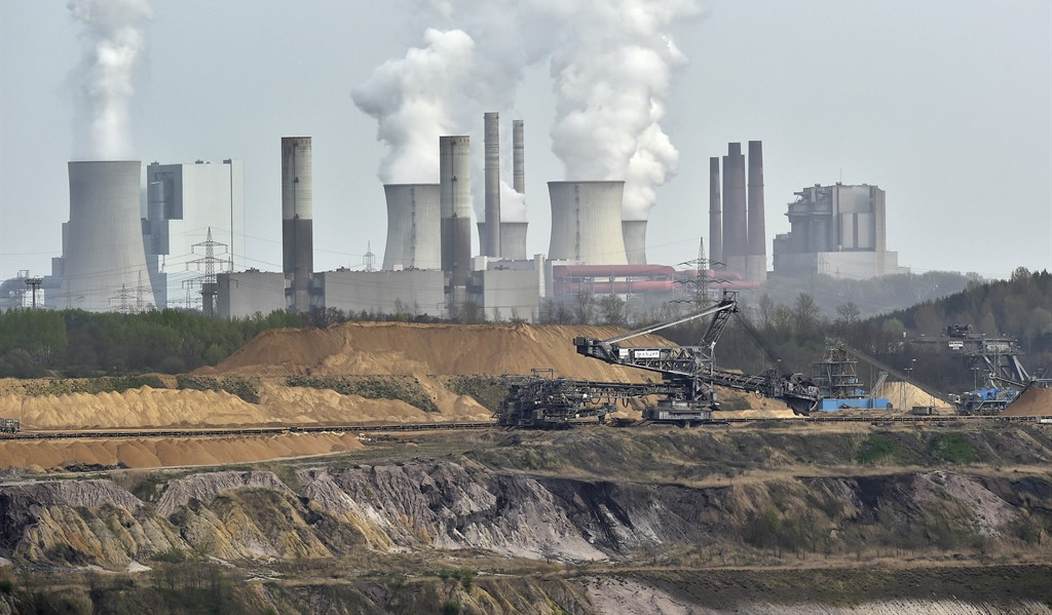
No matter what you think of global warming or coal or fossil fuels in general, what’s happening with a proposal to build a coal export terminal in Washington state ought to bother you.
Longview, Wash., a 2 ½-hour drive south of Seattle on I-5, is a deep-water port on the Columbia River. It was built in the early-1920s by a lumber company looking to move 14,000 workers there to harvest timber and ship it from the port.
Today, an outfit known as Millennium Bulk Terminals wants to build a terminal to ship coal harvested in Montana, Wyoming and Idaho to China, which still derives nearly three-fourths of its power from coal.
Coal would arrive on trains from out of state then be put on ships to immediately leave the state. That’s 2,650 direct and indirect jobs during construction, 230 permanent positions, $20 million in wages annually, $37.2 million in state tax revenue and $5.9 million to the county for providing a facility where machines transfer coal from trains to ships.
But the state sees not economic opportunity but coal. The state’s Department of Ecology studied the proposed project for five years, hoping to delay it to death, then issued a most unhelpful final environmental review earlier this month. The Longview Daily News called the decision “disappointing” and charged the state “has strayed from its mission.”
“It’s not the state’s job to pick a side during the permitting process of any business, but it certainly looks like it did on the Millennium project.”
The state changed the scope of the assessment after it had begun … effectively changing the rules of the game after the game was under way, the paper said.
It suddenly discovered, seemingly out of nowhere, that trains passing through towns elevated cancer risks along their routes by 3 percent. “What Ecology has done is equate 16 train trips a day (eight trains in and eight trains out) to 1,100 truck trip0s or about 23 diesel trucks per hour running in both directions,” the paper stated.
The department then tweeted out, “Key findings: Trains to increase diesel emissions & increase cancer risk rates in nearby Highlands neighborhood. #MillenniumCoal,” as if its job is to win a PR war with a company seeking to do legal business in its state.
It never had even brought up the matter of diesel emissions before, or that the Washington Department of Transportation had found the eight additional train trips required to serve the terminal would have no discernible impact on noise, air or “other environmental hazards.”
It said Millennium had to mitigate 50 percent of the air pollution generated by the coal shipped through its ports to China, then abruptly upped it to 100 percent at the end of the process.
That’s right … the state wanted to hold Millennium responsible for mitigating air pollution of coal that passes through its port but is burned in China, Korea, Japan or elsewhere.
“This use of a state regulatory policy to police the use of products outside of Washington state is simply unheard of,” said Mariana Parks, spokeswoman for the Alliance for Northwest Jobs and Exports.
“We don’t penalize farmers for agricultural products used in foreign markets, or aerospace manufacturers. But because it’s coal, state polices are being used to enforce the end-use of products around the globe. It’s unprecedented.”
It’s easy to sit in Seattle or even Olympia and condemn the project. The tech boom – the cleanest of industries at this level – provides growth and prosperity that could sustain Seattle and Washington state indefinitely.
But in Longview, it’s different. Unemployment is at 7 percent. The economy always has depended on blue-collar jobs, which is why the unions and chamber of commerce types in the area unite in support of Millennial and why 30 union bosses have asked Gov. Jay Inslee, a Democrat, to approve the project.
For them, those 260 permanent jobs are what their community is all about. The coal that will be burned in China, Japan and South Korea will come from somewhere, and increasingly that somewhere won’t be domestic, as China already has begun to cut back on coal production.
But again, whatever one thinks of coal or fossil fuels, there is little disagreement that the Millennium project met the criteria for approval, even under the law of stridently green Washington. And after all the attempts to kill this along the way, Millennium has been able to provide the information and data to keep the project alive.
If we’re to have environmental laws and if those laws are to enjoy the support they need to truly protect us, they must be enforced evenly.
The goalposts can’t be moved. The rules can’t change in the middle of the game. The process can’t be delayed so long as to try to thwart the plan. And hostility to coal that is not enshrined in law can’t be the guiding principle.


Join the Conversation
VIP members get the ability to comment on articles.