





American manufacturing is having a moment. Congress is pushing tax cuts that will enable production growth while President Trump is reshuffling trade deals to favor goods built in the heartland over those manufactured in Asia. Stimulating demand for “Made in America” products is important, but so too is unlocking new domestic manufacturing capacity to meet the revived interest.
Small businesses are a crucial piece to that puzzle.
When most Americans think about the manufacturing sector, brands like General Motors, John Deere, or Boeing typically come to mind. But these huge companies, and others like them, depend upon a complex network of small- to medium-sized manufacturers to help source components.
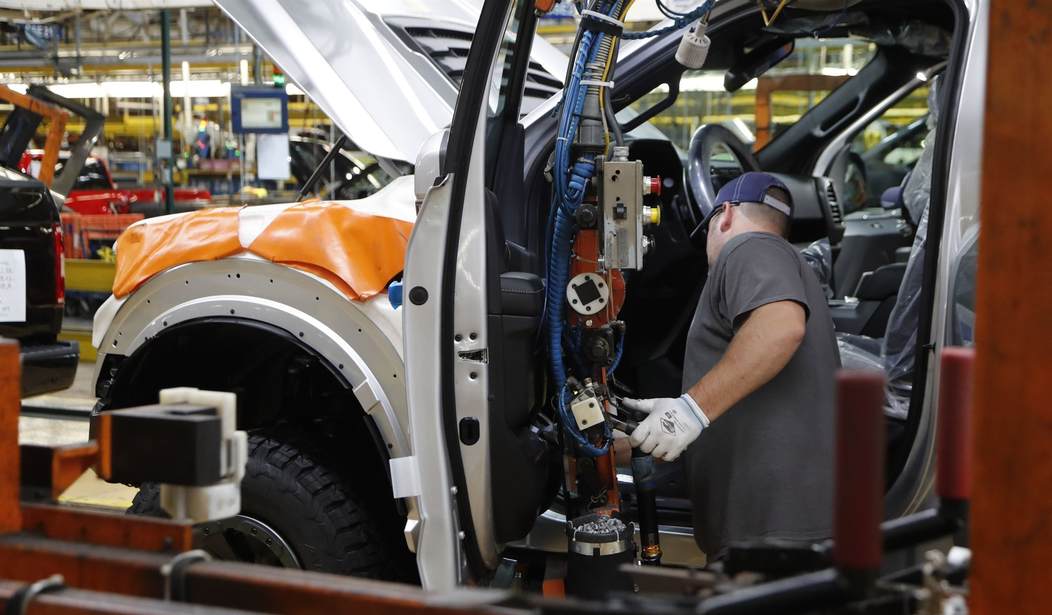
Ford Motor Company is an informative example. While the storied-brand’s trucks may be assembled in a singular factory in places like Missouri or Michigan, the vehicles are made-up of thousands of parts that are built by partner businesses elsewhere. Mining companies provide the raw materials. Other manufacturers supply necessary components like bumpers, upholstery, and lighting.
And much of this broader manufacturing ecosystem consists of small businesses. In fact, nearly three-fourths of all manufacturing firms in the country employ 20 or fewer people. Although the names of these businesses are unknown at most American kitchen tables, they are critical pillars of the larger manufacturing sector that is responsible for roughly 10 percent of the U.S. economy.
For example, Texas-based V&G Dynamic Machine employs 20 people to build precision parts made out of stainless steel, aluminum, copper, and other metals for companies across the country. Softline Brand Partners, headquartered in Minnesota, is supporting large companies like Cargill and Allen Edmonds with sewing services. HM Manufacturing in northern Illinois is a power transmission components provider with dozens of team members that serves industries ranging from aerospace to automated packaging.
Although small business manufacturers like these are not rare, their relative anonymity is a major hurdle to growth. Unlike their large, multi-national competitors, these businesses often lack the networks, marketing budgets, and industry name recognition to easily attract new customers and contracts.
But that is fortunately changing.
Congress is working to extend—and expand—the Tax Cuts and Jobs Act so small businesses have the financial footing to grow operations. The Trump administration is thinning existing regulations to streamline the process for building new manufacturing facilities. And the White House is reworking trade deals to encourage more companies to seek out the American-made products and contract manufacturing capabilities these small businesses are selling.
In parallel, new AI tools and networking platforms are helping to play matchmaker between small manufacturers and potential customers. It’s a win-win. The dynamic fosters more free market competition and drives greater efficiency, while also elevating small businesses across the country who serve as the foundation for our industrial economy.
Returning to “peak” manufacturing in the U.S. is unrealistic given supply chain realities. The world looks very different today than it did in the 1970s, and so does our labor force. But unlocking the power of Main Street manufacturers to meet a growing demand for American-made products is a smart move that will deliver a stronger—and more resilient—modern U.S. economy.
Bret Boyd is CEO of Sustainment, a technology company dedicated to helping American manufacturers thrive, and a partner of the Job Creators Network Foundation.



Join the Conversation
VIP members get the ability to comment on articles.