





New York City has long been celebrated as a city of immigrant neighborhoods. Little Italy, Chinatown, Harlem, Washington Heights, Brighton Beach - these communities tell the story of generations of newcomers who helped build America's largest city while gradually becoming part of it.
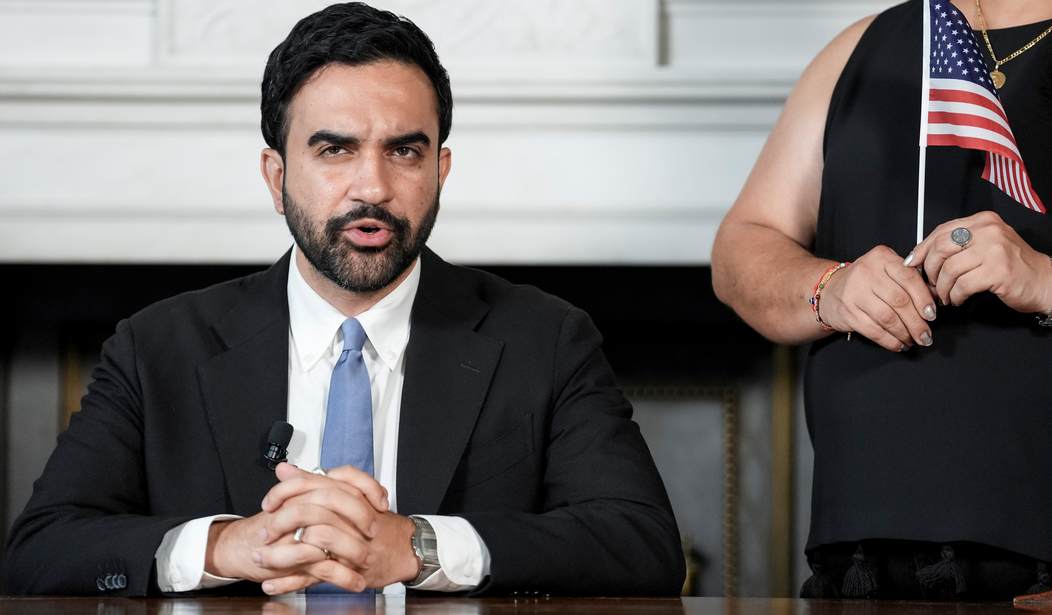
That history makes one omission from Mayor Zohran Mamdani's recently released map of immigrant communities particularly striking.
Little Italy wasn't there.
Instead, the map highlighted a series of neighborhoods identified as "Little Pakistan," "Little Senegal," "Little Yemen" and even "Little Palestine." City Hall defended the project by saying it was never intended to identify religious enclaves but rather neighborhoods with substantial foreign-born populations from around the world.
That explanation raises an obvious question: If the goal was to recognize immigrant communities, how does one leave out perhaps the most iconic immigrant neighborhood in New York City?
Little Italy is more than a tourist destination. It represents one of the defining chapters in the city's history - a reminder of the millions of Italian immigrants who arrived in America, endured discrimination, built businesses and eventually became woven into the fabric of American life. Omitting it while highlighting far newer and, in some cases, unofficial neighborhood designations sends a message, whether intended or not, about which immigrant stories deserve recognition.
The omission also fits a broader pattern.
During the protests of 2020, Mamdani posted a photograph of himself making an obscene gesture toward a statue of Christopher Columbus, accompanied by the caption, "Take it down." Columbus has become a lightning rod in America's culture wars, but for many Italian Americans, his monuments represent more than one historical figure. They symbolize a community that fought for acceptance in a country where Italians were once treated as outsiders.
Seen through that lens, leaving Little Italy off the map appears less like an oversight than another step in distancing the city from parts of its own heritage.
Questions about Mamdani's priorities extend beyond symbolism.
According to reporting by City Journal, New York City's Office for International Affairs recently scheduled a meeting between Commissioner Ana Maria Archila and Iran's ambassador to the United Nations. The meeting was reportedly canceled after intervention from higher authorities, and the State Department reminded city officials that foreign policy is conducted by the federal government, not municipal governments.
The same reporting also alleged that staff within the mayor's international affairs office were instructed to "prioritize diplomatic engagement" with governments viewed as politically aligned with the administration. Among the examples cited were efforts to engage officials connected to Iran and Colombian President Gustavo Petro, as well as participation in conferences hosted by the Party of European Socialists.
Whether one agrees with those priorities or not, they raise legitimate questions about the role a city government should play on the international stage. New York has every reason to maintain relationships with foreign governments and international institutions, particularly as host to the United Nations. But conducting diplomacy based primarily on ideological affinity rather than municipal interests risks blurring the line between city governance and foreign policy.
Supporters dismiss these concerns by arguing that a mayor's authority is limited. They contend that campaign rhetoric often exceeds what any municipal executive can realistically accomplish.
History, however, offers plenty of examples of political leaders using local offices to reshape institutions, influence public culture, and redirect investment long before they gain broader power.
Indeed, some investors have already expressed concern about New York's political direction. If businesses and property owners begin viewing the city as increasingly hostile to investment or economic growth, those perceptions alone can influence where capital flows.
Ultimately, the controversy over Little Italy is not simply about a map. It reflects competing visions of what New York represents.
One vision sees the city as the culmination of generations of immigrants who arrived from around the world and gradually forged a common American identity. The other places greater emphasis on preserving distinct identities and highlighting newer communities while giving less attention to older ones that have largely assimilated.
A map tells a story about what matters, what deserves recognition, and what belongs in a city's collective memory. When one of New York's most historic immigrant neighborhoods disappears from that story, people are right to ask why. Whether intentional or accidental, erasing Little Italy from the city's official narrative risks erasing part of New York's own history. And if history is any guide, today's symbolic omissions often foreshadow tomorrow's political priorities.
Ben Shapiro is a graduate of UCLA and Harvard Law School, host of "The Ben Shapiro Show," and co-founder of Daily Wire+. He is a three-time New York Times bestselling author.
Editor’s Note: Do you enjoy Townhall’s conservative reporting that takes on the radical Left and woke media? Support our work so that we can continue to bring you the truth.
Join Townhall VIP and use promo code FIGHT to receive 60% off your membership.


Join the Conversation
VIP members get the ability to comment on articles.