





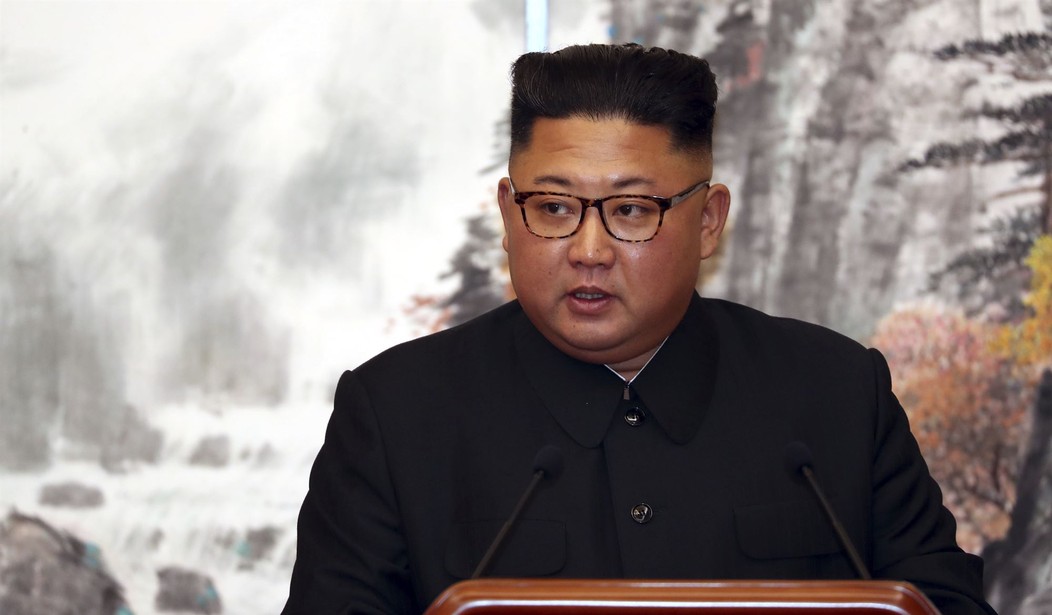
February's Hanoi summit was unquestionably a media bust. When North Korean dictator Kim Jong Un demanded reduced economic and political sanctions but refused to abandon his nuclear weapons, U.S. President Donald Trump shrugged and walked out.
No sensational agreements; no bombastic threats. Sensationalist media had to scramble. For a week or so, snark artists called the summit a diplomatic disaster.
When the historical and technological contexts that shape this phase of the Korean War are considered -- and this is a phase of the Korean War -- hasty damnation is, at best, an exaggeration.
Start with a calendar, then do the math. The Korean War began in June 1950 when North Korea invaded South Korea. The war will turn 69 this year: definitely the menacing senior citizen among globe-threatening armed catastrophes.
The year of 2017 introduced a new diplomatic element -- Donald Trump. When Kim threatened nuclear strikes on South Korea and the U.S., Trump's tough talk, well, trumped Kim's. North Korea tested intercontinental ballistic missiles (ICBMs). American, South Korean and Japanese militaries conducted aggressive "show of force" operations. In September 2017, Kim tested a nuclear device. Trump responded with an executive order that amounted to declaring economic war. Trump's domestic critics called him a madman hellbent on war.
Then in February 2018, North Korea's tune changed. Trump's tweet from March 6, 2018, summarized developments: "Possible progress being made in talks with North Korea. For the first time in many years, a serious effort is being made by all parties concerned. The World is watching and waiting! May be false hope, but the U.S. is ready to go hard in either direction!"
Recommended
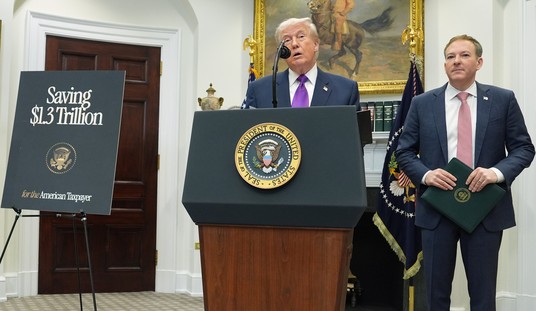
In this historical context, Hanoi may rate as a disappointment in a nascent process that began in March 2018. More likely, Kim's stonewall was a negotiating gambit he had to try. Did anyone expect the summit to end with North Korea agreeing to complete, verifiable, irreversible denuclearization?
North Korea has a record for promising good behavior, then reneging and demanding economic aid. Trump gave North Korea only his time, otherwise, Pyongyang got zilch and nada.
Kim and his cohort may regret their Hanoi stonewall. Their action will further stiffen economic and political sanctions. Financial restrictions hinder North Korean money laundering and the naval embargo has crimps smuggling. When companies are caught violating the sanctions, the businesses and their officers are penalized.
Sanctions aren't perfect but they impose costs on Pyongyang. Over time, the economic stress increases.
New military technology is another noose confronting Kim's tenure in Pyongyang.
Small allied drones have identified his bunkers, tunnels and hardened artillery locations near the DMZ. These structures are vulnerable to smart bombs and armed drone attacks. South Korea's kill chain pre-emptive strike concept challenges North Korea's ability to launch sophisticated surprise attacks. Kill chain combines surveillance and intelligence capabilities with hypersonic missiles and other quick-strike weapons that can destroy missile launch sites and command centers.
U.S. and allied anti-missile technology and sensor systems are improving dramatically. Land- and ship-based anti-ballistic missiles have improved. A new wrinkle affecting North Korea is boost-phase intercept using missile-armed F-35s and "long-loiter" drones armed with high-speed missiles. Drones with advanced sensors can already track missile deployments and launches. Within two years, North Korea might launch an ICBM and, within seconds, see it destroyed in boost phase by a swarm of missile-firing drones.
This week, U.S. envoy for North Korea Stephen Biegun declared that "diplomacy is still very much alive."
Perhaps that's a signal that Kim understands economic sanctions cripple his regime, new surveillance technology can locate his nukes and new military technology may soon render his missile arsenal obsolete.







Join the conversation as a VIP Member