





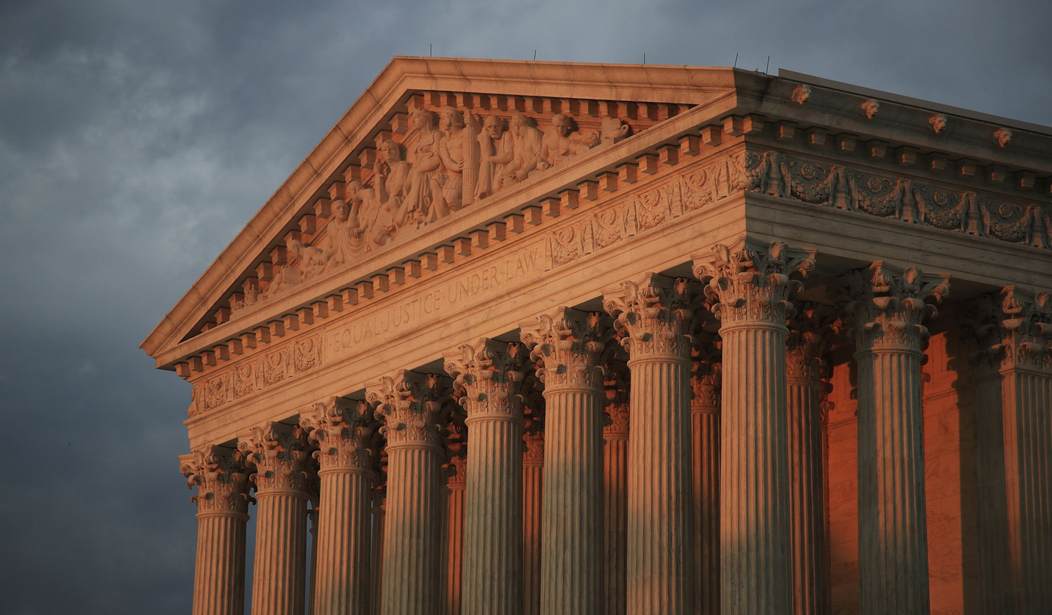
The news out of Washington isn’t promising. Our country is looking at a week that could rival Pearl Harbor in terms of strain placed on the American conscious. Coronavirus is a silent killer, and so our nation had shut down for its own long-term wellbeing.
Yet during this closure, not all businesses have stayed closed. Many are finding innovative ways to safely continue operation, as they claim the now popular term “essential business.” While many think of grocery stores or pharmacies in their local communities, our nation has essential services too. And one of them, the Supreme Court, may have some of its essential service shut down longer than anticipated.
The Supreme Court remains “open” for the time being as Justices work to decide cases where they’ve already heard arguments. But they suspended hearing new oral arguments back in March and have extended that suspension through April. This means cases that could play an essential part in our nation’s recovery have been put on hold until later in the year. With the prospect of a late summer reopen looking likely, our country simply can’t wait that long. We need to get the Supreme Court open as soon as possible.
In the March batch of suspensions was Google v. Oracle, a case some were calling the "Copyright Case of the Century.” At stake are the legal protections for software developers, and more broadly, the copyright protections for everyone. Google's theft of Java code in its development of Android opens the possibility that big businesses can rip off their competitors as they create innovations in the recovery economy that's to follow the pandemic.
Google’s attempt to expand “fair use," a copyright exemption which requires transformative or parodic application, in this case also means that songwriters, novelists, and even businesses open themselves up to intellectual property theft from competitors that look to profit off their work. If Google can steal over 11,000 lines of code, without any alterations, then theft will have new legal protection throughout the economy. That is why creators throughout many different industries have filed amicus briefs against Google in this case.
When the virus has passed us, there is little doubt that many will use their return to freedom to create and innovate. By postponing this hearing, the court is delaying offering reliable legal protection to those who will help heal our society.
With the new April suspension of Supreme Court activity also comes the casualty of Colorado Department of State v. BACA, a case regarding faithless electors in the Electoral College. While already significant for deciding our democratic process, the importance of the case is amplified by the presence of a monumental election year.
The case revolves around the question of states' rights in controlling how their electors vote. In 2016, 10 electors attempted to vote for candidates who did not match the will of their states’ popular vote. Seven were successful, with three denied by their respective states.
It's not clear if states possess this censorship right, or if the Founders intended for that level of independence from electoral college voters, but the importance is undeniable; rogue voters could have incredible impacts on our republic.
Consider that a mere five electoral votes decided the election of 2000. As we enter into a historically contentious election, it's imperative to the integrity of the vote that our populous be informed of how faithless electors may factor into the outcome.
These are simply two cases out of over a dozen that will now wait sine die for their needed conclusions. And so, our nation is left in limbo for the time being, and we can't afford to wait indefinitely. The economy isn't suspended, nor is our presidential election. In the coming weeks, the court will need to come to terms with the fact that suspensions are not an acceptable long-term solution. That may mean holding oral arguments over a digital platform or cutting summer break short.
Like grocery stores and pharmacies for our local communities, the Supreme Court holds a vital role for our nation's health. And with our essential local businesses moving to digital service where possible, our federal court should follow suit. No one is saying this is ideal, but pandemics usually leave little room for convenience. In this unprecedented time, our nation must take unprecedented action, and that means reopening the court as soon as safely possible.
Andrew Langer is president of the Institute for Liberty.

Join the Conversation
VIP members get the ability to comment on articles.