





Editor's Note: This column was co-authored by Jill Homan.
For generations, many communities across America have prayed for opportunities.
They have prayed for jobs that allow parents to provide for their families. They have prayed for unused buildings to become thriving businesses. They have prayed for neighborhoods where young people can build a future instead of feeling compelled to leave in search of one.
Faith teaches us that every person possesses inherent dignity and God-given potential. Yet, too many communities have been denied investment and resources necessary to realize that potential. Economic renewal alone cannot solve every challenge facing a neighborhood, but opportunity remains an essential ingredient for human flourishing.
That is why renewed Opportunity Zone programs (OZs) present an important moment for communities across the country.
The Opportunity Zone program was created to spur economic development and job creation in economically distressed areas through tax incentives that encourage long-term private investment. Since its creation in 2017, approximately 8,764 low-income census tracts across the country have been designated, and more than $84 billion in private capital has been invested. These investments have supported housing developments, commercial projects, manufacturing businesses, and start-up businesses in communities that have too often struggled to attract investment.
The impact of the program has been significant; Opportunity Zones have generated employment growth that was three to 4.5 percent higher than comparable non-OZ communities. Home values in Opportunity Zones have also increased by approximately 3.4 percent, with no observable increase in rents. These outcomes suggest that when investment is directed toward communities that have long lacked access to capital, economic growth and revitalization can follow.
Now, a new chapter is beginning.
The Working Families Tax Cuts Act made OZs permanent, preserving a policy that has already attracted billions of dollars in private investments to underserved communities. Also, the legislation focuses on communities facing the greatest economic challenges, as the new eligible OZs. Starting July 1, 2026, governors will nominate up to 25 percent of their states’ eligible census tracts as OZs. The new OZs would take effect in 2027.
As governors and state executives consider the implementation of new OZs, the program remains a powerful tool for connecting private capital with communities that have often been overlooked by traditional investment markets.
This moment presents an important question: Are communities prepared not simply to receive investment, but to shape it?
Too often, economic development is viewed as something that happens to a community, rather than something that happens in a community. The strongest neighborhoods understand that attracting investment is only the beginning. Long-term success depends on local leadership, community vision, and institutions that can help guide growth in ways that benefit residents.
This is where faith communities have an important role to play.
Churches and faith-based nonprofits are often among the most trusted institutions in underserved neighborhoods. They understand the local needs, know the community leaders, and maintain relationships that can extend across generations. They are uniquely positioned to help ensure investment aligns with community priorities.
Rather than waiting for outside investors to determine what a neighborhood needs, local organizations can begin by identifying projects that would strengthen the community. Is housing too expensive? Are there opportunities to expand health care access? Could vacant properties be turned into useful retail stores serving community demand?
Communities that answer these questions before funds arrive will be better positioned to benefit from future investment.
Equally important is workforce development. New investment can create jobs and business opportunities, but local residents must be prepared to compete for and benefit from them. Churches and community organizations can play a critical role by supporting mentoring programs, job training, entrepreneurship initiatives, and partnerships with schools, employers, and local workforce organizations. The goal should be more than revitalizing buildings; it should be expanding opportunity for the community members.
Community leaders should also become familiar with the Opportunity Zone resources available through federal and state agencies. Understanding whether a neighborhood meets eligibility criteria, learning how OZs function, and identifying potential development opportunities can help communities make informed decisions about their future. The OZ initiative is intended to encourage private investment in underserved communities, and informed local leadership is essential to ensuring that investment produces lasting benefits.
At its heart, this conversation is about more than economics. It is about stewardship.
Scripture reminds us that as the “one blood, one human race,” we are called to seek the success of our communities and to be faithful stewards of the resources entrusted to us. When communities prepare for growth, cultivate local leadership, and embrace new opportunities for investment, they are positioning themselves to transform economic potential into lasting prosperity.
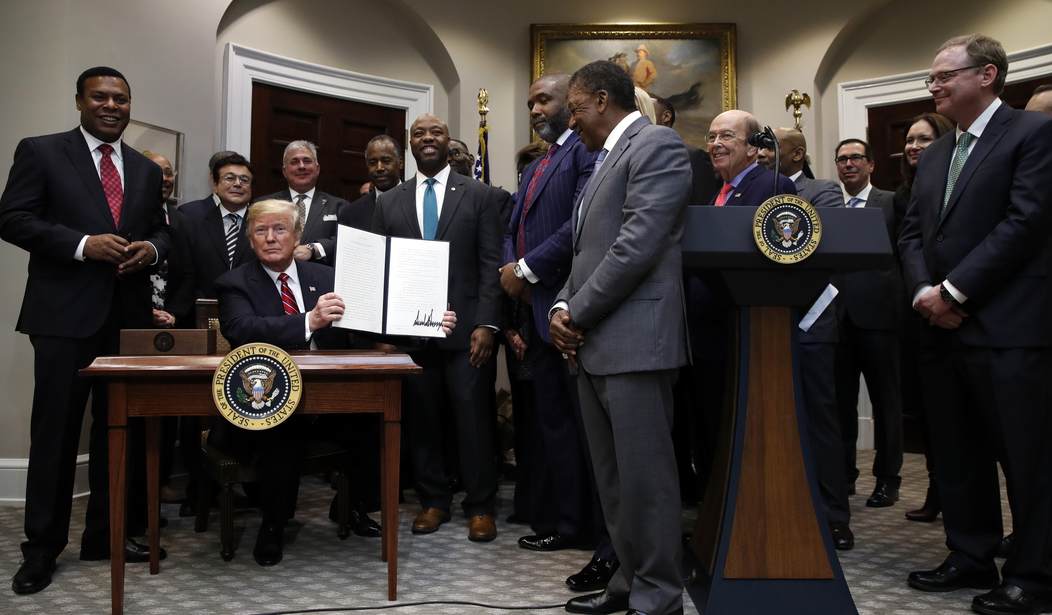
Jeremiah 29:7 calls us to “seek the peace and prosperity of the city” and to pray for its welfare, “because if it prospers, you too will prosper.” That charge speaks directly to the work before us with the next generation of Opportunity Zones. President Trump's Opportunity Zone initiative proves that when government removes barriers and encourages private investment, communities that have been overlooked for generations can experience renewed hope, new opportunities, and lasting prosperity. But capital alone cannot create flourishing neighborhoods. Lasting transformation requires investment paired with vision, leadership, faith, and commitment to serving others.
Dr. Alveda King serves as chair for the American Dream at the America First Policy Institute.
Jill Homan serves as deputy director for Economy and Trade, and campaign director for American Revival at the America First Policy Institute.
Editor's Note: It’s America’s 250th birthday! Help Townhall celebrate the greatest nation in history by honoring its past, defending its present, and preserving its future with reporting you can trust.
Join Townhall VIP and use promo code AMERICA250 to receive 74% off your membership.


Join the Conversation
VIP members get the ability to comment on articles.