





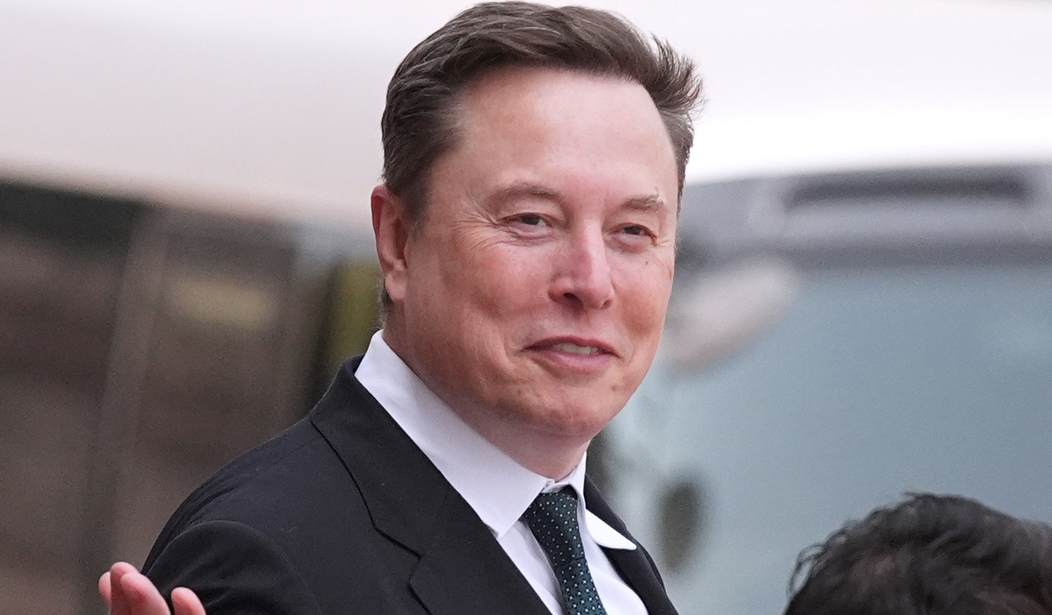
Elon Musk has never been shy about making bold claims. Recently, he suggested that artificial intelligence (AI) and biotechnology could deliver what he described as “Jesus-level” benefits to humanity. What might he have meant by this?
Musk’s Neuralink, a company developing brain-implant technologies, exemplifies his vision: healing physical disabilities, enhancing human cognition and expanding the boundaries of human potential. He went on to suggest that AI applications for paraplegics and others could become what he “might call Jesus-level technologies.” Unsurprisingly, such language draws the attention—and skepticism—of many Christians. Comparing human-engineered technology to the miracles of Jesus Christ is provocative. Yet, while Musk’s rhetoric may overshoot the mark, the underlying idea contains a kernel of truth that warrants reflection.
At its core, Musk’s assertion hinges on the transformative potential of technology. Healing the sick, restoring lost abilities, and even extending human life have long been the stuff of religious aspiration. In Biblical narratives, Jesus, as found in the Biblical Gospels, is the archetype of this healing power: restoring sight to the blind, mobility to the paralyzed, and life to the dead. Human ingenuity in the 21st century appears to be on the cusp of replicating some aspects of those miracles through science and technology. Neural implants, AI-assisted prosthetics, gene therapy, and regenerative medicine offer tangible pathways to restore (or even to potentially improve) human function. For those living with disabilities, these advancements are nothing short of revolutionary.
Therein lies Musk’s partial correctness. Healing (either theistically or technologically) is indeed a desirable outcome. For example, if someone has lost the ability to walk, an AI-guided exoskeleton or a neural implant restoring motor function would be life-altering. Unlike miraculous interventions (rare and unpredictable), technological solutions can be systematically distributed and refined. In this sense, humans are beginning to harness tools that can affect “miracle-like” outcomes. It may not appear to be through divine power, but by ingenuity, research, and relentless experimentation (all of which, incidentally, God gives us the ability to do).
Amidst humanity’s astonishing technological benchmarks, it is important to distinguish between impressive accomplishments and literal Godhood. Healing the body is a profound act, but it does not equate to omniscience, omnipotence, or omnipresence. AI can process vast amounts of data, and biotechnology may one day repair or enhance human physiology. But no matter how sophisticated AI becomes, it cannot embody divine wisdom, transcend God’s eternal nature, or replace the spiritual dimension that defines humanity’s relationship to God.
A crucial distinction should be noted between potential and application. The technologies Musk praises are morally neutral: they can heal, but they could also harm. Gene-editing tools, AI surveillance, and attempted neuro-enhancement carry profound ethical risks. The choices humanity makes in deploying these tools will have eternal consequences—in shaping societies, cultures and human destinies for generations. Technological power increases human responsibility. The ability to “play God” in a limited sense does not absolve us of the moral consequences of our decisions; if anything, it heightens them.
Musk’s words call for reflection on a deeper question: What does it mean to aspire to “Jesus-level” inventions? This is not a call to divinity (“god-making,” thankfully, will never be within our grasp). But the challenge is to align innovation with human flourishing. Healing paralysis, restoring sight, and curing more and more diseases are noble objectives. If pursued responsibly, such innovations can indeed transform lives in ways previously considered miraculous. Yet lessons from history should be frighteningly cautionary: the pursuit of extraordinary power must always be tempered by ethical deliberation, humility and a recognition of the potential for human malevolence.
The miracles of Jesus were more than brute demonstrations of power. They were acts of love, compassion, and moral guidance. Technologies, by contrast, are indifferent: They are tools shaped by the intentions of developers and users. Thus, humanity’s path to “miracle-level” capability is inseparable from the responsibility to act wisely and ethically.
Technology does not exist in a vacuum. The true measures of progress should be more than what we simply can do, but what we should do (and choose to do). The capacity to heal also breeds the desire to enhance—which could lead to hubris or exploitation.
Elon Musk is partially right: AI and biotechnology hold the potential to produce near-miraculous benefits for humanity. But this is not Godhood, nor a “realized divinity.” Our technological triumphs, no matter how impressive, do not confer omnipotence or personal salvation.
Musk is a visionary the likes of whom come along once per century. The favor God has showered on him is certainly beyond his own comprehension. Musk is an innovator, one day likely to be spoken of alongside Edison, Tesla, Bell, or the Wright brothers. But he is not Jesus, nor did he imply that. We, the created, will never eclipse He, the Creator.
But in a sense, Musk’s recent remarks were right: Technology now does some things that once seemed miraculous. Whether humanity will wield AI wisely remains an open question. The answer will echo well beyond the laboratories and boardrooms where these innovations are born.
A globe of hard drives and servers daisy-chained together, and “Jesus-level” technology is not about us becoming God; it is about responsibly participating in creation, mindful of the eternal implications of our choices.
Dr. Alex McFarland is an apologetics evangelist who has spoken at hundreds of locations throughout the U.S. and internationally. He is heard live on “Exploring the Word,” airing daily on 200+ radio stations across the country. “The Alex McFarland Show” airs weekly on NRBTV, providing Biblically faithful TV and discussion on current events affecting our nation. His newest book, “100 Bible Questions and Answers on Prophecy and the End Times,” is available now.
Editor's Note: Do you enjoy Townhall's conservative reporting that takes on the radical Left and woke media? Support our work so that we can continue to bring you the truth.
Join Townhall VIP and use promo code FIGHT to receive 60% off your membership.


Join the Conversation
VIP members get the ability to comment on articles.