





Cheating as a way of life.
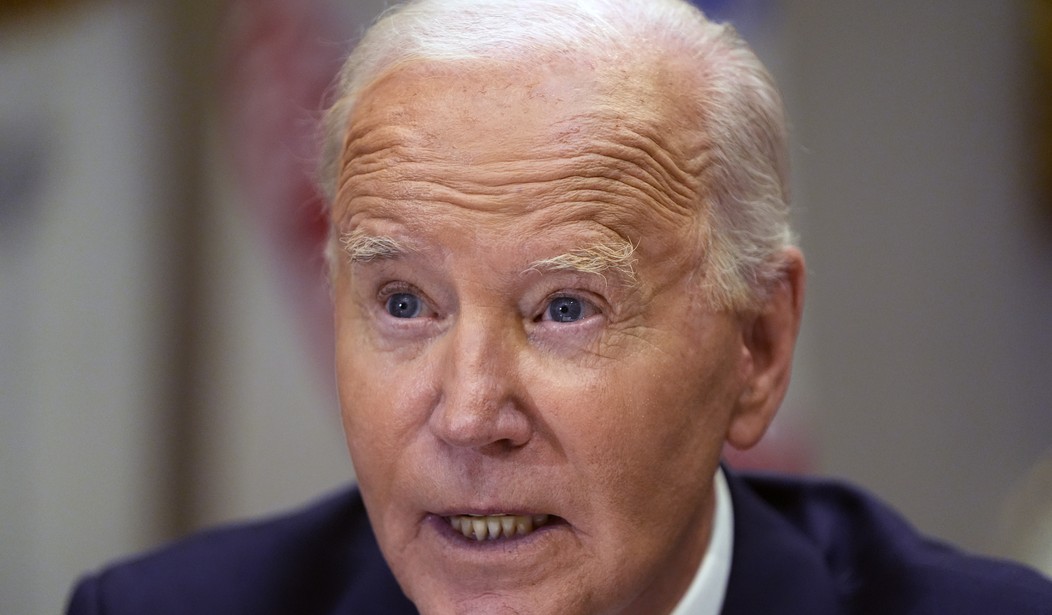
We are surrounded by cheating, some legal and some otherwise. Baseball has become boring without spitballs and corked bats. I am still appalled when I hear people saying that Florida counted 95 percent of its ballots on a recent Tuesday in only a few hours, while California took days to do the same. HELLO! California intentionally slow-walks its results to massage them, as it recently did with the LA mayoral primary. They had to get rid of the independent troublemaker, Spencer Pratt. Thus, they needed to know how many votes they had to manufacture, where they would introduce them, and how they would push him into third place and irrelevance for the next 20 years. The cheating there was intentional, as it is in many cases. What they did to Donald Trump was cheating, lying, and misdirecting, in order to prevent his return to the White House. For the first time in my lifetime, the election in 2020 took days to complete so as to flip states that were for Trump Tuesday night and went for Biden when enough votes had been invented. One can say that the 2020 election was kosher, but nobody can explain how a person who barely campaigned and was already not fully functional received more than 10 million more votes than Barack Obama. How was Trump up 800,000 votes at 64 percent counted in Pennsylvania and then lost a few days later? Call the Guinness Book of Records because such a thing has never happened before.
Cheating is what people do if they figure that they won’t get caught. It’s a near iron-clad rule that in Israel, cops don’t give tickets for up to 10 kilometers per hour over the speed limit, due to the factor of error and judges not accepting small violations. My wife just got a small refund from Apple for slowing down Apple 6-era phones so as to get people to move on to more advanced devices. It’s a class-action suit with a 10 million shekel total payout. Why did Apple do it? Because they could technically do it and assumed that the law would never catch up with them. A high-trust society assumes that everyone pays his fare to get on a bus. A low-trust society has New York City spending endless millions — unsuccessfully — in order to prevent fare jumpers on the subway.
A functional society does not need to put toothpaste and brushes behind locked glass doors. But we are losing our functionality as the real foundation of good and proper behavior — religiously driven values — has eroded. One can try to take care of the problem at the other end. A branch of Kroger in Las Vegas completely redid its interior so as to make it harder to steal small items that one can hide in one's clothes. Cameras, anti-theft devices, and the glass cabinets all say one thing: crime is out of control, and we need to stop what the people themselves will not prevent. A friend of mine told me long ago that at the Israel Diamond Exchange, it was customary for one person to put out his diamonds and then get up from the table. It was to show trust: I can’t recall how many stones I put out and which they are. I completely trust you that you will not steal or switch diamonds in my absence.
When people no longer act as their own gatekeepers for good behavior, then the stopping force must come from the other end; it is generally cumbersome, inefficient, and not 100 percent successful. Are you old enough to remember when you could go to the gate to meet your loved ones the second they deplaned? Do you remember when stores had all their goods out for your handling so that you didn’t have to call over an “associate” or “team member” to unlock the laundry detergent? After four years in Boston, I moved to Madison, Wisconsin. On a fine Fall afternoon, I went biking with a friend. Along the trail was a house where people stopped to buy lemonade. They would throw their bikes on the grass and run inside. Only a few months removed from Harvard’s campus, where a bike was stolen every couple of hours, I couldn’t believe what I was witnessing. “Aren’t they afraid that someone will grab their bikes?” “Nope.” There was a shoe store near there which, at the time, did not take credit cards. Disappointed shoppers said that they did not carry enough cash. “No problem. Take the shoes home and send us a check.” They claimed that they had virtually no losses. Those were the days, my friends.
When you try to work the behavior spectrum from the punishment end, life becomes less pleasant. We now spend enormous amounts of time going through metal detectors, taking off shoes, belts, and our personal humanity. You are assumed guilty until proven otherwise. You too have to go through the New York turnstiles because some folks don’t want to pay for services the city offers. There is a demented idea that was flying around during the George Floyd riots: the insurance companies will pay. Firstly, that is not always true. Secondly, the payment may not be enough to go back into business. Finally, many simply take the dough and retire to citizen-friendly Florida. Around half (40 in number) of destroyed businesses in Minnesota have not been rebuilt. It took parts of LA decades to recover from the 1992 riots. If a person leaves home and goes through multiple stages of security, he also starts not to trust anybody. If I saw someone on the side of the road, I would assume that it is a gimmick to get me to stop out of the goodness of my heart and then steal my car or my wallet. In the days of old, we would have stopped to help our fellow man. Now we wonder what they have planned for us.
Even in not very holy societies, religious values can permeate the people. One does not have to be a religiously observant person to know not to steal, not to lie, not to mistreat others. But as we move generation after generation away from religious foundations and into some type of moral relativism, society loses its trust and becomes reactive. Some professors asked college students a while back about morality, and most said that it was each to his own. I am not expecting people to be perfect, to adhere to the speed limit to the exact mileage, or refuse a tax break that some people might suggest is questionable. The problem we have in the West is a complete breakdown of values and, with them, the trust needed to have a working society. I remember when we were in London years ago and, as bus riders, had to use a prepaid card to travel. The driver was in a hermetically sealed chamber around his chair and steering wheel. At the same time, Israeli bus drivers were balancing driving, making change, punching passengers’ tickets, and talking to the regulars. On the one hand, the London approach was more efficient, and Israel has adapted it. On the other hand, the Israeli bus driver was one with his riders; now he is disconnected from those on his bus and their lives.
A society that has all of its goods behind glass will go on but will not succeed. There will not be the patience or manpower for people to shop in amounts like they did in the past. Fauci could misdirect because he was sure that he would get away with it. He won't spend a day in jail. Democrats cheat because winning isn’t everything; it’s the only thing. Republicans better figure that one out.
Editor’s Note: The 2026 Midterms will determine the fate of President Trump’s America First agenda. Republicans must maintain control of both chambers of Congress.
Help Townhall continue to report on the Democrats’ radicalism and inform voters as our nation faces a crossroads. Join Townhall VIP and use promo code FIGHT to receive 60% off your membership.


Join the Conversation
VIP members get the ability to comment on articles.