





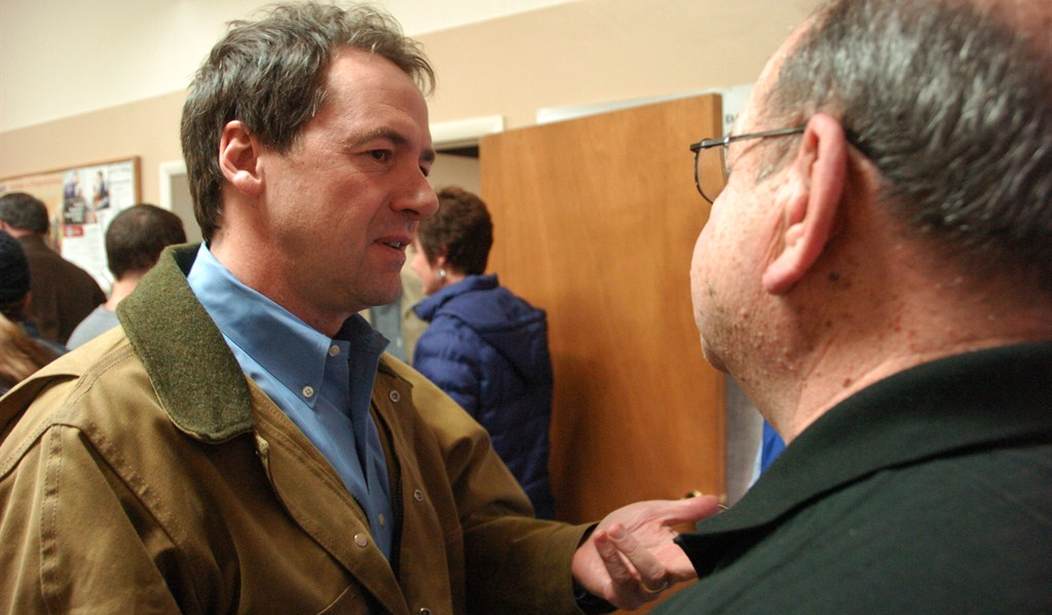
On Monday, Montana became the 30th state to expand Medicaid coverage. Democratic Governor Steve Bullock said enrollment would begin sometime later this fall, with coverage starting by the start of next year (via AP):
The governor's office has said 70,000 people or more would be eligible for coverage under the expansion, but legislative fiscal analysts predicted about 45,700 would actually participate over the next four years.Medicaid expansion was a key part of President Barack Obama's health care reform law, but a U.S. Supreme Court ruling in 2012 made it optional for states.
So far, 29 other states and the District of Columbia have expanded their programs. Six of those states received federal waivers allowing them flexibility in designing their programs.
The aim is to expand eligibility to residents with incomes at or below 138 percent of the federal poverty level, about $16,000 per year for an individual and $33,000 for a family of four.
Bullock's original expansion plan stalled in this year's legislative session and was replaced by a compromise bill sponsored by Sen. Ed Buttrey, R-Great Falls.
[…]
The plan also requires that patients make the maximum copayments allowed under federal law, though copayments and premium payments combined can't exceed 5 percent of a family's household income.
[…]
Obama administration officials in May said they had concerns with the plan, but were willing to work with the state.
Recommended
First, expanding Medicaid doesn’t help the working poor, which what this program was originally intended do. It adds childless, able-bodied adults into the mix–of which nearly half don’t work. Additionally, over a third of the new recipients have a criminal record.
Second, this is a government program with government projections on enrollment and expenditure, meaning that there’s a 99.9 percent probability that both are going to be way off. The majority of states that have expanded this coverage have gone way past their original projections. As such, Medicaid has become a budget buster, sometimes causing states to find two to three dollars in cuts just to save one dollar in Medicaid spending.
Third, the program isn’t flexible and access is being limited. The Foundation for Government Accountability has been thorough about the impacts of Medicaid expansion. In Virginia, almost a quarter of doctors aren’t accepting new Medicaid patients. The proposed expansion in the old Dominion would have constituted a $1.3 billion tax increase to cover 400,000 able-bodied adults who are over the age of 18. Children are already covered. Luckily, the proposed expansion seems dead in the water after Republicans maintained control of the state legislature in the recent elections.

Lastly, a 2011 University of Virginia study found that surgical Medicaid patients are 13 percent more likely to die than those without insurance. Avik Roy wrote in Forbes that of the 893,658 surgical operations between 2003-2007, with normalized results for age, gender, income, geographical locations, operation, and 30 diseases–Medicaid patients were twice as likely to die before leaving the hospital than Americans who have private insurance:
Patients on Medicare were 45% more likely to die than those with private insurance; the uninsured were 74% more likely; and Medicaid patients 93% more likely. That is to say, despite the fact that we will soon spend more than $500 billion a year on Medicaid, Medicaid beneficiaries, on average, fared worse than those with no insurance at all.
Avik called the program is a “humanitarian catastrophe,” that’s only an integral part of an unpopular health care law that was rammed through by President Obama and the Democratic Party. Oh, and did we mention that premiums are going up?


If you want to see how Medicaid is a budget buster please read Jason Hart’s piece on how Gov. Kasich’s decision to expand the program is going to torpedo the state’s finances (via Watchdog):
Medicaid has grown rapidly in Ohio because Kasich added working-age adults with no kids and no disabilities to the welfare program to bring billions in new Obamacare spending to the state.Ohio Medicaid enrollment rocketed from 2.2 million when Kasich took office in 2011 to three million when Kasich’s first term ended in January — an increase of 800,000 welfare recipients in four years.
With the state slowly rebounding from the 2007-09 recession, Ohio spent $17.7 billion on its Medicaid program for the aged, blind, disabled, children, pregnant women and impoverished families in fiscal 2011.
As a result of Kasich’s Obamacare expansion, Ohio Medicaid spending ballooned to $23.5 billion in fiscal year 2015 — a $5.8 billion bigger price tag than just four years earlier.
Ohio Medicaid spending is expected to total $28.2 billion in 2017, a 59 percent increase from when Kasich took office and an average annual increase of 9.8 percent during Kasich’s first six years as governor.
Oh, good grief.












Join the conversation as a VIP Member