




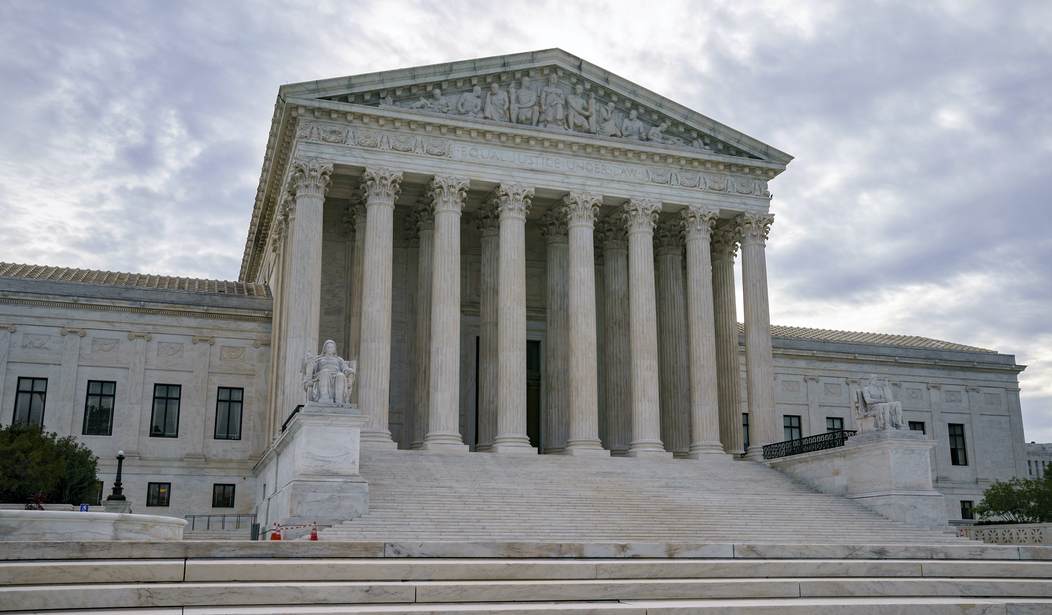
This week, the United States Supreme Court ordered a lower court in Massachusetts to vacate its ruling that upheld a state gun control law. The case was directed to a lower court to be reconsidered.
The case, Morin v. Lyver, surrounded a plaintiff who was prohibited from obtaining a new firearm license due to the fact that he had two out-of-state misdemeanor convictions for weapons possession. The state law imposes a lifetime ban on purchasing handguns for anyone convicted of nonviolent misdemeanors involving the possession of guns. The law includes the need for a license to purchase or possess a pistol.
“The judgment is vacated, and the case is remanded to the United States Court of Appeals for the First Circuit for further consideration in light of New York State Rifle & Pistol Assn., Inc. v. Bruen,” the order from the Supreme Court said.
This year, in a 6-3 ruling, the Supreme Court struck down a New York gun law that required residents to provide “proper cause” to obtain a concealed handgun permit. Justice Clarence Thomas wrote the majority opinion, pointing out that the right to bear arms should not be subject to a different set of rules apart from the other rights detailed in the Bill of Rights.
The constitutional right to bear arms in public for self defense is not “a second-class right, subject to an entirely different body of rules than the other Bill of Rights guarantees.” We know of no other constitutional right that an individual may exercise only after demonstrating to government officers some special need. That is not how the First Amendment works when it comes to unpopular speech or the free exercise of religion. It is not how the Sixth Amendment works when it comes to a defendant’s right to confront the witnesses against him. And it is not how the Second Amendment works when it comes to public carry for self defense. New York’s proper-cause requirement violates the Fourteenth Amendment in that it prevents law-abiding citizens with ordinary self-defense needs from exercising their right to keep and bear arms. We therefore reverse the judgment of the Court of Appeals and remand the case for further proceedings consistent with this opinion.
Recommended

This week, a federal judge in Syracuse struck down key parts of a New York gun law that took effect in the wake of the Supreme Court’s ruling. The law restricted who can carry a handgun in public, where handguns can be carried and where firearms can be purchased.
Judge Glenn Suddbaby of the U.S. District Court for the Northern District of New York said in the ruling that the state “further entrenched itself as a shall-not-issue jurisdiction” and “further reduced a first-class constitutional right to bear arms in public for self defense…into a mere request.”
In the ruling, Suddbaby explained that certain parts of the law went too far, such as a requirement for gun license applicants to turn over information about their social media accounts as part of a “character and conduct” screening.







Join the conversation as a VIP Member