





Are mass shootings really on the rise in America? Will an increased focus on mental health help prevent mass murders? Would expanded background checks really make a difference? The answer to all of these questions, according to author and Northeastern University criminology professor James Alan Fox, is no.
In the study, “Mass Shootings in America: Moving Beyond Newtown,” Fox and coauthor Monica DeLateur, analyzed research and important statistics to debunk many common myths surrounding mass shootings—many of which were the subject of proposals from the Obama administration and Democrats in the wake of the Newtown massacre.
“Public discourse is grounded in myth and misunderstanding about the nature of the offense and those who perpetrate it,” Fox writes in the journal Homicide Studies, where the research was published. “Without minimizing the pain and suffering of the hundreds of those who have been victimized in recent attacks, the facts clearly say that there has been no increase in mass shootings and certainly no epidemic.”
Some of the study’s findings include:
- Mass murderers snap and kill randomly - Mass murderers typically plan their assaults days, weeks, or months in advance. Their motives are most typically revenge, power, loyalty, terror, and profit.
- Mass shootings are on the rise - According to FBI data, over the past few decades there has been an average of 20 mass shootings a year in the U.S.
- Violent entertainment, especially video games are causally linked to mass murder - Scientists have not found a causal link between video games and mass murder; violent video gaming may be a symptom and not a cause of the incidents.
- There are telltale signs that can help us to identify mass murderers before they act - Murderers tend to be male Caucasians with psychological issues, but these characteristics apply to a very large portion of the population.
- Widening the availability of mental-health services will allow unstable individuals to get the treatment they need and decrease mass murders- Increasing mental health facilities may not reach those on the fringe who would turn to murder as many see the blame residing in others, not themselves.
- Enhanced background checks will keep dangerous weapons out of the hands of murderers - A recent examination of 93 mass shootings from 2009 through September 2013, conducted by Mayors Against Illegal Guns (2013), found no indication that any of the assailants were prohibited by federal law from possessing firearms because of mental illness.
- Having armed guards at schools will protect students from active shooters - 28% of public schools already employ armed security personal regularly; there is no way for armed guards to sufficiently protect every single one of their students in an event of a mass shooting.
The Washington Examiner’s Paul Bedard also points out one more important myth the study addresses:
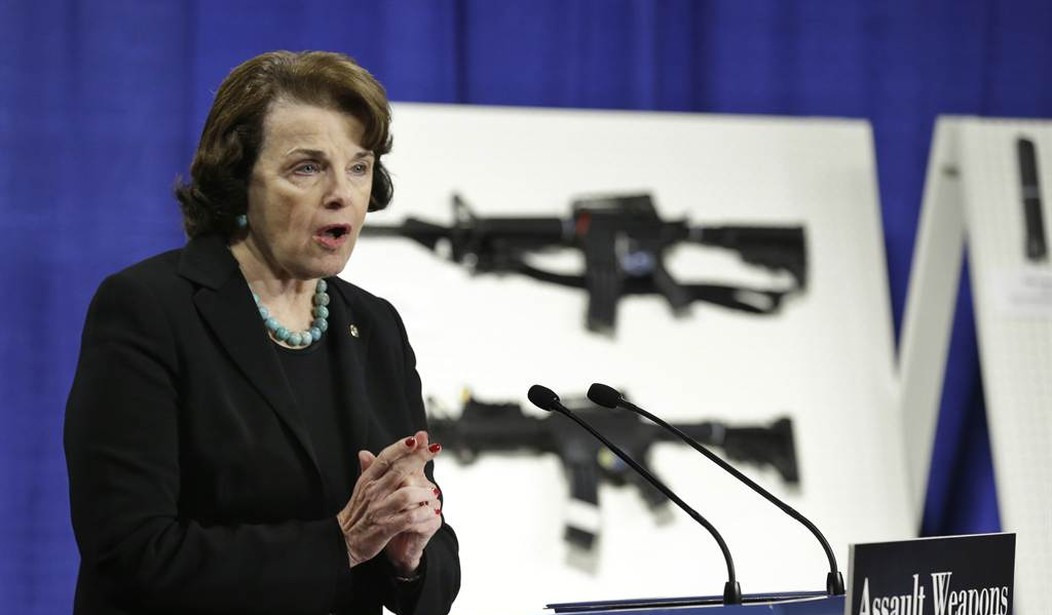
— An assault weapons ban would work. They found that the typical weapon used is a pistol, not an “assault weapon” like the semi-automatic AR-15 rifle. Assault weapons were used in 24.6 percent of mass shootings, handguns in 47.9 percent. And limiting the size of magazines weapons can carry wouldn’t help, they said, because any ban would impact new sales and “there is an ample supply of large capacity magazines already in circulation.”
So, are there any real solutions out there that would curb mass shootings in our society? Yes, but none our freedom-loving nation would likely adopt anytime soon, the researchers note.
“Taking a nibble out of the risk of mass murder, however, small, would still be a worthy goal for the nation,” the authors state. “However…eliminating the risk of mass murder would involve extreme steps that we are unable or unwilling to take—abolishing the Second Amendment, achieving full employment, restoring our sense of community, and rounding up anyone who looks or acts at all suspicious. Mass murder may just be a price we must pay for living in a society where personal freedom is so highly valued.”



Join the Conversation
VIP members get the ability to comment on articles.