





Are we headed for a healthcare "disaster" due to Trump's Obamacare "sabotage"? On one hand, insurers (and other analysts) have been nearly unanimous in warning about the impacts of having their taxpayer-funded "stabilization" funds suddenly yanked away: An already-volatile individual healthcare market will be thrown into deeper chaos -- as financial losses associated with Obamacare's unsustainable risk pools are magnified, forcing carriers to compensate with even bigger premium spikes. In other words, the failing law's excruciating death spiral will gain speed, hurting more people in the process.
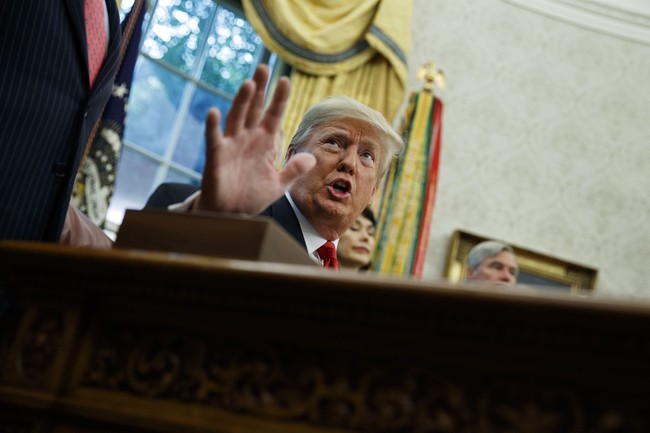
Democrats and other Obamacare apologists will try to make you believe that Trump's action "sabotaged" a law that was working, but that's risible revisionism. Obamacare was failing even when Obama's never-appropriated slush fund was dutifully propping up the insurers. The law's fundamental structure was causing its collapse, from soaring rates to fleeing providers, long before Trump shocked everyone (including many within the insurance industry) by winning the election. He inherited this promise-shattering, dysfunctional mess. That said, his decision to revoke the unlawful payments will exacerbate sticker shock and amplify flaws. Or at least that the conventional wisdom, backed by some early evidence. But conservative healthcare wonk Avik Roy thinks that's all wrong:
Far from “sabotaging” or “gutting” Obamacare, as various organs have claimed, taken together these orders will improve the marketplace.
— Avik Roy (@Avik) October 15, 2017
In his expansive explainer piece at Forbes, Roy summarizes last week's orders (his descriptions of the less-discussed moves rolled out on Thursday are especially valuable), then explains how this combination of the president's actions could lead to superior outcomes versus the status quo:
On Thursday, President Trump issued an executive order covering three areas: (1) allowing small businesses to pool together to purchase health insurance; (2) restoring the ability of individuals to buy short-term plans exempt from some Obamacare rules; and (3) examining ways to make employer-funded health savings accounts more flexible. On Friday, the President announced that he would no longer be disbursing the cost-sharing subsidies that I discussed above, until Congress appropriates the funds for them...Insurers are required, under the Affordable Care Act, to offer plans with very low deductibles to those with incomes below 250 percent of the Federal Poverty Level, amounting to $30,150 for childless adults and $61,500 for a family of four. The cost-sharing subsidies are designed to pay insurers for the extra cost of providing that kind of coverage.
Without the cost-sharing subsidies, insurers will have to cover these individuals at a loss; nearly all have said that they will increase premiums on those above 250 percent of FPL in order to make up the difference. Again, as with the short-term limited-duration plans, the Obamacare premium subsidies will expand to cover all of this difference for nearly all exchange enrollees...Friday’s decision to end the disbursement of illegal cost-sharing subsidies, until Congress appropriates the money for them. This should not be thought of as a health policy decision, but rather as a constitutional one. It is simply illegal for the federal government to spend money that Congress hasn’t authorized it to spend.
Recommended
He also tweeted a few data points from the Congressional Budget Office that projected upsides to canceling the cost-sharing subsidies known as CSR's. In his concluding passage, Roy echoes the call for Congressional action that I offered in my supportive analysis of President Trump's controversial decision: "What the White House has done, in effect, is to send the ball back into Congress’ court, where Congress has the authority—and the interest—in appropriating funding for cost-sharing subsidies. They should do so, if they can pair that funding with other reforms that would provide relief to those facing unaffordable Obamacare premiums. Is this Congress capable of doing that? The jury is out."
Indeed it is. Banking on the legislative branch to function effectively is a dodgy proposition, but it's the only constitutional proposition on the table here -- a point that much of the media coverage of this story has downplayed or omitted. Liberal law professor Jonathan Turley (whose consistency in opposing bipartisan executive overreach has been admirable to witness and who represented House Republicans in their successful lawsuit) appeared on Fox News to highlight what should be the only relevant point in this debate -- namely, that a federal court ruling struck down Obama's end-run around Congress as illegal and violated the constitution's separation of powers:
On Media Buzz, our panel got into a debate about the impact of Trump's decision on the CSR's (skip ahead to just past the 33-minute mark), all of which focused on the policy outcomes. I felt compelled to interrupt and simply draw attention to the elementary point that the canceled payments were illegal. Constitutionality should not be a pesky afterthought, despite the misplaced emphasis of media coverage and Democratic complaints, which frequently coincide. I'll leave you with this piece of framing, followed by a brisk, bruising rebuttal from The Federalist's Ben Domenech:
Nailed it ?? pic.twitter.com/PBHsWiinLV
— Omri Ceren (@omriceren) October 13, 2017
Subsidies were for insurers.
— Ben Domenech (@bdomenech) October 13, 2017
Ruled illegal by a federal judge.
Medicaid covers the poor.
This is CNN. https://t.co/3H4vgFmGdK






Join the conversation as a VIP Member