



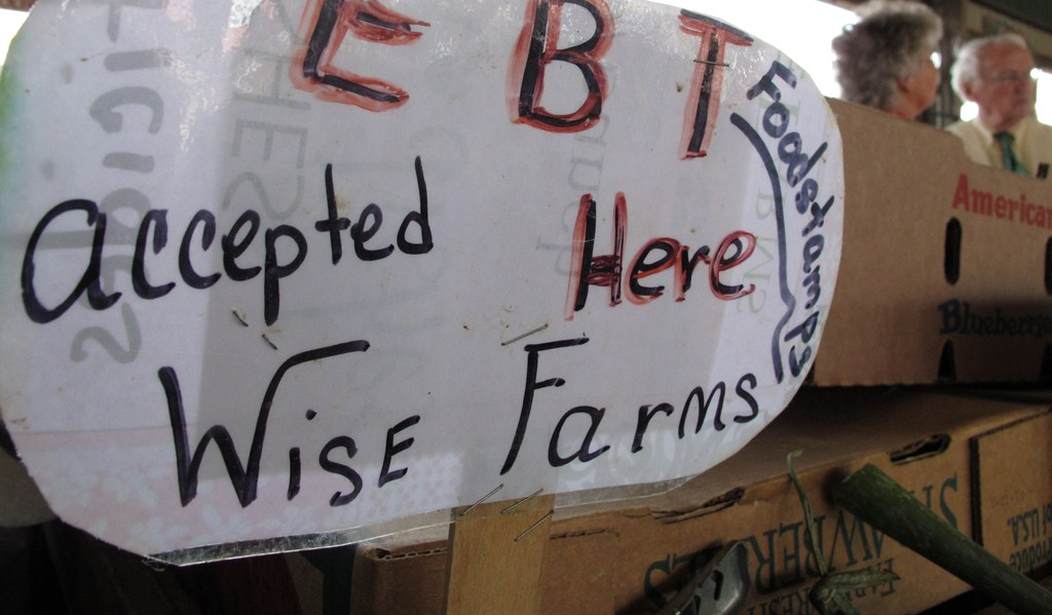
American Enterprise Institute scholar Robert Doar testified before the House Committee on Agriculture recently to examine this exact question. Doar notes that changes in the SNAP program that took place during this time period may disincentivize work requirements - and keep SNAP participation among working-age population artificially high.
As Doar notes:
In the four years following the end of the downturn in 2009, the number of SNAP recipients increased by 7.3 million. Moreover, the percentage of the population receiving food stamps increased from 13 percent to 15 percent. To give perspective on this number, we can compare the recent recovery with the recovery after the recession of the 1980’s, whose duration and unemployment levels are most comparable. Adjusting for population, in the four years following the 1981-82 recession, there was a 12.5 percent decline in food stamp recipients. In the four years following the 2007-09 recession, SNAP recipients increased by 15.6 percent. Were this recent recovery to have behaved similarly to that of the 1980’s, by 2013 only 11.5 percent of the population would have been receiving SNAP benefits: 36 million individuals as opposed to 47.6 million. That is not a small difference.

By itself, SNAP benefits may not be enough to reduce the incentive for a recipient to go to work, or to move from part-time to full-time regular employment, but when combined with unreported earnings or other assistance programs -- perhaps most notably unemployment insurance benefits – the program does appear to allow a significant number of adult recipients to remain out of work longer than they might otherwise. Without some effort to require these SNAP recipients to participate in employment programs such as those offered under TANF, I fear that the number of non-working, nonelderly, nondisabled SNAP recipients will remain high.

The SNAP program is actually one of the most helpful and targeted of our federal welfare state program. But as said by Doar, who a former SNAP overseer in his time in New York State government, the program has to be viewed as a piece of the overall safety net, and the incentives it provides in tandem with other programs may be harmful. The post-recession increase in utilization of the SNAP program has to be viewed as a new and unique - and possibly detrimental - phenomenon.













Join the conversation as a VIP Member