


Editor's note: This column was authored by Jacob Richards.
According to a September poll conducted by Politico and Harvard, 85 percent of Republicans believe that free trade has cost more American jobs than it has created. Under Trump’s influence, opposition to free trade among Republicans now outpaces Democrats, only 54 percent of whom believe trade has been harmful.
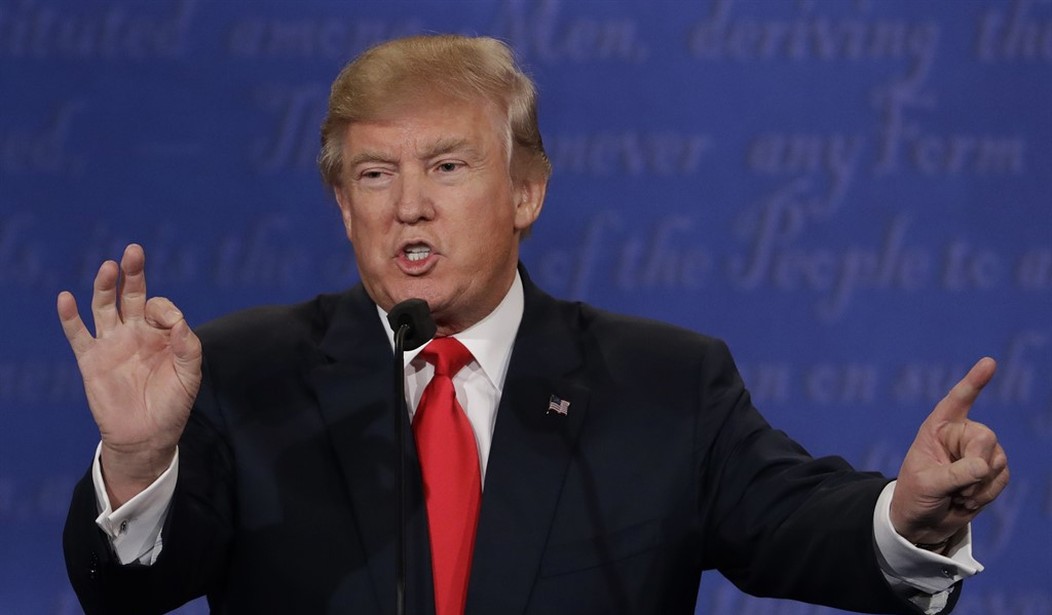
One of Donald Trump’s core talking points is his opposition to free trade. Trump has insisted that trade deals, most notably the North American Free Trade Agreement (NAFTA), have harmed the American economy. On this issue, he represents a drastic departure from the Republican norm, even going so far as to praise self-described socialist and Democratic presidential candidate Bernie Sanders’ protectionist trade views.
Trump asserts that if elected, he will craft “better deals”, and that the existing ones are detrimental to American workers. He’s called NAFTA a “total disaster”, alleging that it has resulted in resources and jobs fleeing south of the border to Mexico, leaving Americans permanently unemployed.
Such claims may be politically expedient, but they are premised on misinformation. Those who advance the “NAFTA kills jobs” narrative ignore the fact that NAFTA had no statistically significant influence on job growth. According to data from the Bureau of Labor and Statistics, from 1980 to 1993, in the 13 years prior to NAFTA, the American economy added a net 21.4 million jobs, a growth of 23.6 percent. In the 13 years after NAFTA, from 1994 to 2007, the economy grew by 25.6 million jobs, or 22.8 percent. If NAFTA had really been a horrific job killer, a substantial dip in job creation would be expected.
Commerce between the United States and Mexico tripled in the wake of NAFTA, and not all in the form of cheap imports from Mexico. American exports also soared, increasing by 104 percent to Mexico and Canada from 1993 to 2000.
Recommended
Furthermore, the decline in the total number of American manufacturing jobs did not occur as a result of NAFTA. In fact, in the first five years after NAFTA, America experienced a net gain of half a million manufacturing jobs. The number of Americans employed in the manufacturing industry hit its peak in 1979, meaning that the long-term decline began more than a decade before NAFTA and is attributable mainly to technological advances.
It is worth noting that the manufacturing industry itself grew substantially in the decade after NAFTA – it just did so while employing fewer people. In the decade after NAFTA, US manufacturing output rose overall by a whopping 41 percent.
As manufacturing is automated, it becomes cheaper, safer, and more efficient. It’s a classic example of what economist Joseph Schumpeter called creative destruction; new innovations disrupt the existing market and the makeup of available jobs changes. As less human workers are needed in manufacturing, their labor is freed up for productive use in other sectors.
There are individuals and communities who are hurt by these shifts in the manufacturing industry. But their jobs are destroyed by innovation, not trade, and they’re not coming back — even if Trump lived up to his promise to force companies like Apple to make their products in America.
The manufacturing sector is becoming a less promising career path, but free trade is not the culprit. Critics of trade incorrectly diagnose the cause of the shift in American manufacturing employment, and ignore the obvious benefits of trade, namely, more products at lower prices for consumers and an expanded market for producers. Trump’s proposed 45% tariff on Chinese imports would function as a regressive tax on Americans, most immediately impacting those who wouldn’t be able to make ends meet when the increased prices on imported goods were passed on to consumers.
If leaders want to help those displaced by the decline in manufacturing jobs, they should focus on promoting policies that encourage economic growth and new opportunities, rather than engaging in counterproductive attempts to recreate jobs that are lost forever due to evolving market conditions.
Jacob Richards is a senior studying political science at Arizona Christian University. He is a Young Voices Advocate.







Join the conversation as a VIP Member