





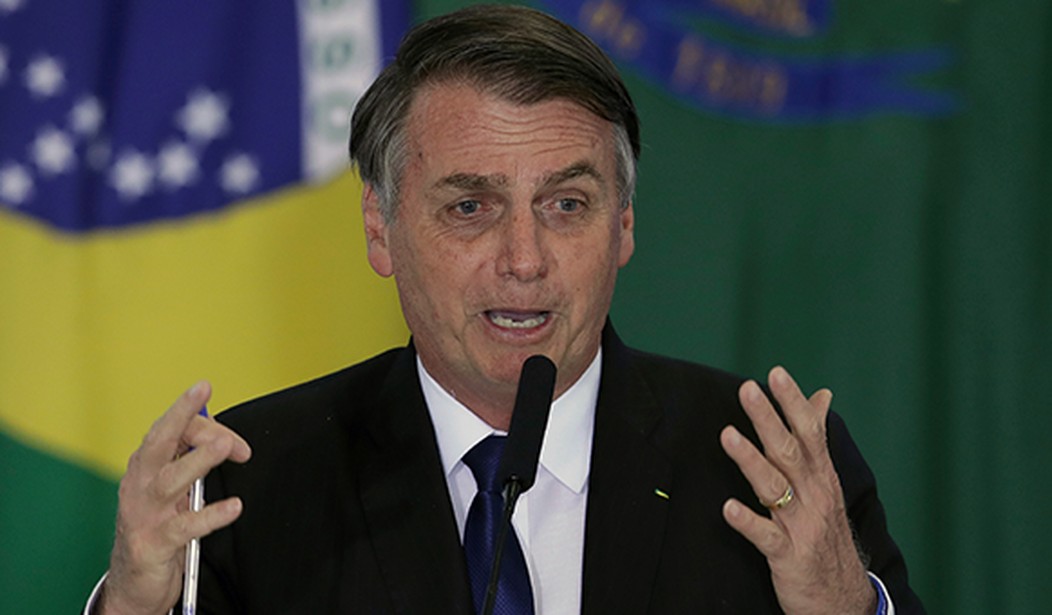
On March 5, 2021, the Guardian’s editorial team made a scathing attack on Brazilian President Jair Bolsonaro in an article titled “The Guardian view on Jair Bolsonaro: a danger to Brazil, and the world.”
This is the latest of a string of attacks that the mainstream media (MSM) have carried out on Bolsonaro ever since he became President. The MSM and radical environmentalists have often criticized, and even ostracized him.
In the past, many of these criticisms were aimed at his policy decisions on natural resource utilization. The Guardian, in 2021, called Biden’s negotiations with Bolsonaro “Negotiating with your worst enemy.”
Justifying their hatred based on a concoction of pseudo-scientific claims on climate change and radical green ethics, they even called for the removal of Bolsonaro from office. His departure, in their perspective, would be “good for the planet.”
But is Bolsarano’s strategy to prioritize natural resource use, especially fossil fuels, really bad for Brazil?
Brazil: Morally Right to Alleviate Poverty with Natural Resources
More than 12 percent of Brazilians live under the poverty line, with just $1.66 USD per day in income. The pandemic in 2020 was especially hard for most of them.
In order to ease the pressure, Bolsonaro’s government issued financial aid for 66 million Brazilians and many of the poor received unprecedented emergency financial aid that lasted from April to December 2020.
Recommended
But financial aid of that sort is never a long-term solution. Developing economies need stable GDP growth, powered by industrial growth. For growth of this magnitude, these economies require an energy sector that is robust and expandable.
Fossil fuels have historically provided this affordable and dependable energy to Brazilians, and the country’s future economic trajectory will depend on its ability to fully utilize the fossil fuel sector.
In fact, prioritization of fossil fuel-backed economic growth in industrial-era Europe and North America is why those nations are far ahead on the economic ladder. The requirement is no different for today’s developing countries, including Brazil.
Coal, particularly, is key to this economic growth. It is estimated that Brazil has 32 billion tonnes of coal in reserves, mostly located in the states of Rio Grande do Sul, Santa Catarina, and Paraná.
Last month, Brazil’s energy minister said that “Brazil won’t heed IEA call to halt fossil fuels—but will meet green goals.” This strategy—to simultaneously develop both fossil and renewable energy—is an increasingly common strategy adopted by developing nations like India and China.
That same twin approach—of simultaneously embracing both enlarged use of fossil fuels and heightened use of renewables—can enable Brazil to tap the much-needed energy availability from fossil fuel reserves, while fulfilling their “green” commitments under the Paris agreement.
Reducing its reliance on coal, oil, and gas won’t help Brazil, and the leadership there understands this. In its commitment to the Paris climate agreement, Brazil has justified its use of fossil fuels and stated that “as a developing country and a nation of late industrialization, Brazil’s historical contribution to climate change has been low.”
This fossil fuel-friendly attitude has been reflected in the country’s policy decisions, allowing an increasing number of investments in fossil fuels. Recently, a consortium comprising Equinor, ExxonMobil, and Petral Brasil announced phase one development of Brazil’s Bacalhau oil field. The project is worth $8 billion and is expected to provide 220,000 barrels per day once it becomes operational in 2024.
Brazil’s state-run Petrobras oil company has also laid out plans to increase domestic natural gas production and import more of it from neighbors like Bolivia. Petrobras believes rapid economic growth will propel electricity demand that can only be met by increasing the supply of natural gas to its thermal power plants.
Bolsonaro’s administration is right regarding its fossil fuel-dominated energy policies for Brazil. He need not answer to the hypocritical, falsehood-laden eco-warriors and the mainstream media.
Brazil needs robust growth in GDP for the poverty rate to come down. For now, the nation is headed in the right direction regarding its energy policy. Regardless of how long the current administration lasts, the country must continue to utilize the fossil fuel reserves that are rightfully its own.
Vijay Jayaraj (M.Sc., Environmental Science, University of East Anglia, England), is a Research Contributor for theCornwall Alliance for the Stewardship of Creation and resides in Bengaluru, India.







Join the conversation as a VIP Member