


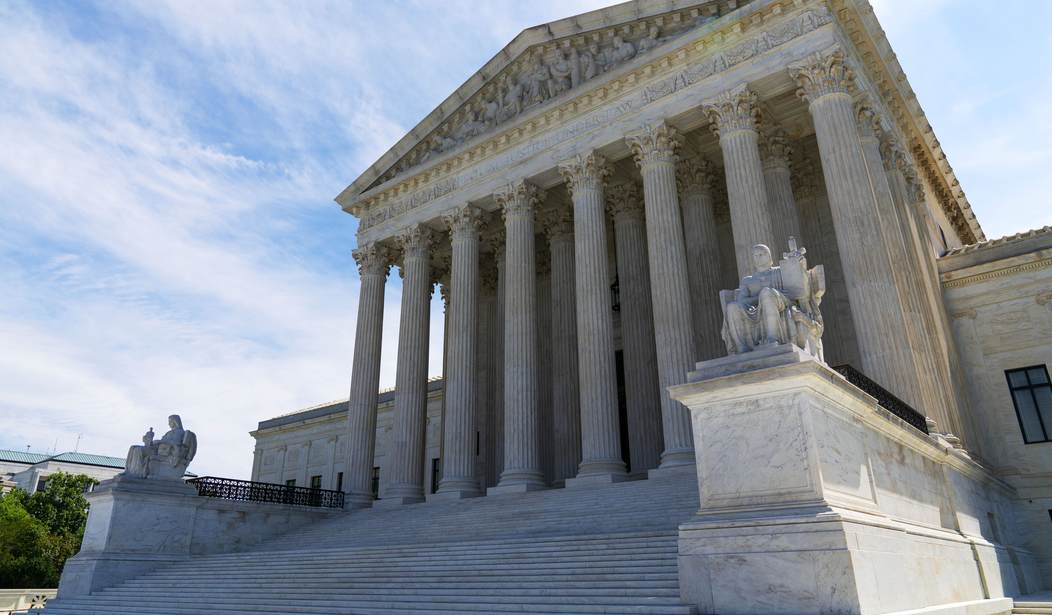
The Supreme Court of the United States opens its next term in October. This fall, the court will consider a serious challenge to Roe v. Wade from Mississippi in Dobbs v. Jackson Women’s Health Center. SCOTUS needs to discard the tragic decision of Roe by following the scientific fact that human life begins at conception.
In Roe, the high court punted on the issue of when human life begins by saying: “We need not resolve the difficult question of when life begins. When those trained in the respective disciplines of medicine, philosophy and theology are unable to arrive at any consensus, the judiciary, at this point in the development of man’s knowledge, is not in a position to speculate as to the answer.” This dodge of the central issue relating to abortion was not only contrary to clear science at the time, but also flawed reasoning for allowing abortion.
Flawed logic based on outdated science means the resulting decision, Roe, is ripe for revision. Even if the court’s earlier statement in Roe was correct, which it is not, it is illogical to conclude that abortion should be allowed. Such reasoning is void of intellectual credence.
America’s deeply-held belief in the value of human life is represented in countless other circumstances and laws in which any question about the presence of human life must be resolved in favor of life. Imagine if a deer hunter sees something move in the bushes and is not sure that such movement is from a human. Is he justified in firing and killing whatever is there? Of course not. Such decisions should always be resolved to favor life.
The court’s 1973 statement was also contrary to accepted science at that time. However, scientific advances in human reproduction since then show beyond a reasonable doubt that the court’s statement was wrong. Such scientific evidence now provides clear grounds to reverse Roe.
Recommended

A friend of the court brief filed by NIFLA in Dobbs states: “The Court did not have DNA testing, sonograms, and in vitro fertilization (IVF) in 1973. Supreme Court opinions should change when science advances. No society or court should be stuck in outdated science from the seventies. One simple example is that DNA testing was not even used in the courts until the mid-1980s. Anonymous DNA testing of the infant life in the womb and a DNA sample from the mother now shows that two separate humans exist. Sonograms, another scientific advancement that began after Roe, convinced Dr. Bernard Nathanson, the founder of NARAL, as it should this court, that he was wrong to kill innocent human life.
The charitable work of pro-life pregnancy centers and medical clinics exemplifies the practical application of technological advances in the field of medicine and proves the existence of life in utero. These charitable agencies provide free medical services to mothers considering abortion, including limited ultrasound examinations to confirm pregnancy.
These sonograms provide not only medical confirmation of pregnancy but also indisputable evidence of life in utero. Such free services result in 80-90 percent of the recipients considering abortion choosing life for their infants in the womb. This medical technology, not available in 1973, now confirms the existence of a human life in the womb with separate DNA and beating heart from her mother.
The judicial doctrine of stare decisis binds the Supreme Court to respect precedent. However, this doctrine is flexible and allows for corrections in the law when new circumstances arise that were not present at the time of the original decision. Much has changed since 1973 and scientific evidence now shows the court’s reasoning regarding the beginning of human life to be faulty at best. While constitutional precedents should be respected, no court opinion or precedent is above reconsideration when scientific evidence calls for a reversal. This is especially true of Roe.
Contrary to the Supreme Court’s 1973 statement in Roe, current science proves beyond doubt that human life begins at conception. Thus, the most important question for the court now as it reconsiders Roe is, “when do human rights begin?” The obvious answer to this question is that human rights begin when human life begins.
In determining the fate of Roe v. Wade and millions yet to be born, the Supreme Court simply needs to follow the science.









Join the conversation as a VIP Member