





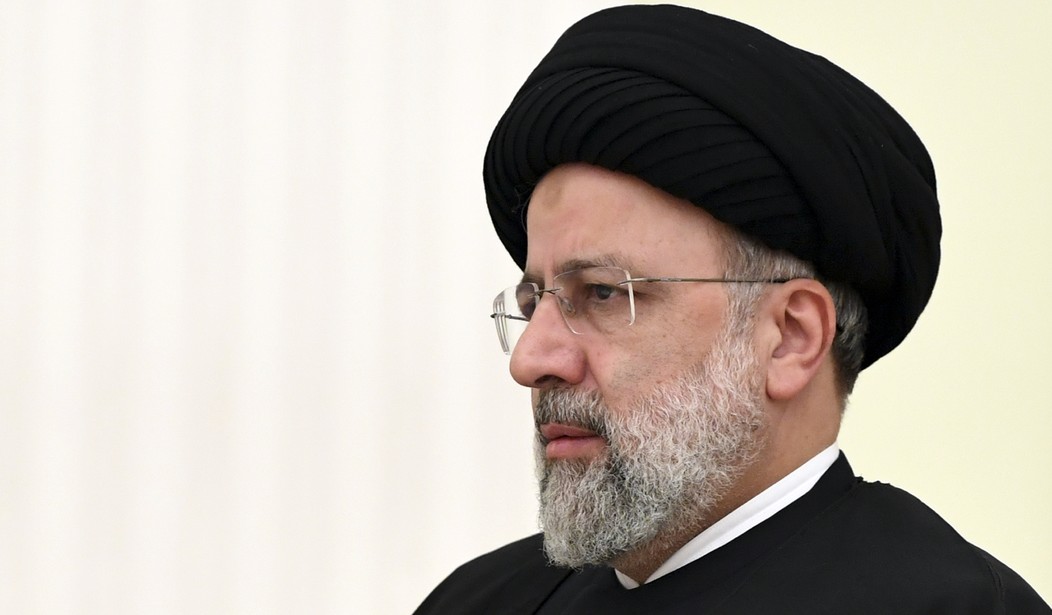
As the war in Gaza between Israel and Hamas intensifies, the prospect of the conflict widening across the Middle East grows daily. On Oct. 20, an American warship, the USS Carney, shot down three cruise missiles and several drones launched from Yemen by the Iran-backed Houthi rebels. They appeared to have been targeted at Israel. It followed a warning on Oct. 10 from the Houthi leader Abdel-Malek al-Houthi, who said the Houthis would fire missiles and drones if the Americans backed Israel in its war against Hamas.
The Houthis came to prominence in 2014 when they swept to power in Yemen, overthrowing the internationally recognized government and taking control of the capital Sanaa and more than one third of the country’s territory, which contains up to 80 percent of the population. They are an extremist Shiite movement, heavily armed and trained by the Iranian regime’s elite Quds force, the extra-territorial wing of the Islamic Revolutionary Guards Corps (IRGC), the mullahs’ Gestapo. As well as Iran, the Houthis count amongst their allies the usual suspects of Russia, North Korea, Syria and of course, other terrorist groups like Hezbollah in Lebanon and Hamas in Gaza. The Houthi war in Yemen has already cost around 377,000 lives, with an estimated 11 million children requiring urgent humanitarian assistance. Houthi landmines are reckoned to be responsible for 55 percent of child deaths in Yemen. The militant Houthis' war cry of “God is great, death to America, death to Israel, damnation to the Jews, victory to Islam,” perfectly describes their fundamentalist ideology.
The missiles and drones fired at Israel from Yemen, followed hot on the heels of similar attacks launched by Hezbollah in Lebanon. Hezbollah is blacklisted as a terrorist organization by the US, EU and UK and is also heavily backed by Iran. On Oct. 16 it said it had fired rockets and mortars targeting two Israeli military posts in Galilee, in response to Israeli shelling that it claimed had killed three of its members. The Israeli military said it had identified a number of “launches” from Lebanon into Israel and was responding with artillery fire. The Israelis said their initial exchange of fire was in answer to a cross-border raid by the Palestinian Islamic Jihad (PIJ) armed terrorist group. They said their soldiers backed by helicopters had killed at least two PIJ gunmen who had crossed the frontier. Hezbollah has denied any involvement with the PIJ raid. There is growing apprehension that Hezbollah, with a sophisticated fighting force and a significant arsenal of long-range missiles, might enter the current conflict, opening a second front for Israel, in what many military experts say would be a nightmare scenario. An Israeli ground invasion of Gaza could trigger Hezbollah’s involvement, which, in turn, could draw in Iran.
Recommended
It is against this background that US Secretary of State Antony Blinken rushed to Tel Aviv on Oct. 12, days after the horrific Hamas massacre of men, women and children, to pledge America’s undying backing for Israel. He was quickly followed by President Joe Biden and British Prime Minister Rishi Sunak, both of whom promised their everlasting support to Prime Minister Benjamin Netanyahu. Their presence, however, made it diplomatically difficult for Netanyahu to launch a ground offensive. Rishi Sunak called on world leaders to do “everything possible to prevent” the violence in Israel and Gaza spilling over into a wider Middle East conflict. The presence of an estimated 200 Israeli hostages in Gaza and the release of two American female captives by Hamas has further increased the pressure on Netanyahu to forestall his ground offensive, as has the initial arrival of the first aid trucks, allowed through the Rafah border crossing from Egypt.
Although an imminent ground offensive in Gaza may have been averted, it has not stopped the Iranian regime from stirring the pot. In Iraq, the Ain al-Assad air base, which hosts US and other international forces, was targeted by drones and missiles fired by the Iraqi Islamic Resistance, an umbrella group for Iranian-backed militias. According to security sources, multiple blasts were heard inside the base on Oct. 18, marking a further escalation of the crisis. The next day, a barrage of rockets hit another US military base near Baghdad’s international airport. American forces in Syria also came under drone attack at the same time, causing some minor injuries. A second drone was shot down. Again, the IRGC’s Quds force almost certainly coordinated these attacks, under direct instructions from Tehran.
Indeed, it has now been confirmed that Iran warned Israel, through the UN, that it would have to “intervene” if they invaded the Gaza Strip. This threat was amplified on Oct. 19, when Gholamhossein Gheybparvar, a deputy IRGC commander, said in a speech that Iran-backed militias in Iraq, Lebanon, Syria and Yemen were ready to strike Israel if its ground forces invaded Gaza. In a frenzy of diplomatic activity, the leaders of France, Germany, Italy, the UK and the US said in a joint statement, "This is not a moment for any party hostile to Israel to exploit these attacks to seek advantage." But their warnings may have fallen on deaf ears. Israel sees itself surrounded by hostile forces, all of which are armed, trained and funded by Iran and all of which have adopted an increasingly aggressive posture to the US and to American forces in the region. There are even fears that America could be drawn into the conflict, by sustained attacks on its forces by Iranian-backed militias. It is a volatile situation, exacerbated by threats from Israel that they will cut off the head of the snake in Tehran if Hezbollah joins the war with Hamas and opens a Northern Front. Western appeasement of the Iranian regime for decades has fuelled the current crisis. Confronting the mullahs and backing the Iranian population in their calls for regime change could have prevented the Israeli-Hamas war. When you cut off the head of a snake, its body dies.







Join the conversation as a VIP Member