


Editor's Note: Steve Chapman is off. The following column is by Veronique de Rugy.
The goal of health care reform is to provide better health care to everyone at a lower cost, year after year. The solution is not to provide a better third-party-payer system -- e.g., health insurance or government-provided health insurance -- but instead to allow technological development and entrepreneurship to improve the current business model through groundbreaking innovations that empower consumers, improve quality and cut prices. We have seen it happen in many industries, such as transportation, room and board, and tech.
Of course, special interests benefiting from the old model do not appreciate being challenged. As a result, rather than make it easier for new models to thrive by ensuring that rules and regulations do not stifle innovation, politicians often choose to protect established industry players at the expense of consumers.
Examples of this are easy to find. New York City is now retroactively fining Airbnb hosts thousands of dollars for competing with hotels to provide affordable short-term rentals. Likewise, Uber has faced opposition from politically connected taxi cartels almost everywhere it operates. These services provide additional income for those with capital resources that would otherwise go unused, and they make travel more convenient and cheaper for customers.
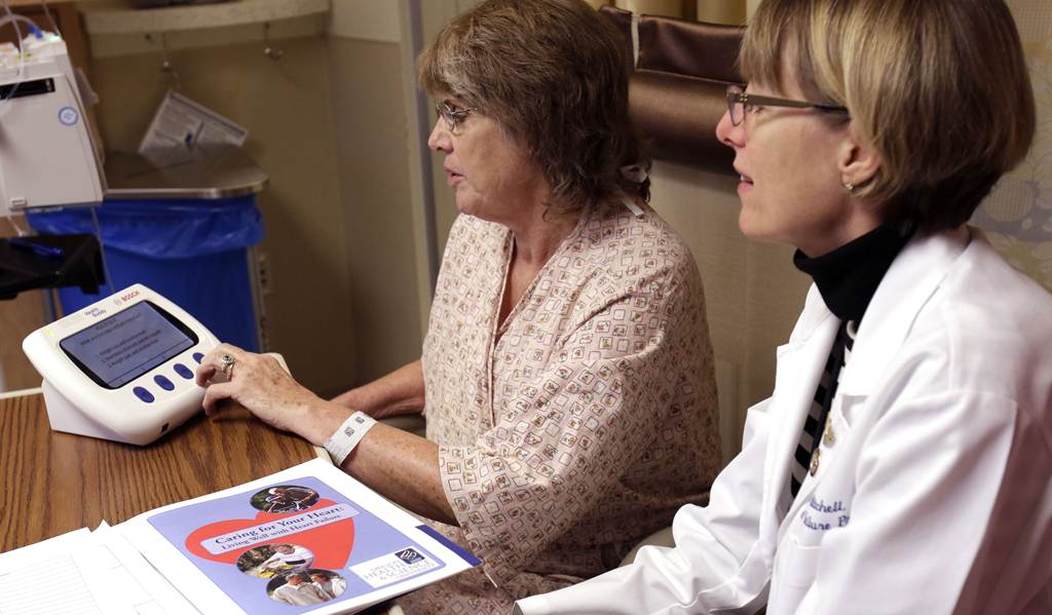
Some services strive to do something even more impactful by making health care more affordable and accessible, yet they are held back by outdated rules and hostile competing industries. Take, for example, telemedicine -- the use of modern communications technology, such as videoconferencing and using smartphones, to facilitate patient care. It has the potential to help millions of Americans struggling to pay the skyrocketing costs of health care. But instead, some politicians are siding with their campaign contributors in the health care industry and not the constituents they supposedly are in office to serve.
Telemedicine can benefit a variety of medical fields, especially when a visit to the doctor for answers to routine questions often costs a pretty penny. For instance, most modern phones are capable of taking high-quality images of a questionable mole or rash, which can then be transmitted by an app for review by a dermatologist. Instead of waiting weeks for an appointment, the patient can get an answer faster and at a lower cost.
Recommended
Like the other disruptive services, telemedicine is running into opposition from politically connected competitors.
Consider eye care, where telemedicine holds great potential. Several startups are trying to make it easier for patients to receive new prescriptions by offering exams through smartphones, which are as good as traditional exams. The results are reviewed by a licensed optometrist, who then provides the prescription.
Optometrists, who make a lot of money by prescribing and selling specific brand-name versions of contact lenses and eye care products, are fighting to prevent this use of telemedicine in multiple states.
The California State Board of Optometry used taxpayer dollars to engage in a public relations campaign against one telemedicine startup. Indiana enacted a law last year to prevent the use of online eye exams. Georgia and South Carolina have also enacted bans, and the Virginia Legislature just sent a bill to the governor's desk that would do the same.
All of this is done not to safeguard patients but to protect older and more expensive business models. This is highly unfortunate. Telemedicine not only can help reduce health care costs but also has the potential to greatly expand access to care -- something politicians claim to care about. Yet many states nevertheless prevent doctors licensed in other states from offering telemedicine services to their residents. This makes it more difficult for poorer citizens living in medically underserved areas to achieve the same access to care that their wealthier neighbors can discover by traveling out of state.
To make medicine great again, politicians need to fix outdated rules that are standing in the way of market innovation, especially when it's seeking to solve major public policy problems. They must also stop favoring established businesses at the expensive of finding new ways to do things better and more cheaply. Telemedicine is the way of the future, and denying it is to deny the people who need it the most a chance at a happier, healthier and wealthier life.







Join the conversation as a VIP Member