







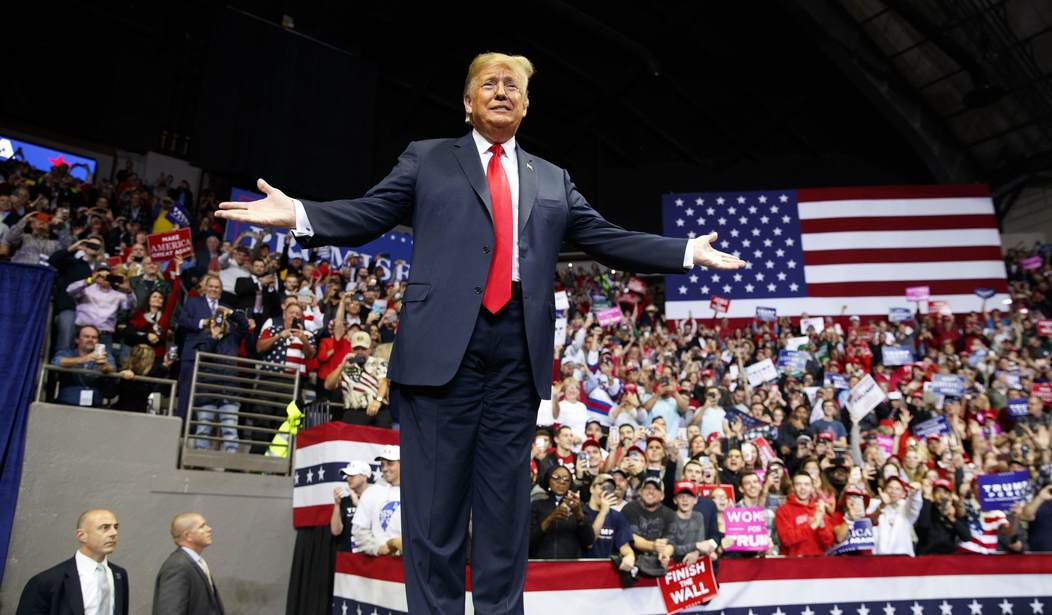
It was almost unsettling to wake up the morning after the election and realize it turned out pretty much as we expected. There were, of course, some individual surprises, but nothing on the seismic shock scale of 2016.
For months, it had been expected that Democrats would win a modest House majority, and they did. The popular vote margin for the Democrats was just about right where the ScottRasmussen.com Generic Congressional Ballot projected it to be (and also about the same as the RealClearPolitics average of all election polls).
In the Senate, it had long been recognized that the Republicans were likely to gain a few seats, and they did. In the campaign's final days, there were five or six very close races where either candidate could win. But while Democrats could have won any of those individual races, the GOP was favored to win most of them. That's just what happened.
So now that we got the election we expected, where do we go from here?
The conventional wisdom suggests gridlock is coming. In that view, there's no way a Nancy Pelosi-led House will forge significant bipartisan deals with a Mitch McConnell-led Senate and President Donald Trump.
The likelihood of gridlock is very high, but I'm not sure how much it matters. Over the past two years, the Republican-led House also struggled to reach agreement with the Senate and the president. Other than the tax cut and repeal of the Obamacare mandate, little was accomplished in the legislative arena.
But the lack of legislation does not mean a lack of impact. The Trump Administration did take some modest steps to reduce the regulatory burden. That accomplishment seems especially significant because it followed decades of enormous regulatory growth.
The deregulatory effort is almost certain to continue. Among other things, there will be an ongoing effort to give Americans a greater degree of control over the health insurance they purchase. Lower-cost insurance that doesn't cover every imaginable procedure may be frowned upon by bureaucrats in Washington, but they are welcomed by millions who have to buy their own insurance.
Additionally, with an increased Senate majority, the president will find it easier to confirm judges who are skeptical of an all-powerful federal government. That's especially true because the Republican Senate victories in 2018 make them early favorites to retain control of the Senate in 2020. If there is another Supreme Court nomination in the coming years, the confirmation will be a lot smoother with a bigger Republican majority.
For their part, the Democrats are likely to launch many investigations of the president. But they will feel an ongoing tension between a progressive base demanding impeachment and more moderate Democrats fearful of offending centrist voters. That tension will carry over to issues like health care, where progressives dream of banning private insurance companies and forcing all Americans into a government-run health care system. The moderates recognize that such a plan is not popular with the rest of the country.
So, over the next two years, we're likely to experience gridlock. But that doesn't mean a lack of action. Instead, we'll see deregulation and judicial appointments from Republicans. And Democrats will try to resolve their party's inner tension before the 2020 presidential election.
Scott Rasmussen is the publisher of ScottRasmussen.com. He is the author of "The Sun Is Still Rising: Politics Has Failed but America Will Not."


Join the Conversation
VIP members get the ability to comment on articles.