




Over and over we hear, slow growing wages and increasing inequality are holding up the recovery. It’s not so simple.
To the untrained ear these nostrums sound plausible. After all, giving the average American more to spend should boost demand, production and growth.
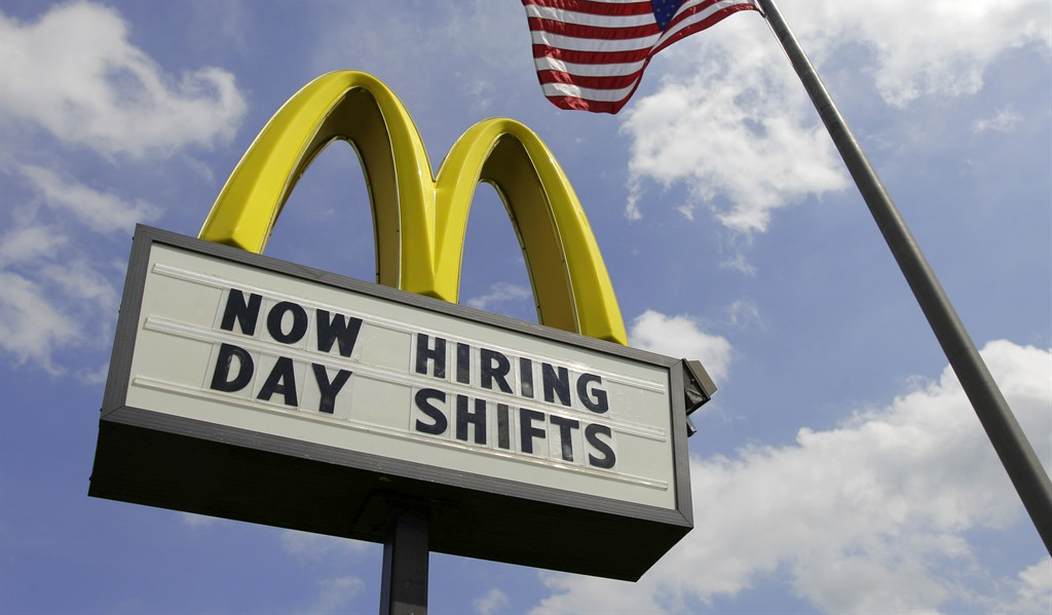
Progressive politicians and labor leaders use this line to argue raising the minimum wage would push the economy into high gear. If that were so, then increasing the federal minimum to $10.10 an hour, as President Obama happily campaigns, would not kill 500,000 jobs, as the nonpartisan Congressional Budget Office predicts.
What the president and the unions fail to mention is that businesses can’t print money to cover higher wages. They must charge higher prices, slash profit margins and reduce dividend payments to stockholders.
The latter are often middle-class workers with IRAs, and the elderly, who will spend just about every dollar they get as they draw down from those nest eggs. Those folks spend too, and in fact many of them buy more domestic products and fewer imports at Walmart, because older folks spend more on health care and other services, which are made in America, not China.
Much the same applies to wealthy Americans—they are more likely to spend their dividends at home.
That calculus has given rise to the myth that higher wages will boost growth. That's another misperception about demand. Americans really are spending again but not enough of those dollars stay at home to create jobs.
Thanks to oil imports and the rising tide of Chinese manufacturers—made artificially cheap by the Middle Kingdom’s purposeful undervaluation of the yuan, subsidies and steep barriers to foreign products—U.S. imports have been rising faster than exports and that is sending a lot of consumer dollars abroad.
Recommended
The root causes are well catalogued but ignored by a president who spends his time campaigning for a $10.10 minimum wage, playing diplomat with a Vladimir Putin (who is really playing war), and scheming about ways to avoid legal and constitutional restrictions to do as he pleases without the inconvenience of Congressional ascent.
The president opposes drilling for oil off the Atlantic and Pacific Coasts. He has severely limited drilling in Alaska and the Gulf—and is blocking pipeline projects, too. All of which adds to the cost of transporting onshore oil and the environmental risks of rail shipments.
Fixing petroleum policy and encouraging Americans to engage in just a little more conservation would eliminate the 5 million barrels a day of oil the United States still imports. If America did that, and confronted China and other currency cheaters over protectionism, the economy could easily cut the ranks of the jobless in half and drive the unemployment rate to 4 percent.
That would put a lot of upward pressure on wages—especially in the lower and middle ranks of the labor force and mitigate income inequality.
Since the recovery began, wages have barely kept up with inflation, but cutting unemployment in half would easily boost wages after inflation by 3 percent overall, and 5 percent or better for folks on the lower end.
A minimum wage of $10.10 an hour with its devastating 500,000 job loss would sentence many workers now employed into deep poverty and dependence on government programs.
But there is a silver lining for the president—folks dependent on federal handouts are more likely to vote Democratic.
Given all this, how should the president spend his time: addressing those problems to really stimulate growth and equality, or tarring Republicans as unworthy of any public office above blackboard monitor for opposing ideological hidebound policies?
Perhaps if he paid attention to those real economic issues—instead of encouraging friends at major newspapers to publish bogus economic theories masquerading as science—he might have something to show for his second term other than being outwitted by Vladimir Putin.
Peter Morici is an economist and professor at the Smith School of Business, University of Maryland, and widely published columnist. He tweets @pmorici1







Join the conversation as a VIP Member