



When it comes to foreign policy, it’s sometimes trickier to deal with friends than with foes. However much finesse you need with enemies, it rarely compares to the amount you need with allies.
After all, you’re both on the same side, and you want to keep it that way — at least without being taken advantage of.
Take Turkey, which has been a fellow NATO member since 1952. During the Korean War, it deployed 15,000 troops and suffered 721 killed and more than 2,000 wounded. One of only two NATO members that has a land border with the Soviet Union, today it plays a critical role in preserving the security of the Black Sea and the Mediterranean region.
More than 1,500 American soldiers are based in Turkey. Airbases at Incirlik and Konya are crucial assets for our military and have been used in several recent operations, including ongoing actions against the remnants of the Islamic State.
Nevertheless, relations between Washington and Ankara have been strained lately. The Trump administration recently suspended Turkey from our F-35 fighter jet program. It wasn’t an easy decision, but considering Turkey’s purchase of a Russian S-400 air-defense system, it had to be done.
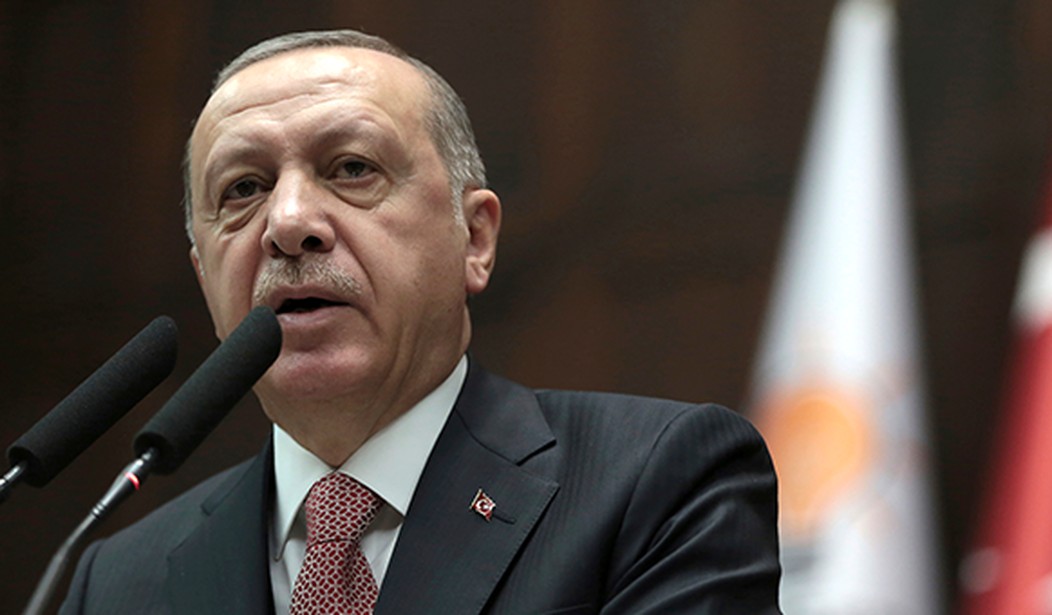
The S-400 purchase isn’t the sole speed bump, however. Turkish President Recep Tayyip Erdogan has a deep anti-American bias and has tried to steer his country away from the West. He tries to play competing foreign partners off of one another to maximize Turkish advantage, while clamping down on dissent at home.
But we need to keep the big picture in mind. For one thing, the S-400 won’t be fully operational until April; there is still plenty of time for the situation to improve. While it remains unlikely, the U.S. has left the door ajar for Turkey to reverse course.
Recommended
Moreover, the U.S.-Turkish partnership is bigger than one or two politicians. The U.S. derives far more value from keeping Turkey as an ally, than it would from pushing it deeper into the arms of our adversaries.
The Trump administration must thread a difficult needle: criticizing Turkish actions — like the S-400 purchase, which endangers the lives of U.S. and NATO allied troops, and taking steps to mitigate its impact — but doing it in a way that doesn’t alienate an important ally and preclude improvements down the road.
The same dynamic applies to Germany, which is a crucial U.S. ally and security partner in Europe. It hosts over 35,000 American troops and their families, pays more than $1 billion a year to offset the cost of basing those troops, and is the keystone logistics hub for our presence in Europe. It plays a central role in ensuring EU sanctions on Russia over its aggression in Ukraine remain in place.
“As the largest economy in Europe and the second-most populous NATO member after the U.S., Germany is right to take on a larger role in bolstering the collective defense,” foreign policy expert Daniel Kochis writes. “President Trump should encourage Germany to continue to play a role commensurate with its political and economic clout.”
Yet we have had some very public disagreements with Germany: over the Paris climate deal and the Iran nuclear deal (German officials opposed our withdrawal from both), and over the Nord Stream II pipeline, which would increase German dependence on Russian gas. Berlin’s low defense spending hasn’t helped matters, either.
Making the situation worse is the vehement anti-Trump rhetoric coming from the far-right and far-left parties in Germany. The president is just as much a lightning rod in Europe as he is at home. Considering that our efforts to persuade Germany to adopt our views on Iran, climate, energy, and defense spending should be handled more with tact than with disdain, we clearly have our work cut out for us.
Whether we’re dealing with Turkey or Germany or some other ally, we must strike a delicate balance: hold them accountable for their missteps, but do it in such a way that we don’t push them away. It’s difficult, but worth the effort. As Winston Churchill once said, “There’s only one worse than fighting with allies, and that is fighting without them.”
###
Kim R. Holmes, a former assistant secretary of state, is executive vice president of The Heritage Foundation (heritage.org).





Join the conversation as a VIP Member