





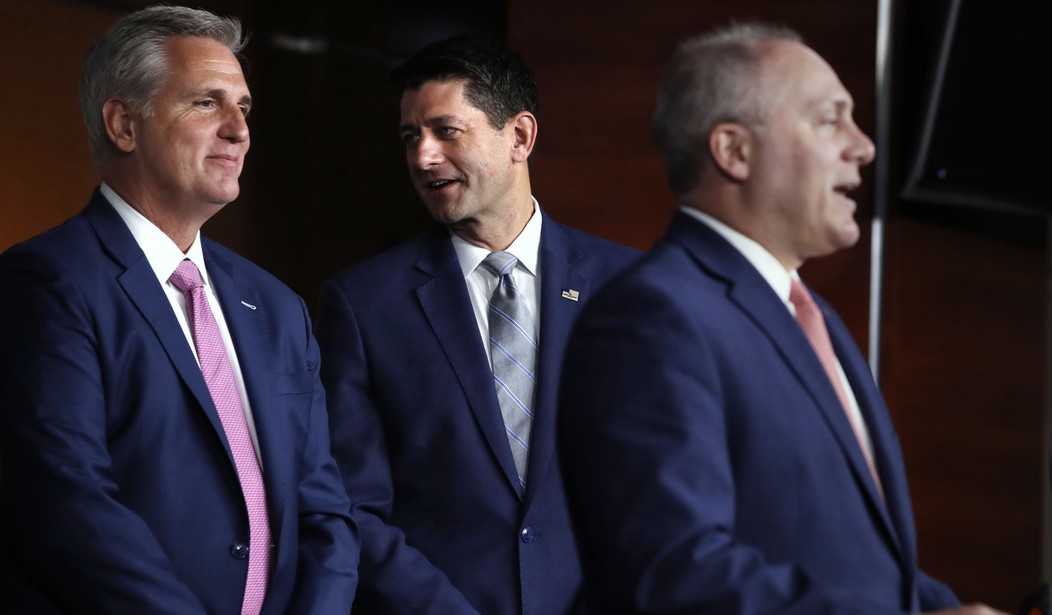
The Democrats have made clear that we’re about to begin two years of congressional gridlock. Before that happens, Congress should take immediate and urgent action to protect our nascent economic recovery.
The midterm elections resulted in a divided Congress, producing a Democrat majority in the House of Representatives while giving Republicans a firmer hold on the Senate. This could complicate the progress of some of President Trump’s outstanding initiatives, such as “Tax Cuts 2.0,” but it also imperils other necessary efforts to promote job creation and energy efficiency.
With the House in a lame duck session through December, the GOP should take advantage of this period to focus on moving those important bills through Congress before a Democrat-controlled House thwarts the prospects of enhancing incentives for business growth and innovation.
Several bills securing the initiatives made under the Tax Cuts and Jobs Act of 2017 have already been introduced, known collectively as “Tax Cuts 2.0.” The House has approved all three bills, meaning they only need Senate approval before the end of the year in order to reach the President’s desk.
Yet there are additional actions that Congress can and should take to encourage further economic growth, as well.
As we look forward to additional job development, for example, it is vital that we address Research and Development (R&D) Tax Incentives. Under current law, businesses can deduct research expenses and claim R&D tax credits immediately. Starting in 2022, however, they will be required to spread those expenses out over five years, significantly reducing the value of those R&D incentives.
Recommended

For small and medium-sized businesses, the pending change could deprive them of the resources they need to engage in R&D, while large businesses will likely respond to the loss of research incentives by shifting R&D spending to other countries.
We can’t afford to wait until 2022 to fix this problem. Most businesses consider three years to be the “near term” when it comes to investment decisions, so we could start losing R&D investment in this country as early as next year if Congress doesn’t act before then.
Similarly, Congress should pass legislation to permanently extend and expand the “179D Commercial Buildings Energy Efficiency Tax Deduction.”
The proposed 179D Permanent Extension and Improvement would increase the tax deduction for certain energy-efficient improvements made to new and existing commercial and multifamily housing from $1.80 to $3.00 per square foot, as well as expand eligibility to Real Estate Investment Trusts and government buildings.
Simply extending the deduction would contribute $3.9 billion to GDP, $5.1 billion to national personal income, and 40,749 jobs annually. Improving the existing arrangement, though, could increase those benefits significantly, adding $7.4 billion to GDP, $5.7 billion in national personal income, and 76,529 jobs annually.
As we saw in the October jobs report, job creation goes hand in hand with increased tax revenues.
October 2018 delivered 250,000 new jobs — smashing economic expectations — and record total tax revenues of $252,692,000,000, far surpassing the previous record for tax receipts in a single month.
President Trump has the right idea: prioritize job creation, and tax dollars will follow. Expanding the R&D and energy efficiency tax incentives not only ensures robust job creation in the near future, but will also deliver additional tax revenue to the federal government.
Following the passage of the Tax Cuts and Jobs Act of 2017, President Trump promised that bigger and better tax cut bills would follow. Now, with an obstructionist majority about to take over the House, we’re running out of time to make that promise a reality.
Julio Gonzalez is the CEO of Engineered Tax Services.








Join the conversation as a VIP Member