





Editor's note: This column was co-authored by Nikki Goeser.
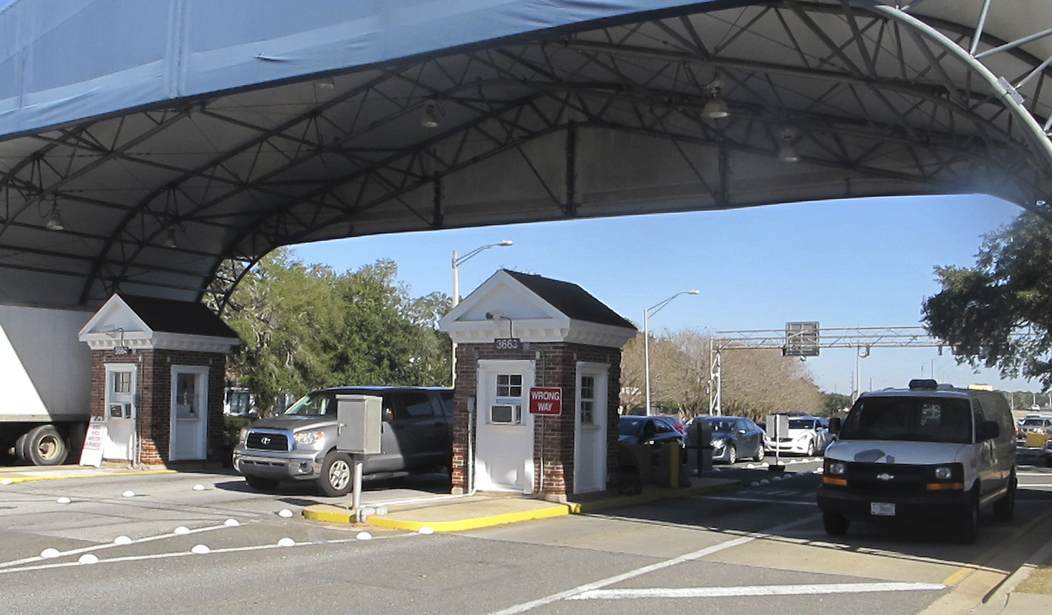
With the shootings over the last week at Naval Air Station Pensacola in Florida and at Pearl Harbor Naval Shipyard in Hawaii, people are again asking why military personnel are banned from having guns on military bases in the U.S.
These attacks have become an all too familiar pattern of attacks at U.S. bases: the two Fort Hood shootings, the 2015 Chattanooga and 2009 Little Rock military recruitment center shootings, the 2013 Navy Yard complex in Washington, D.C., the 2013 Norfolk Navy base shooting, as well as other cases.
The irony is that our troops have been mandated to have their guns with them at virtually all times when they have been overseas at bases in Afghanistan or Iraq, but somehow those same troops are not trusted with guns when they come back to the U.S.
Good soldiers — like law-abiding citizens — obey the rules against carrying guns. But instead of making places safer, disarming them leaves them sitting ducks. Those who want to do harm seek out venues where they don’t have to worry about victims defending themselves. Since at least 1950, 94 percent of the mass public shootings have taken place where citizens are banned from carrying guns.
The hero in the Naval Air Station Pensacola attack was Naval Academy graduate Joshua Watson, 23. Watson was shot at least five times by a Saudi national but still made it outside to alert the First Response team to the shooter's identity and location. Watson was qualified as an Expert Marksman with small arms. He even trained others at the US Naval Academy on how to use firearms.
Recommended
Now Watson’s family told “Fox & Friends” on Tuesday that they believe the situation would have turned out differently had their son been allowed to have a service weapon on the base. One of the authors here — Nikki Goeser — knows exactly how they feel and talks about it in her new book, as her husband was murdered by her stalker in front of her in a gun-free zone.
The rules governing the Pensacola base were both typical and explicit: “First, state issued ‘concealed weapons permits’ are not recognized on any Navy installation” and that “personal firearms may only be stored in the installation’s armory.”
Yes, there are military police and they guard the entrances, but, like police generally, they can’t be everywhere all the time.
Thus during the Navy Yard or Fort Hood shootings, the unarmed JAG officers, marines, and soldiers could do nothing but cower as the shooter fired round after round.
Apparently, it took 15 minutes for the military police to arrive on the scene, and no one blames them. But 15 minutes is simply too long.
Even the few minute response time for the Pensacola attack was too long for the three people murdered and eight others wounded.
Ironically, as the quote above indicates, soldiers can get a permit to carry a concealed handgun whenever they're off the military base so that they can protect themselves and others. But on the base they are defenseless.
And there are dozens of instances in recent years where Americans legally carrying guns stopped mass public shootings. From school shootings that were stopped before police arrived in such places as Titusville, Florida, Pearl, Mississippi, and Edinboro, Pennsylvania, and at colleges like the Appalachian Law School in Virginia. Or attacks in busy downtowns such as Memphis; churches such as in Antioch, Tennessee and Colorado Springs, Colorado; at a malls in Portland and Salt Lake City; at restaurants across the country; at a grocery story in Louisville; or a dentist’s office in Tennessee.
More than 11 million Americans can legally carry concealed handguns. They are next to us in restaurants, movie theaters and stores. Permit holders are law abiding, committing even the most trivial firearms violations at a rate of hundredths of 1%.
American police understand this. PoliceOne, the largest organization of police officers in the U.S. with 450,000 members, asked its members: “What would help most in preventing large scale shootings in public?” Their most frequent answer, with 30 percent support, was “more permissive concealed carry policies for civilians.”
If civilians can be trusted with guns, surely military personnel can be trusted.
Yet the government doesn’t seem to see the problem with the current setup. The Department of Defense report on the Washington Navy Yard shooting focused solely on how mental illness of the assailant went unreported. After the Pensacola attack the “solution” was to randomly search more vehicles driving onto the base.
Clearly there were mistakes. The Navy did not properly report multiple troublesome incidents during Washington Navy Yard shooter’s active duty service. The government did not tell his employer about any of these problems. But it would be foolish to believe that all potential mass shooters will be identified in advance. Even with better reporting practices, many will slip through the cracks. Besides, it is always much easier in hindsight to realize that people had mental health issues.
The Pensacola attack also demonstrates once again that determined terrorists pose a serious threat, too.
The military also can’t search all or even most of the vehicles of the civilian contractors and service members who drive onto a base every day. They can’t do this any more than a small or medium size town could search everyone who drives into town every day.
The ultimate question is what should be done if the screening for mental illness fails? Or when there is a terrorist plot?
Armed soldiers would provide the best last line of defense.
Additionally, the bans on them carrying show that the concerns of gun control advocates have nothing to do with people not being trained. These people are trained, but gun control advocates still want areas to be “gun-free.”
We trust these people in combat situations, but somehow we can’t trust them at other times?
The Watson family’s reaction is understandable. We need to trust soldiers to carry weapons on bases. That would provide another line of defense against any attacks and not leave our soldiers as sitting ducks.
* Nikki Goeser is the executive director of Crime Prevention Research Center and the author of the newly released book “Stalked and Defenseless: How Gun Control Helped My Stalker Murder My Husband in Front of Me.” John Lott is the president of the Crime Prevention Research Center.






Join the conversation as a VIP Member