





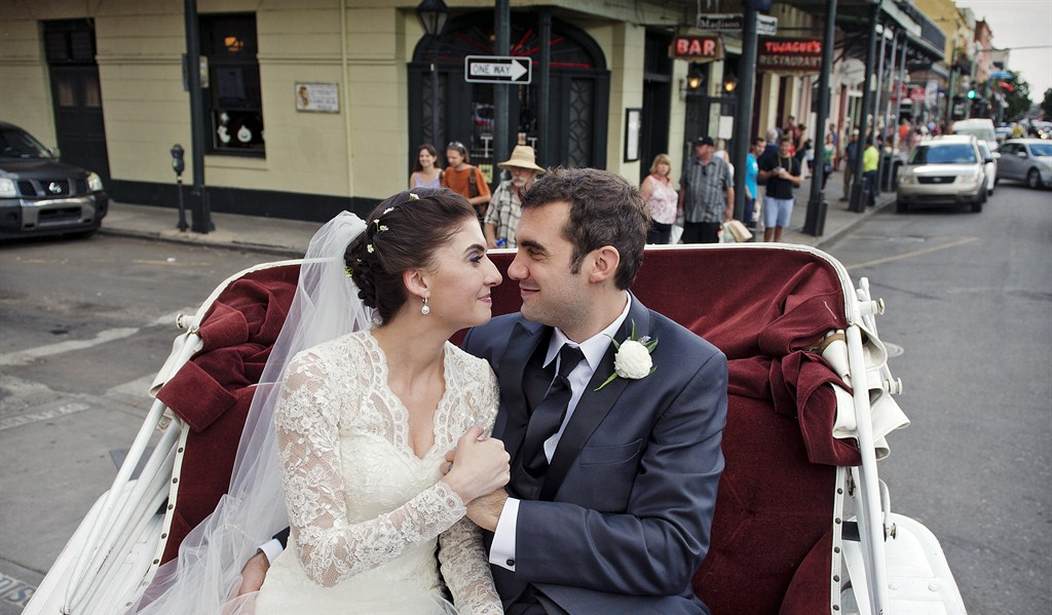
When my wife and I were first married, we had some tough times, just like many married couples. Our budget was often in the deficit column before we even began the month! As much as we were in love, money, or the lack of it, tried to consume our relationship. However, with God’s help, we were able to use these times to build communication and strengthen our united resolve to press on to better times.
February 7th through 14th is National Marriage Week, a movement begun in the mid-1990s in the United Kingdom. Soon it spread to continental Europe, the United States and other parts of the world. Its aim is “to strengthen individual marriages, reduce the divorce rate, and build a stronger marriage culture, which in turn helps curtail poverty and bssenefits children.”
You would think these goals would be pretty non-controversial, and in one sense they are. Almost no one disputes that children raised by married parents are better off in almost every measurable way than those who are raised by single parents. This holds true for academic achievement, emotional health and likelihood of avoiding criminal behavior. Studies have also consistently demonstrated that children with married parents are far less likely to be poor than the children of single parents.
A recent report released by the Council for Contemporary Families (CCF), however, asserts that low marriage rates among the poor are not a cause but a symptom. Writing in the Atlantic, Emily Badger summarizes their argument: “Fractured family structures don't cause poverty. Poverty causes these family structures.” The CCF report is essentially asserting that children raised by married parents are not better off because their parents are married; they claim that their parents married in the first place because they were better off.
This is absurd for several reasons. First of all, according to US Census data, the black marriage rate was actually higher than the white marriage rate from 1890 to 1940. During this time—the height of the Jim Crow era when many blacks were sharecroppers or laborers—the economic standard of living for blacks was undoubtedly worse than it is today. If poverty indeed causes “fractured family structures,” why was the black marriage rate so much higher when poverty was so much more severe? For that matter, why did slaves go out of their way to marry in secret, even when their marriages were forbidden by law?
Margaret Sims of the Urban Institute (also quoted in Badger’s article) reduces the benefit of marriage to mere economics saying, "It’s clear that married-couple families are better off economically, because there are potentially two workers in the family." But marriage isn’t important only because it provides two potential income earners for a household. If this were true, children of married couples where only one parent worked would demonstrate similar high school dropout and criminal behavior rates as those children raised by single parents. But they do not.
What many people purporting to solve the problems of urban America are reluctant to admit is that traditional marriage works because it places healthy boundaries on sexual behavior and brings out the best in both mothers and fathers. But this is precisely the reason the institution has been attacked since the latter part of the twentieth century.
During my decades of pastoring, I have observed firsthand the devastating effect of the decline of marriage, particularly in the black community. I have preached and written often about how redefining marriage to include homosexual relationships is weakening the institution as a whole. But I will also freely admit that it was not homosexual activists who started American marriage on its road to decline.
Marriage began to weaken as soon as it became socially acceptable to separate sex from a life-long commitment. 1960’s icon Gloria Steinem famously declared, “A liberated woman is one who has sex before marriage and a job after.” What Steinem and the many others preaching the same message didn’t mention was how many “liberated women” who opted to have sex before marriage would end up never get married at all.
Of course promoting marriage was never predicated on the notion that increasing the number of marriage ceremonies among the poor would magically raise their standard of living. Instead, we need to encourage all our young people to prepare for marriage, both by exercising control over their sexual desires and by developing the life skills needed to have a permanent and successful relationship. This is primarily the work of families and institutions of faith, although it is vital that our public policies cease punishing marriage by subsidizing single parenthood.
Marriage matters. And it’s time people across the ideological divide recognized its importance and began working together to make it stronger. I’m glad my wife and I chose to use difficult times to strengthen our marriage and I pray for those who are stretched thin in these economic times to choose the same!



Join the Conversation
VIP members get the ability to comment on articles.