


I had an eye-opening conversation recently with an acquaintance of mine, a professor of environmental science. I had expressed my opinion that late-term abortion is a barbaric procedure and asked what she thought. “I’m sorry,” she said with discomfort, “I can’t agree with you. You see, I’m a scientist so, of course, I’m pro-choice.”
Taken aback, I responded: “Oh! I’m a scientist, too – a physician. So, of course, I’m pro-life.”
That, as you might imagine, ended our conversation. But it left me thinking:
My pro-choice acquaintance thinks she commands the scientific high ground. Is she correct? Does a firm grasp of science tend to move us toward acceptance of abortion? Or away?
Maybe the answer depends, in part, on how scientific advances shape our thinking over time. Coming of age during the 70’s, her generation experienced the revolution of the birth-control pill, which granted people unprecedented control over women’s fertility. But freedom from childbearing turned out to be incomplete. Un-marital pregnancies continued to occur and even became more common, and women’s liberation from pregnancy (and men’s from responsibility--let’s face it) was felt to be inadequate without the backstop of abortion.
The abortion procedure was refined, with improved pain-control techniques and new drugs that could effectively dilate an unripe cervix and put a woman into pre-term labor in a controlled manner. Soon, terms like “termination of pregnancy” and “clump of cells” took the place of “abortion” and “unborn child” in the modern lexicon. Then, with Roe v Wade, the law adapted to the new zeitgeist and abortion was brought out of obscurity to its new home in the glare of the local strip mall—from outer darkness to Big Business.
Those were heady days of newfound scientific control and dominion over human reproduction. But questions as to the ethical implications of abortion--especially what the choice to end a pregnancy entailed beyond the needs or desires of the mother—were often ignored or treated as inconsequential afterthoughts. Not, of course, by the pro-life movement, born in reaction to the Supreme Court decision, and made up of people who felt in their gut that the “clump of cells” argument was flawed.
Recommended

It would take only a little time for science to catch up with the intuition of the pro-life movement.
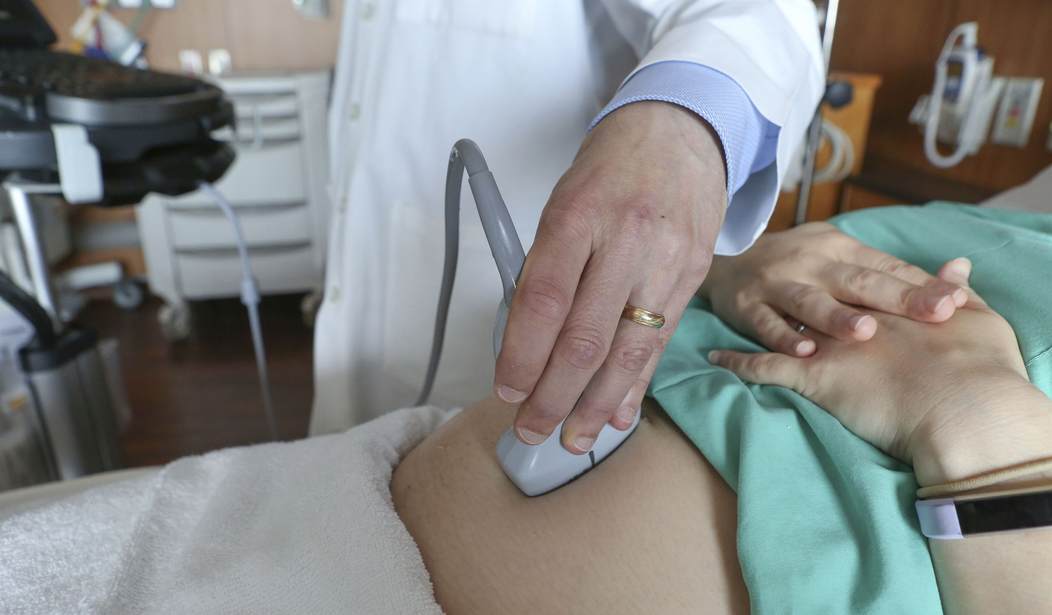
Just as Roe v. Wade was making its way to the Supreme Court, scientists were developing fetal ultrasound. The first machines in the 50’s and 60’s involved large water tanks and generated fuzzy images with few practical applications. But by 1975, ultrasound was being used routinely during pregnancy to obtain amazingly detailed images of living creatures, creatures that to the naked eye were much more than a “clump of cells.” Beating four-chamber hearts with delicately wavering valves, diaphragms lifting and falling as fetal lungs filled with amniotic fluid and slowly emptied, and tiny nail-less fingers probing sensitive mouths— these were clearly nascent human beings on real-time display for everyone to see.
In examination rooms across the country, and fluttering on refrigerator doors everywhere, the public saw images of second and third trimester fetuses who were very obviously human babies—rousing all the tender and protective feelings newborn babies always do. Then, in the 90’s, trans-vaginal ultrasound gave us images of tiny embryos with a steadily beating hearts as early as three weeks post-conception. The rhythmic thump-thump that fills the examining room of radiologists like me – so much faster than the mother’s heartbeat – became the sound of a claim for compassion, tolerance, and inclusion into the human family. To each eagerly listening mother and father, of course, it is a plea for a lifetime of love.
In this historical narrative, science gave us the techniques to achieve absolute control over our reproductive destiny and then the clarity to see, vividly and poignantly, exactly what (or properly, who) we were destroying by the millions in our quest for personal freedom.
To think that science is pro-choice is to embrace technique and balk at clarity. To be pro-life is to accept the scientifically undeniable: a pregnant woman carries a unique and irreplaceable human being inside her uterus. And then, of course, to allow that simple fact to fill us with compassion and solidarity—not only for the woman, but for her little child.
Dr. Grazie Pozo Christie is a radiologist and Policy Advisor for The Catholic Association.









Join the conversation as a VIP Member