





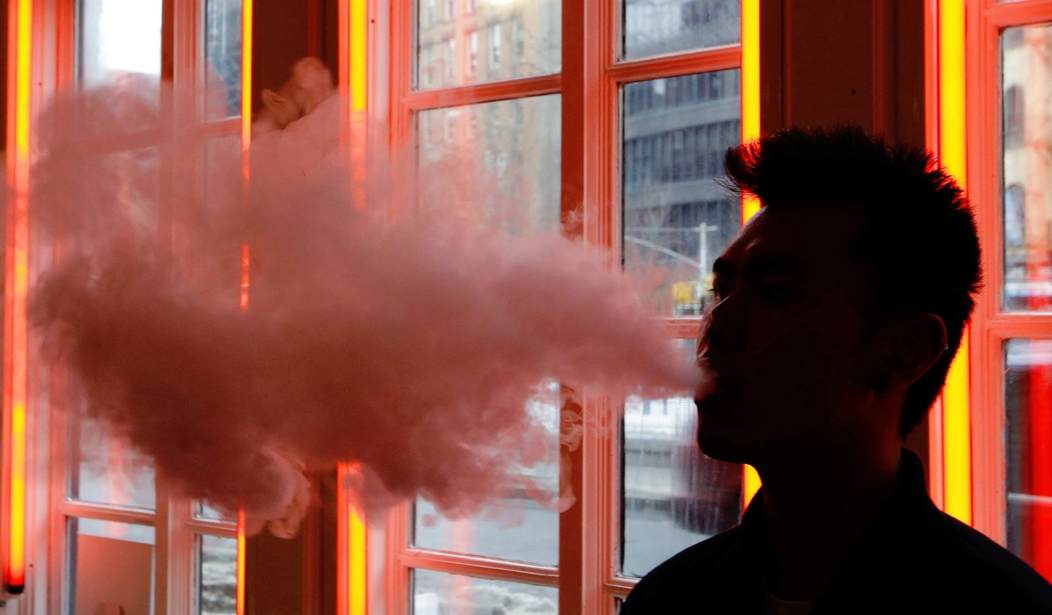
The World Health Organization’s (WHO) own newly-released global report leaves little room for denial: safer nicotine alternatives are catching on worldwide, and that’s bad news for the prohibitionists. After surveying 195 countries and finally measuring global e-cigarette use, the WHO’s data make one thing clear—vaping is displacing smoking. Yet instead of embracing a shift that could save millions of lives, the WHO is heading into its Conference of the Parties (COP) 11 still doubling down on counterproductive anti-vaping policies that defy both evidence and common sense.
According to the report, the number of tobacco users has dropped from 1.38 billion in 2000 to 1.2 billion in 2024. Since 2010, the number of people using tobacco has fallen by 120 million—a 27 percent drop in relative terms. Global tobacco prevalence has significantly declined since the turn of the century, with a 13 percent reduction in the number of users and a 27 percent decrease in prevalence when adjusted for population growth. Interestingly, current tobacco use among women (females aged 15 years and older) is declining at a faster rate than that of men. The 2000 estimate for women started much lower at 16.5 percent, which was one-third the level of men’s prevalence at the time. By 2010, it was down to 11 percent. In 2024, the estimate is 6.6 percent, already below the WHO member states' target of 7.7 percent.
Tobacco harm reduction (THR) must be recognized as a crucial factor in tobacco cessation. The WHO report estimates that the number of tobacco users will continue to decrease to 1.197 billion by 2030, but it overlooks the impact THR has had on smoking rates.
Products such as vapes, nicotine pouches, and heated tobacco are less harmful alternatives to traditional cigarettes. Over 480,000 deaths occur annually in the United States from smoking, which accounts for about one in six deaths each year. A typical cigarette contains more than 6,000 ingredients, and when burned, it releases over 7,000 chemicals, many of which are carcinogens, including arsenic, formaldehyde, lead, and tar. Unsurprisingly, traditional cigarette use is linked to numerous diseases and chronic illnesses.
According to the National Cancer Institute, smoking wreaks havoc across nearly every organ system, driving a long list of cancers, heart and lung diseases, metabolic disorders, and immune problems. In short, few habits are more destructive to the human body than lighting up.
Millions of Americans have used THR products to help them quit smoking. In 1965, according to the Centers for Disease Control and Prevention (CDC), 42 percent of U.S. adults smoked cigarettes. By 2022, that percentage had decreased to 11.6 percent. Between 2007 and 2015, more than three million U.S. adults used THR products to stop smoking cigarettes. Smokeless tobacco products, like e-cigarettes or vapor products, deliver nicotine without the harmful effects of smoking. They have been proven to assist adults in quitting smoking and likely played a significant role in the sharp decline of combustible tobacco use in recent years. However, governments worldwide are restricting access to THR products.
Unfortunately, the WHO has taken the wrong approach. The report credits progress to the implementation of the WHO FCTC and MPOWER measures, ignoring the critical role of reduced-risk products. The WHO encourages governments to adopt ineffective policies, such as high taxes and bans, to accelerate the decline of tobacco use. History has shown us that prohibition doesn’t work. In the 1920s and 1930s, alcohol prohibition proved to be ineffective and created more problems than it solved. Severe unintended consequences included the creation of a black market controlled by organized crime and the sale of dangerous illicit products.
Thousands died from drinking contaminated “moonshine.” Wanton restrictions on tobacco and THR products are posing similar problems. When products are unregulated, they pose health risks to consumers.
Additionally, these policies cause economic hardship and lead to significant tax revenue losses at both the state and federal levels. According to the Tax Foundation, cigarettes are easily transportable in bulk, and large-scale cigarette smuggling operations are already in place due to excessively high tax rates. In 2022, 54 percent of cigarettes consumed in New York were smuggled into the state. Nearly half of the cigarettes consumed in California and New Mexico were not legally purchased in those states. Restrictions, bans, and high taxes only succeed in empowering criminals and compromising Americans’ health.
The WHO must recognize the benefits of THR before it's too late. Fortunately, the Taxpayers Protection Alliance is organizing a rapid response and fact-checking conference in Geneva, Switzerland, to counter the WHO’s COP11. TPA’s event “Conference of the People (Good COP)” brings in experts and consumers, often ignored by WHO, to be heard during the discussion of tobacco and THR. Hopefully, global bureaucrats will listen and embrace harm reduction and consumer choice.
Christina Smith is the director of the Consumer Center at Taxpayers Protection Alliance.
Editor’s Note: Do you enjoy Townhall’s conservative reporting that takes on the radical left and woke media? Support our work so that we can continue to bring you the truth.
Join Townhall VIP and use the promo code FIGHT to get 60% off your VIP membership!

Join the Conversation
VIP members get the ability to comment on articles.