





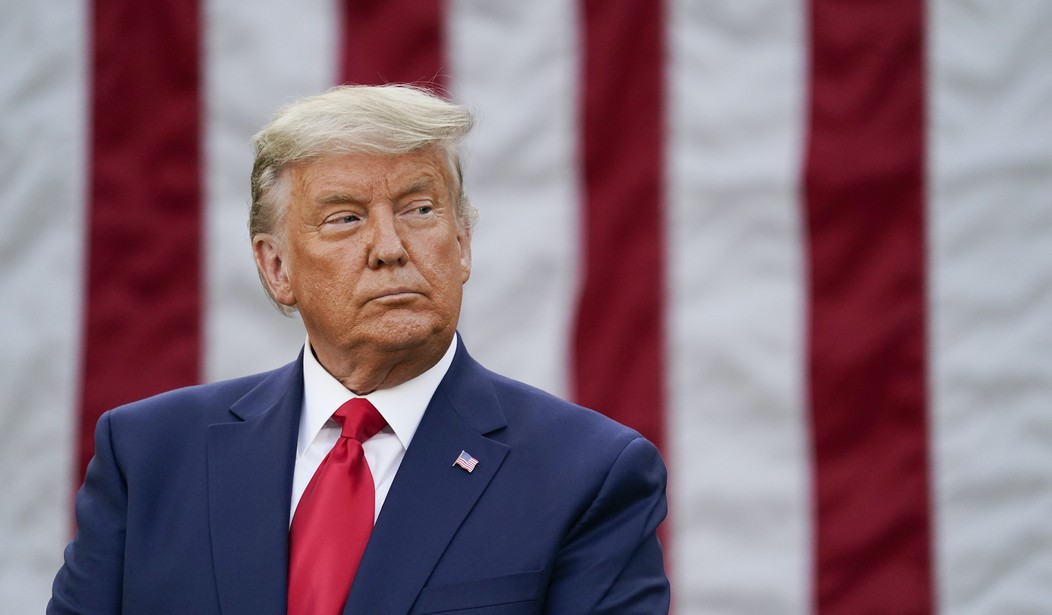
The Constitution grants expansive pardon power to the office of the President. President Donald J. Trump should use this power liberally and as he sees fit.
The United States has an overcriminalization problem in United States. In addition, we have a system that continues punishing those who have paid their debt to society and have turned their lives around. Showing mercy to those who have reformed, and many who should have never been sent to jail in the first place is probably the best use of the broad presidential pardon power to balance off overcriminalization and the continuing punishment of those who have already served time in jail.
Article II, Sec. 2 of the Constitution delegates to the President the power “to grant Reprieves and Pardons for Offenses against the United States, except in Cases of Impeachment.” The pardon power embodies the idea that the President can show mercy. President Trump has wisely used this power already to grant pardons to many people, including well-known individuals such as Michael Flynn, Bernie Kerik, and Dinesh D’Souza. He also has used in cases of ‘ordinary’ citizens, such as Alice Johnson, who served twenty-one years of a life sentence for a minor role in a cocaine trafficking ring--her only criminal offense.
President Trump also has used the pardon power to right historical wrongs, such as with the pardon of former heavyweight boxing champion Jack Johnson, who over 100 years ago was tainted with a racially-motivated federal conviction. In all such cases, President Trump was righting wrongs and rewarded good conduct following the convictions. It remains sensible for President Trump to continue granting pardons to those deserving Americans who need relief from an overaggressive federal government, and to those who have turned their lives around and now are dedicated to good works.
One reason why it makes good sense for the president to liberally use the pardon power is to address the problem of overcriminalization It is widely recognized that the United States has been overaggressive in criminalizing certain crimes--especially victimless crimes--and punishing offenders with long prison sentences which ruin lives and families. The U.S. has the highest incarceration rate per population of any country in the world – by far. This is a problem that can be balanced out by a President with pardon power to dispense relief for those who should have their civil rights restored post-release, or to be released from prison if still incarcerated under arcane laws.
Recommended
One emerging problem in the U.S. is the criminalization of politics. Democrats frequently brag about wanting to prosecute President Trump, his family, and Trump Administration officials the day they leave office. Indeed, elected New York Attorney General Letitia James, and Manhattan District Attorney Cyrus Vance, have very publicly made it plain that they are searching for state crimes that can be used as a basis for prosecuting President Trump, his family, and his associates. Just look at Paul Manafort, Roger Stone, Michal Cohen, Steve Bannon, Michael Flynn, and Rick Gates who all have been the subject of criminal probes or convictions because they are close to President Trump. One can make a case that all of them may have committed some offense, yet jail terms for these alleged white-collar criminals seem excessive.
Another frequent use of the pardon power by presidents is to clear the names of people who have turned their lives around post-release from prison. I am familiar with the case of John Silvey of Kentucky who is seeking a pardon through the Department of Justice. John was a ‘typical’ young man who was addicted to drugs at a young age, and who found himself as a minor role player in a large drug trafficking ring. John had an epiphany in prison which led him to turn his life around after his release. He went to college, earned a 4.0-grade point average, is a valued employee at the University of Kentucky, and is a professional bodybuilder. John works with the Lexington, Kentucky Police Department now giving talks to at-risk youths who he wants to save from the same fate that he suffered as a young, lost man. This is a man who had committed a non-violent drug offense as a youth, but who to this day has lost many of his civil rights due to his conviction, which is over 20 years old. John is a perfect example of an exemplary adult who served his time in prison as a very young man, but who now should be pardoned.
President Trump is a conservative. It is a hallmark of conservatism that each person is looked at as an individual, and not as a member of a category--even if the category is ‘federal felon’. Thus, as a conservative, President Trump should liberally use his pardon power to right wrongs, and to restore deserving individuals back to full membership of society so as to balance out the injustice of over-incarceration, and to grant a new lease on life to those who have shown themselves to deserve it.




Join the conversation as a VIP Member