







Last week's naval confrontation between Vietnam and China involved an old and unresolved territorial dispute in the South China Sea. For decades, the Communist neighbors have sparred over the islets. However, Hanoi's high-risk response led to the most dangerous clash since the bloody 1979 China-Vietnam border war.
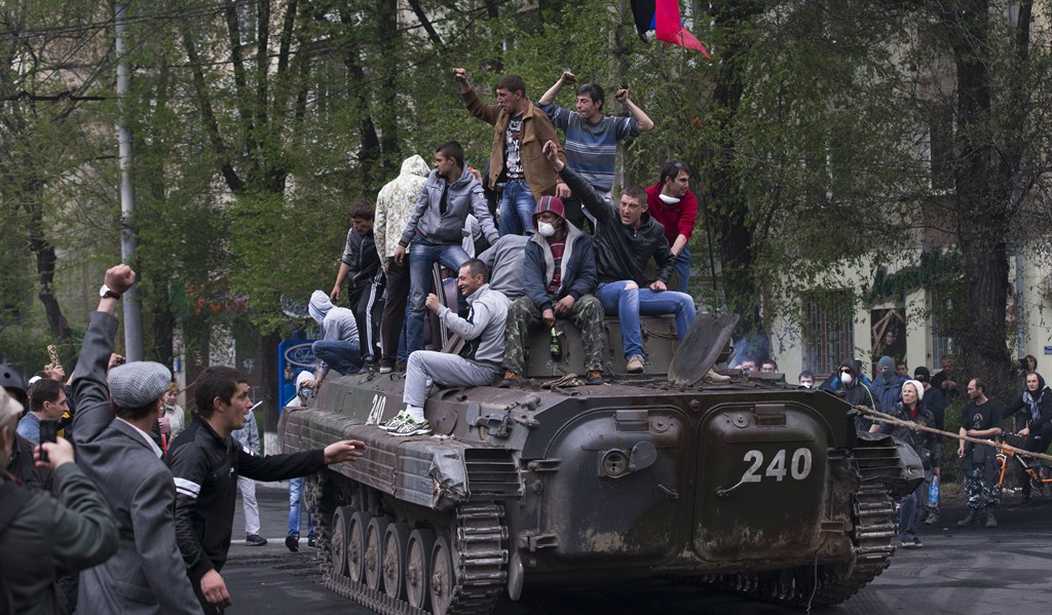
The Vietnam-China Paracel Islands dispute -- Chinese calls the chain of 30 islets the Xisha -- definitely pre-dates Russia's invasion and annexation of territory long coveted by the Kremlin: Crimea.
The imperial seizure of a neighboring region, which the invading state swiftly absorbs as sovereign territory, is an old and dangerous human activity. In the second half of the 20th century, nuclear weapons and firm U.S. leadership by in large checked this behavior in Europe and East Asia.
Crimea, however, already serves as a 21st-century political-psychological precedent. Vietnam and other nations confronting Chinese land grabs cannot help but notice the Kremlin's remarkably cost-free use of military, economic and diplomatic power to forward imperial expansion. Russia's decision to completely ignore the 1994 Budapest Memorandum (guaranteeing Ukrainian territorial integrity) stunned the Obama Administration's "smart diplomats." They fervently believed paper documents stopped dictators. They don't. No wonder Eastern Europeans fear future Kremlin imperial adventurism.
Vietnam's vigorous reaction last week sends the message that it will not submit to any sort of Crimean Precedent. China triggered the incident. Seventy to 80 Chinese vessels escorted a giant oil-drilling ship into disputed waters. Hanoi claimed the Chinese flotilla included seven armed Chinese coast guard and navy ships. The rig anchored 120 miles from the Vietnamese coast. Vietnam claims a 200-mile maritime exclusive economic zone. Invoking the 1982 U.N. Convention on the Law of the Sea, Vietnam accused China of "illegally deploying" the rig within Hanoi's EEZ and dispatched 30 Vietnamese boats to challenge the intrusion. Chinese and Vietnamese patrol boats and trawlers circled the rig. Several collided. Chinese ships employed water cannons. Vietnam claimed a Chinese boat rammed a Vietnamese Coast Guard vessel.
Mayhem at sea? Yes, mayhem on the edge of war.
In 1974, China had forces in the northeastern Paracels. South Vietnam discovered Chinese forces had occupied an island in the Vietnam-claimed southwestern Paracels. When South Vietnam's military challenged the advance, Chinese forces quickly defeated Saigon's weaker naval forces and garrison units. South Vietnam no longer exists. North Vietnam's alliance with China is also kaput. Hanoi has never relinquished sovereign Vietnamese claims to the Paracels and the Spratlys, another disputed island group.
China and Vietnam fought a bitter border war in 1979. The Vietnamese dominated the land battles, and the Chinese suffered heavy casualties. Vietnam, however, lacked the air and naval assets to contest the Paracels.
Vietnam still lacks the air and naval assets, but it is challenging China, anyway. Deploying a state-owned billion-dollar drilling ship is a calculated act. When U.S. Secretary of State John Kerry called it "provocative," he understated the case. It's a fair bet that Crimea's annexation was more than a minor factor in Hanoi's decision to react vigorously.
Conflicting sovereign claims roil the South China Sea. Indonesia, Malaysia, the Philippines, Thailand, Vietnam, China and Taiwan all claim a slice. China, however, lays claim to 90 percent of the area and backs its claim with military forays and bullyboy diplomacy. In 2012, ignoring Philippine objections, China occupied the Scarborough Shoal. This year -- March 9, as Russia surrounded Ukrainian garrisons in Crimea -- Chinese forces blocked the resupply of a Filipino Marine contingent protecting an islet in the Spratlys.
The European Union, NATO and the U.N.'s collective failure to quickly penalize and stigmatize Russia's annexation of Crimea adds to Asian fears that China may decide the time is ripe to resolve territorial disputes by force of arms and then use its economic muscle and U.N. veto to parry international condemnation.

Join the Conversation
VIP members get the ability to comment on articles.