


It goes without saying that children should not be punished for the crimes of their parents. If two adults rob a bank, the children of those adults shouldn’t be sent to jail to serve alongside their parents.
Likewise, for the so-called “Dreamers,” individuals who meet a certain set of circumstances, but who generally were brought to the United States as part of their parents’ efforts at illegal immigration, and were raised here without legal status, these children should not be punished for their parents’ criminal action in bringing them here.
President Obama attempted to solve this issue through an executive branch effort called “DACA” – Deferred Action for Childhood Arrivals. Because President Obama had done this through the executive branch, it left the door open for President Trump to change federal policy via similar executive branch action—and President Trump, rightly, said that if there was to be a permanent fix in the offing, Congress (the legislative branch) should provide it.
And the president set a deadline. This was of the utmost importance since, as we have learned too many times, Congress won’t act on something unless it absolutely has to (and even then, as we’re seeing with the responses to the Covid-19 Pandemic, they still may not).
President Trump setting a deadline for congressional action on DACA was essential in getting a permanent solution to the challenges facing America’s Dreamers. Since this means an actual change in federal immigration law, and all such legal changes are founded in the legislative branch, Congress had to act—and would not do so without the pressure of a deadline.
Unfortunately, such pressure was alleviated when a series of legal challenges to the Trump administration’s efforts was mounted. Federal courts granted “stays” of executive branch policy, and with the deadline gone, Congress felt no impetus to act. A congressional election was held and one house of Congress had their leadership flipped from one party to another, and still, no solution was offered.
Recommended
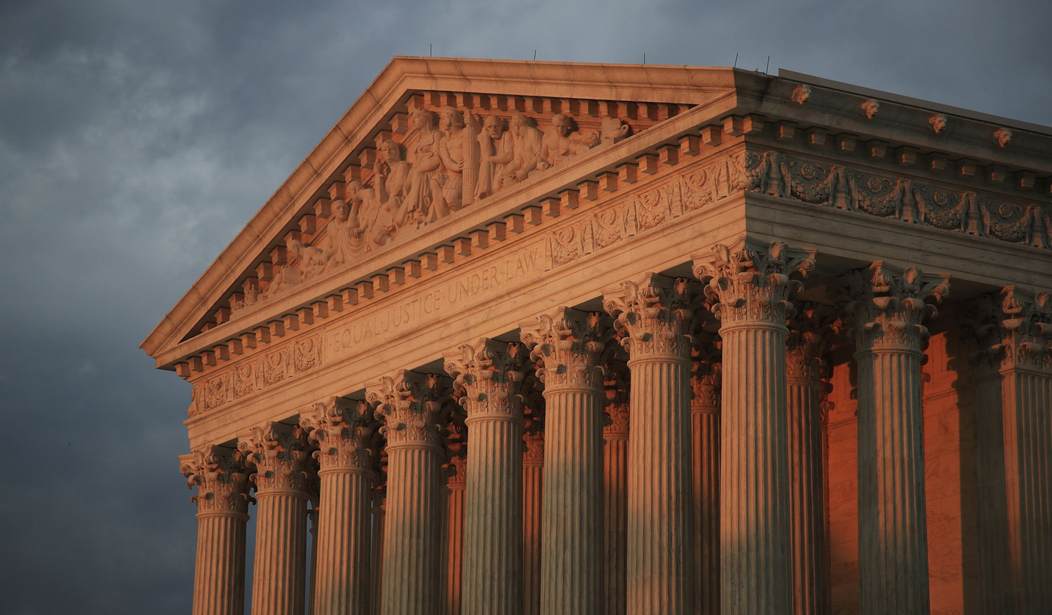
Which is why it was essentially inevitable for the US Supreme Court to get involved in this. Make no mistake, both sides in the case before the Supreme Court generally agree—if the Obama administration attempted to solve this problem without the action of Congress, then the Trump administration has equal power to undo what the Obama administration did.
And at issue in this case is whether the tenets of the Administrative Procedure Act (APA) were followed in undoing the earlier work of the Obama administration and, in doing so, pushing Congress to create a permanent fix.
The APA is an essential tool—it creates a standardized set of procedures whereby most-agencies (there are a few exceptions) conduct their work in crafting executive branch public policies. The APA exists, essentially, to protect individual rights, so that the public is well-aware of how the agency is conducting business, and it is supposed to (in theory) ensure that public input is heard and considered. It works to ensure that agency decision-making is neither arbitrary, capricious, an abuse of discretion or otherwise not in accordance with the law.
Given the deference that agencies are given—both in how they interpret the law and in how they interpret their own regulations, it has to be abundantly clear that the agency abused its powers under the APA (and underlying legislation) in order for agency action to be overturned.
Given how the Justices were discussing the case at the hearing this past fall, there are clear indications that the Court will rule in favor of the Trump administration.
But this is not bad news for Dreamers and their advocates—sadly, the process had to play out in this way.
Once the Court rules, then it will be once again left to Congress to figure out a permanent fix—either under the auspices of a renewed deadline for action, or under the pressure of solving a problem that a majority of Americans believe needs to be solved, and to do so in order to have some positive legislative “wins” before the elections (presidential and congressional) this fall.
Sadly, we’re in an era in which Congress only acts when it has to. With a Supreme Court ruling on the issue of the Dreamers, Congress may once again be under pressure to find a solution. If they seriously want to help DACA recipients, then they absolutely have to act.
Andrew Langer is President of the Institute for Liberty







Join the conversation as a VIP Member