



I have talked with soldiers from Afghanistan -- both American and British, both in the ranks and field-grade officers -- in an effort at making sense of what we are doing there. The White House and Pentagon publicly say they are reassessing policy in Afghanistan. It is well that they should. So far, both means and goals are confused.
The initial phase of the war, which started Oct. 7, 2001, had a clear and necessary purpose: to destroy the Taliban regime that gave succor to those who attacked us Sept. 11. That promptly was accomplished in a shrewdly designed operation that combined a light American presence with a maximum effort at working with local and regional forces hostile to the regime. However, as the Taliban continue the fight (with their Pakistan redoubts), short of permanent American occupation, what is our plan?

In a partially public, partially hush-hush review of policy between the administration and the new commander, Gen. Stanley McChrystal, the commander has said the Taliban has gained the upper hand, extended their fighting to formerly stable areas and increased their technological sophistication. The general has said publicly that he still is considering a request for more troops -- above the current number, 68,000 American troops -- which itself reflects the earlier administration decision to increase troop levels by 21,000 military souls.
Gen. McChrystal also has said publicly already that he would almost double the size of the Afghan military and police. According to The Wall Street Journal, the Afghan army would increase from 135,000 to 240,000, and the police would increase from 82,000 to 160,000. That alone implies a substantial increase in American troop levels -- both to train all those new Afghans and to lead and support them in heightened levels of fighting -- which, the general says, is necessary.
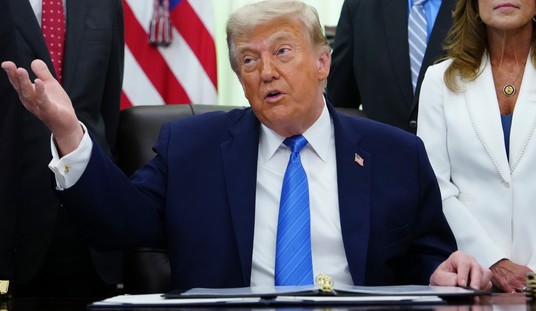
But last week, the general was called to a previously unscheduled private meeting in Belgium with Secretary of Defense Robert Gates and the chairman of the Joint Chiefs of Staff, Adm. Mike Mullen, after which it was announced that McChrystal's new war plans would be postponed.
Last week, Pentagon spokesman Geoff Morrell seemed to be undercutting the significance of Gen. McChrystal's review, stating: "This is not akin to the much-anticipated Gen. (David) Petraeus assessments that we got in ... 2007. ... The assessment will not be, despite some erroneous reporting that I've seen, a work product that includes specific resource requests, if indeed there will be additional resource requests. ... The assessment will focus ... on the situation on the ground and the way ahead, but it will not offer specific resource requests or recommendations."
Some important experts are concerned that those words -- and that rushed private meeting in Belgium -- suggest that the administration is politicizing war policy and not giving sufficient respect to military recommendations.
While I agree with that assessment, I don't chastise the administration for it. Ultimately, high war policy is a political decision for which the president is responsible. Consider the very proper roles of Abraham Lincoln, Winston Churchill and David Ben-Gurion in the wars they actively led in strategic and even tactical decision-making.
At the highest levels, war-fighting policy often becomes historical and political judgment -- and thus presidential. For example, it would appear that a policy that calls for substantially increased troop strengths for both the American and Afghan forces implies a policy that aspires to build a strong central government in Kabul capable of permanently suppressing the Taliban. But the long history of Afghanistan suggests that, unlike Iraq (or Japan and Germany after World War II), Afghanistan is not likely to accept a strong central government.
According to several of the troops with whom I talked, a policy that merely wants permanently to suppress the Taliban could be more surely gained by fully empowering the local tribal chiefs and warlords to go after the Taliban -- who, though of the same Pashtun tribe as many Afghans, are considered different subsets of the tribe and thus foreigners worthy of enthusiastic slaughter.
Afghans hate foreigners, whether Macedonian, British, Russian, American or Pakistani Pashtun. I am told that America's tendency to want to get the military job done ourselves is offending the local friendly fighters. We have trouble letting go of responsibility. We are not hated quite yet. But we need to leave soon, or we will be.
Also, we cannot deny the locals the revenue from the poppy fields and hope to befriend and empower the local tribal chiefs and farmers. It would be better if we simply bought the whole yearly crop (approximate cost $2 billion to 3 billion -- but far cheaper in both dollars and American lives than the alternative) and directed it to the legal pharmaceutical market. Thus, the Afghans would keep their desperately needed money (and their traditional tribal relations and culture); the Taliban wouldn't get its cut; and we would keep the heroin off the streets of Europe and America.
If we insist on our current policy of trying to prop up an inevitably corrupt and feeble Kabul central government and supplant the traditional tribal leaders with a national army and 100,000 American troops in the field, it all will end in tears.
We should support the tribes that have cheerfully and courageously driven out all foreign intruders for thousands of years, not try to build a national government that they will equally cheerfully massacre -- as they have for thousands of years.




Join the conversation as a VIP Member