




What America was to the world in 1950, General Motors was to the nation.
It was the largest and most successful company with the largest number of employees. It paid the highest wages and contributed more in taxes than any other company. During World War II, no company had contributed more to the Arsenal of Democracy and America's victory.
As one wag said, "For every shell Krupp threw at us, GM threw back four." The cars GM built -- Cadillac, Oldsmobile, Chevrolet, Buick and Pontiac -- were the best in their class. But in the second half of the 20th century, something happened.
General Motors' executives repeatedly caved in to United Autoworkers' demands for wages, health benefits and pensions the company could not afford over the long term. Small and inexpensive foreign cars were allowed into the U.S. market and, as their quality improved, began to flood the U.S. market.
GM executives failed to see what was happening, and if they saw it, to act upon the new reality. Thus, at the end of the last decade, the U.S. government acted.
The company was taken into receivership. Shareholders and bondholders of GM were wiped out. Hundreds of GM dealerships closed. Now, a new GM has come out of bankruptcy to takes its place as one of a dozen major auto companies in the United States and the world.
The failure of GM was a failure of leadership. Executives lacked the vision to see the challenges coming. They lacked the courage to resist the demands of union bosses. They lacked the decisiveness to act, when sacrifices were clearly required.
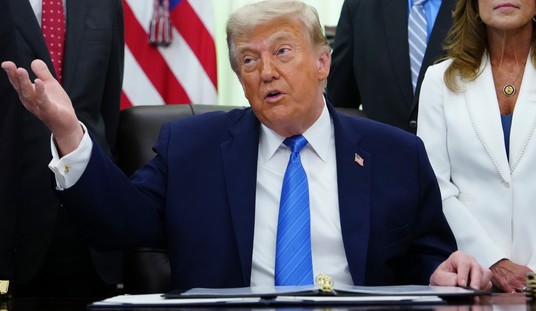
In his State of the Union address, President Obama called this America's "sputnik moment," like that October day in 1957 when we suddenly awoke to the reality that those backward Russians with their communist system had beaten America into space.
But listening to the president speak Tuesday night, one came away with a distinct impression. Either Obama does not believe this country is careening toward a fiscal and financial crisis, or he refuses to pay the political price of imposing the sacrifices needed to lead the country back from the brink.
The day after the president spoke, the Congressional Budget Office estimated the deficit this fiscal year at $1.5 trillion, largest in peacetime history and 10 percent of the entire U.S. economy. Almost 40 percent of the budget will be financed this year by borrowing from our own citizens and foreign countries, China foremost among them.
Did anyone detect in the president's pleasant demeanor that night any sense of urgency, any sense that this time the wolf is really at the door? Did anyone hear a call for sacrifices, and not just small ones, to pull our country back from the precipice of national default?
The disconnect between the Tea Party Republicans and the president could not be greater. He is talking about bullet trains and infrastructure; they are talking of defunding Amtrak and the Washington, D.C., subway system.
They are talking about raising the retirement age for Social Security, which is now sending out more in monthly checks than it is taking in in payroll taxes. Obama is being congratulated by the liberal wing of his party for refusing even to bow in that direction.
What the White House is about may be smart short-term politics, but it is the antithesis of leadership. They are going to let the Republicans take the lead and take the heat for proposing painful budget cuts, then play "good cop" and battle to restore those cuts and win the gratitude of the beneficiaries of those programs.
But it is late in the day for political games.
For both the welfare state -- the major entitlement programs, Medicare, Medicaid and Social Security -- and the warfare state -- the near $1 trillion we spend yearly on wars, 700 to 1,000 military bases in some 140 countries, foreign aid and the military industrial complex -- have to be downsized.
We cannot make good on all the promises our politicians have made, and we cannot defend in perpetuity all the countries we agreed to defend in the Cold War.
And if this downsizing is not done by our leaders, the decisions will be forced upon us when China and our other creditors come to us to say: We have enough of your dollars. We don't want any more. But if we must take them, we want a higher rate of interest to cover the higher risk of default. For you Americans look to us to be headed for the same place where Greece and Ireland may be found today.
Obama's conscious avoidance of any specific recommendations for deep budget cuts, commensurate with the crisis we face, may be rewarded if we avert that crisis before November 2012. But if the crisis hits sooner, his epitaph will be that he lacked the vision to see what everyone else saw or he lacked the courage to rise to the occasion.
Either way, Obama will have failed his country.






Join the conversation as a VIP Member