



Get ready folks: America is about to own a car company. As of Monday, we the taxpayers will own more than 70 percent of GM. Whether the company will be formally renamed Government Motors remains to be seen. But that’s what it will be.
Instead of putting the failed car enterprise into bankruptcy six months ago -- where Carl Icahn or Wilbur Ross could have bought it -- the Bush administration chose Bailout Nation. Under Team Obama, that bailout has morphed into full-scale government ownership. Twenty-billion dollars of TARP money is already invested in GM, with another $50 billion on the way. And that number could easily double unless GM car sales miraculously climb back to 14 million this year. That’s highly unlikely, with car sales presently hovering around 9 million a year.
In other words, taxpayers are not going to get their money back. Yes, we the people will be left holding the bag for the mistakes of GM’s management and labor leaders over the last four decades.
And with CAFE mileage-standards ratcheting up -- all while GM is going down -- Team Obama’s green vision for the economy will soon be crystal clear. With President Obama in the driver’s seat, we’re going to get little green two-door cars that most folks won’t want to buy.
Even worse, UAW chief Ron Gettelfinger has made it plain that his powerful union won’t let these cars be manufactured in low-cost non-union plants overseas. The result? Obama’s little green cars are going to be unprofitable as well.
But it’s the bigger picture that has me most concerned. What does Government Motors say about the direction of the United States? Historically, we don’t own car companies --or banks or insurance firms. But we do now. Tick them off on your fingers: GM, Citi, AIG. Oh, and let’s not forget Fannie and Freddie, those, big quasi-government, taxpayer-owned housing agencies. California is broke and likely headed to bankruptcy. Will we the taxpayers own that, too?
Altogether, we’re talking about hundreds of billions of taxpayer dollars that will never be repaid. This is the stuff the Italians used to do, and the Brits before Thatcher, and the Soviets a long time ago. But it’s something very new and very different for America.
Is this onslaught of government ownership an attack on free-market capitalism? Yes it is. Call it Bailout Nation or Ownership Nation, it’s an unprecedented degree of government command, control, and planning, all in the name of a tough economic downturn.
I don’t pretend to know all the answers to GM’s problems. Neither do I know all the miscues of the banks and insurance companies. But I do know this: The present level of government control over the economy does not bode well for this great country.
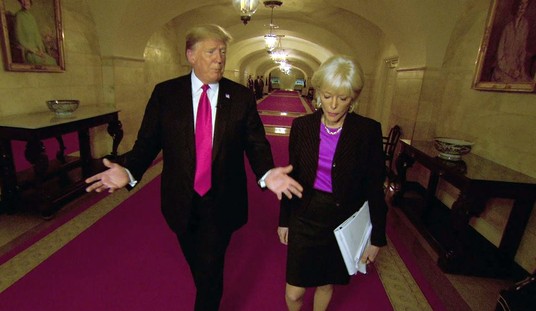
When I sat down with former Vice President Dick Cheney for a CNBC interview this week, I asked him about all this. He wasn’t happy. Of course, many of these policies began during the Bush-Cheney administration, and Cheney didn’t deny it. But when I asked if he anticipated the current degree of government control, he gave me another honest answer, as is his custom: No.
Regarding the banks, Cheney said the bailout work was done over at the Treasury (under Henry Paulson), and that no critical studies were performed by the White House. Cheney himself opposed the GM bailout, preferring Chapter 11 bankruptcy. He did sign on to the TARP bailout of banks as a stop-gap measure. But he didn’t anticipate its eventual size, scope, and sweep. Then, squarely acknowledging the mistake, he compared Bailout Nation to Nixon’s wage-and-price-control program, which touched every enterprise in America. He called it “a terrible mistake; a huge mistake.” By implication, Cheney suggested that the original Bush bailout program was itself a big mistake.
As for Nixon’s wage-and-price-control policy, the former veep reminded me that “we finally got out of it, but it took a long time to do it, and it [did] a lot of damage.”
Cheney was very critical of Obama’s big-government spending-and-borrowing policies, too, telling me that there are only two ways out: inflating the money supply or big tax increases. He doesn’t like either. Yes, Cheney believes Obama has taken Bailout Nation and government stimulus way beyond anything the Bushies ever contemplated. Nevertheless, the damage is done.
Cheney recalled Bush having said that “we have to suspend free-market capitalism in order to save free-market capitalism.” So the big question is this: How long before we resurrect free-market capitalism, and how much damage will current policies do in the meantime?
I won’t lose my faith in this country’s long-term future. But the issue of how much damage we sustain before returning to the policies of free-market economic growth is very much on my mind.





Join the conversation as a VIP Member