





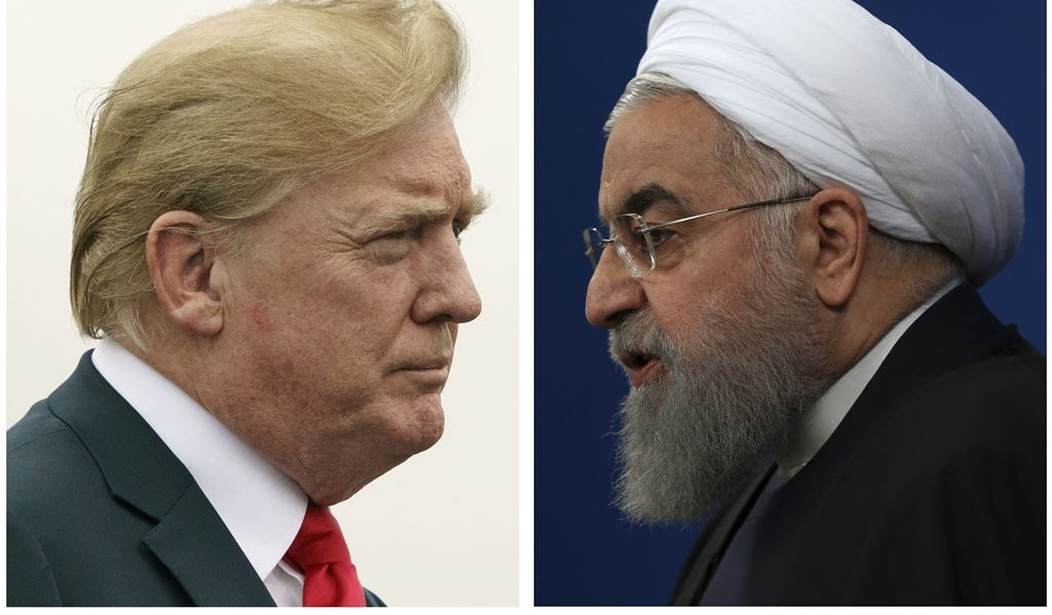
Iran announced on Monday that they now have more enriched uranium than what is allowed by the Iran nuclear deal agreed to under President Obama, raising the stakes in its confrontation with the United States over its nuclear program.
The U.N. nuclear watchdog confirmed that Iran has breached its stockpile limit of 300 kilograms for low-grade enriched uranium. The country’s Foreign Minister Javad Zarif, however, noted that the move is “reversible,” signaling that Iran is still open for negotiation.
Iran exceeded the stockpile limit after a crunch time negotiation with European signatories of the nuclear deal failed to convince the Iranians to roll back its expanded nuclear production, The New York Times reported.
Iran’s move marks the latest escalation in a year-long stand-off between Iran and the United States, which withdrew from the nuclear deal in May 2018 after the Trump administration raised concerns that the agreement does not adequately restrain the country’s nuclear ambitions. The co-signatories of the Iran nuclear deal, which includes the European Union as well as China and Russia, opposed the U.S. withdrawal.
Since withdrawing from the nuclear deal, the U.S. has imposed tough sanctions on Iran and third-party entities that trade with Iran, putting severe pressure on the Iranian economy.
In response to U.S. sanctions, Iran quadrupled its production of low-grade enriched uranium starting in May, putting it on course to breach the stockpile limit in a matter of weeks. The United States also said Iran orchestrated the attacks on several tankers that took place near Iranian waters; Iran flatly denies the charges.
In June, Iran further escalated the situation by shooting down a U.S. drone. Iran claimed the drone was in its own airspace, while the United States said it was flying in international airspace. The tense situation prompted President Donald Trump to authorize a U.S. airstrike on Iranian military installation, an order that was canceled in the last minute after the president learned that 150 people may die as a result.
The low-enriched uranium cannot readily be used to build nuclear weapons. However, Iran promised to start enriching uranium with a higher concentration than allowed by the nuclear deal starting on July 7, if it won’t be shielded from the impact of U.S. sanctions by then.

Join the Conversation
VIP members get the ability to comment on articles.