




Pentagon Press Secretary John Kirby struggled to explain the relationship between the United States, the Taliban, and ISIS-K in Friday morning's press briefing that only led to more questions about why the Biden administration is placing trust in Taliban fighters to provide security after a suicide bomber killed 13 American service members on Thursday.
Stating the obvious, Kirby noted that "something went wrong" that allowed Thursday's attacker to detonate their bomb near an entrance gate to Hamid Karzai International Airport. He also reiterated warnings that there continue to be "specific credible threats" against U.S. forces at HKIA.
"Clearly, something went wrong": Kirby says Pentagon will "do the forensics" on how Kabul security efforts "fell short," allowing Thursday's attacks to happen.
— CBS News (@CBSNews) August 27, 2021
"There are credible threats — in fact, I'd say specific credible threats — and we want to make sure we're prepared" pic.twitter.com/PHcp5bE2rP
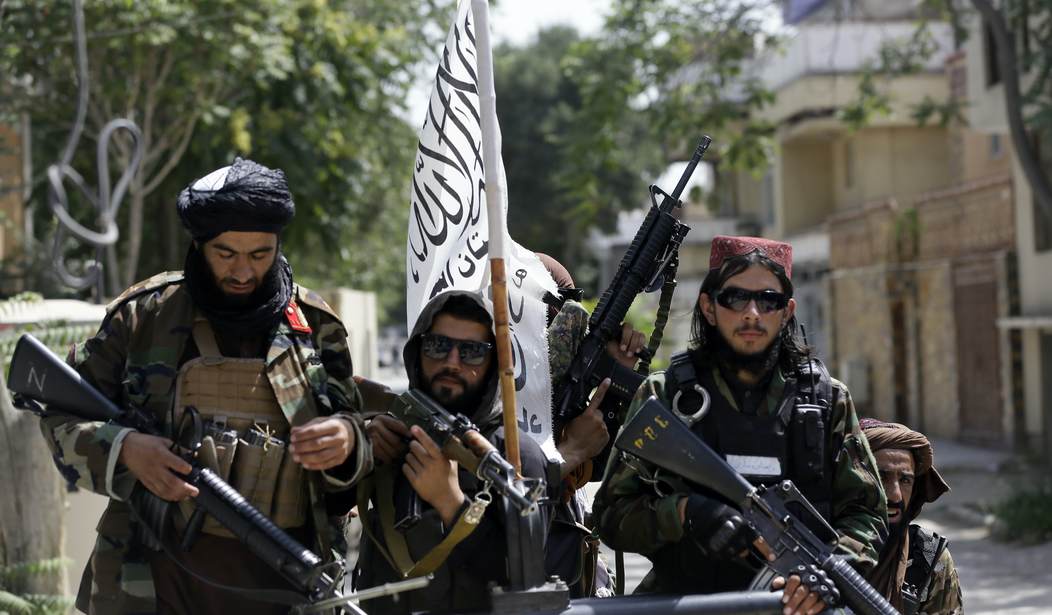
As far as what "went wrong," the situation seems clear. Members of ISIS-K were held in multiple prisons in Afghanistan. As the United States withdrew from Afghanistan, prisoners weren't transferred to other U.S. installations. Instead, the prisons and the prisoners within became the responsibility of Afghan security forces. As the Taliban gained ground in its offensive, it liberated people held in those prisons, including members of ISIS-K. Kirby says the number of ISIS-K terrorists freed by the Taliban is in the "thousands."
.@JenGriffinFNC: "How many ISIS-K prisoners were left at Bagram and believed to have been released from the prison there & why weren't they removed before the U.S. pulled out to some place like Gitmo?"
— Curtis Houck (@CurtisHouck) August 27, 2021
Kirby: "Well, I don't know the exact number. Clearly, it's in the thousands" pic.twitter.com/yUdIz0l32H
Recommended
Even though the Taliban freed members of ISIS-K, President Biden and officials from the Pentagon have repeatedly insisted that the relationship between the Taliban and ISIS-K is fraught with "animosity" and made the case that the (Taliban) enemy of our (ISIS-K) enemy is our friend in order to justify working closely with — and relying on — the Taliban to allow Americans safe passage to HKIA. On Thursday, the Pentagon even said it believed that the Taliban checkpoints encircling the Kabul airport had thwarted some previously attempted suicide attacks.
The Pentagon's reliance on the Taliban to ensure Americans and others are allowed to travel to the airport in Kabul, as well as for initial security screening, could explain Kirby's reticence to implicate the Taliban in Thursday's deadly attack.
.@JenGriffinFNC: "How can you say with such certainty and how can General McKenzie say with such certainty that the Taliban were not involved in this suicide bombing...Are you ruling out them being involved b/c you are so dependent on the Taliban right now?" pic.twitter.com/54htvpij7B
— Curtis Houck (@CurtisHouck) August 27, 2021
Kirby backtracking a bit today about the Taliban not being involved somehow in the suicide bombing yesterday that killed 13 U.S. service members
— Katie Pavlich (@KatiePavlich) August 27, 2021
However much the Taliban hates ISIS-K, they clearly hate the United States more. Otherwise, they wouldn't have freed ISIS-K prisoners while obstructing Americans seeking to reach the airlift at HKIA.
After all, if the Taliban is so unfriendly with ISIS-K, why did it free their fighters from prisons rather than keeping the terrorists incarcerated or killing them? Now the Taliban, if it truly opposes an ISIS-K presence in Afghanistan, has to track down thousands of ISIS-K terrorists they themselves liberated.








Join the conversation as a VIP Member