





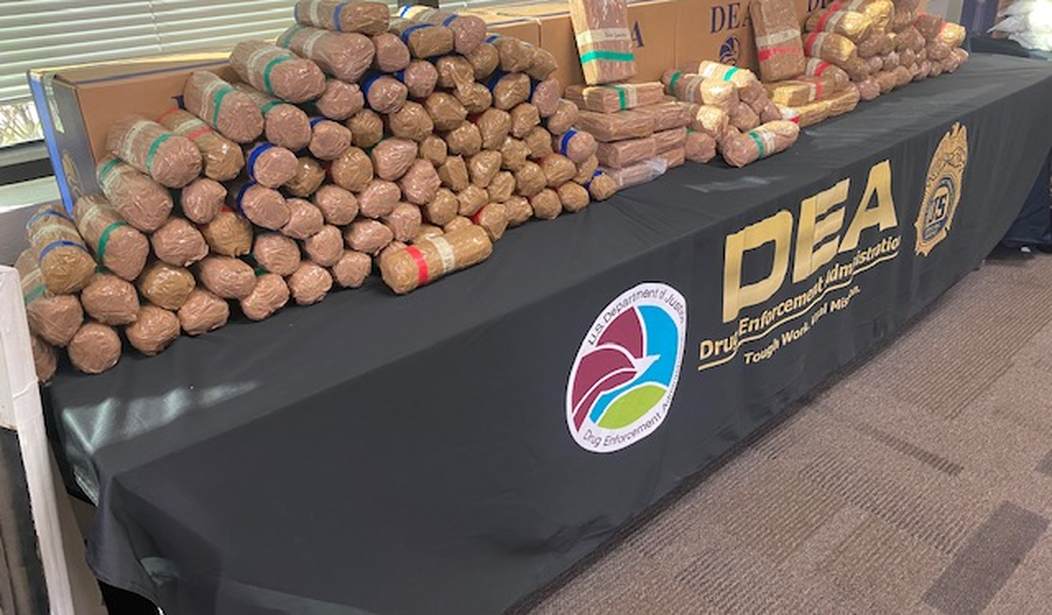
Takeshi Ebisawa, a Japanese national, was sentenced to 20 years in prison for conspiracy to traffic nuclear materials, including uranium and weapons-grade plutonium, from Burma to other countries, as well as international narcotics trafficking, weapons, and money laundering crimes.
Ebisawa previously pleaded guilty to six counts for those offenses before U.S. District Judge Colleen McMahon for the Southern District of New York.
Court records say that from about 2019 until Ebisawa's arrest on or about April 4, 2022, the DEA investigated Ebisawa in connection with the large-scale trafficking of narcotics, weapons, and nuclear materials.
“National security and public safety are the very tenets of DEA’s mission, and this case demonstrates our ability to dismantle the world’s most dangerous criminal networks,” said Administrator Terrance Cole of the U.S. Drug Enforcement Administration. “Today’s sentence should send a clear message: threatening the United States by trafficking nuclear materials, narcotics, and military-grade weapons will trigger an uncompromising response. DEA will hold conspirators accountable—no matter the distance, no matter their allegiance.”
During the investigation, Ebisawa unwittingly introduced an undercover DEA agent, posing as a narcotics and weapons trafficker, to Ebisawa's international network of criminal associates, which spanned Japan, Thailand, Burma, Sri Lanka, and the United States, among other places, for the purpose of arranging criminal transactions. Over three years, Ebisawa and his associates negotiated four sets of transactions with UC-1.
“Thanks to the exceptional work of the DEA and our DOJ prosecutors, Takeshi Ebisawa has been held accountable for his crimes, including an attempt to sell weapons-grade plutonium to Iran and to flood New York with deadly narcotics,” said Assistant Attorney General for National Security John A. Eisenberg. “The National Security Division will continue to work with our law enforcement partners to identify and dismantle criminal networks that seek to profit from the illicit trade in deadly weapons and substances.”
First, Ebisawa attempted to broker the sale of nuclear materials in exchange for military-grade weapons, including surface-to-air missiles, for an ethnic insurgent group in Burma. Ebisawa intended to sell this nuclear material to UC-1’s associate, who was posing as an Iranian general in charge of Iran’s nuclear weapons program.
After initially offering uranium, Ebisawa proposed to supply the General with “plutonium” that would be even “better” and more “powerful” than uranium for Iran’s use. In or about February 2022, Ebisawa and two co-conspirators met with UC-1 in Thailand, where one of the co-conspirators showed UC-1 samples of the nuclear materials (the “Nuclear Samples”). With the assistance of Thai authorities, the Nuclear Samples were seized and subsequently transferred to the custody of U.S. law enforcement. A U.S. nuclear forensic laboratory examined the Nuclear Samples and determined they contained detectable quantities of uranium, thorium, and weapons-grade plutonium.
u.s. v. Ebisawa and Singhasiri Superseding Indictment 0 by scott.mcclallen
“The illicit trafficking of nuclear materials is an existential threat to every New Yorker and every American,” said U.S. Attorney Jay Clayton for the Southern District of New York. “Takeshi Ebisawa tried to sell uranium, thorium, and plutonium to fuel a purported nuclear weapons program, along with deadly drugs destined for U.S. streets. In exchange, Ebisawa hoped to procure battlefield weapons for insurgent groups and profit for himself. This case is a testament to the extraordinary efforts of our law enforcement partners, who worked across three continents to stop Ebisawa and bring him to justice in the United States.”
Second, Ebisawa attempted to broker the sale of methamphetamine and heroin to UC-1 in exchange for heavy weapons for another ethnic insurgent group in Burma. Ebisawa planned for the heroin and methamphetamine to be distributed in the New York market, and he understood the weapons to have been manufactured in the United States and taken from U.S. military bases in Afghanistan. In or about February 2021, Ebisawa traveled to Denmark to inspect some of the purported weapons, including anti-tank rocket weapons, machine guns, and automatic rifles.
Third, Ebisawa conspired to sell, in a separate transaction, approximately 500 kilograms of methamphetamine and 500 kilograms of heroin to UC-1 for distribution in New York. In furtherance of that transaction, in or about June 2021 and September 2021, one of Ebisawa's co-conspirators provided samples in Thailand of approximately one kilogram of methamphetamine and approximately 1.4 kilograms of heroin. The methamphetamine had a purity of approximately 98 percent, and the heroin had a purity of approximately 86 percent to 87 percent.
Finally, Ebisawa laundered $100,000, which UC-1 described to Ebisawa as narcotics proceeds, from the United States to Japan, in exchange for a 15 percent commission. In or about November 2021, the DEA transferred $100,000 to U.S. bank accounts controlled by one of Ebisawa's co-conspirators, and Ebisawa then delivered the Yen equivalent of approximately $85,000 in cash in Tokyo.
In addition to the prison term, Ebisawa, 61, was sentenced to five years of supervised release.
The investigation was led by the DEA’s Special Operations Division Bilateral Investigations Unit and the IRS Criminal Investigation. The DEA Tokyo Country Office, DEA Bangkok Country Office, DEA Chiang Mai Resident Office, DEA Jakarta Country Office, DEA Copenhagen Country Office, DEA New York Field Office, DEA New Delhi Country Office, the Counterterrorism Section of the Department of Justice’s National Security Division, the Office of International Affairs of the Department of Justice’s Criminal Division, and law enforcement partners in Denmark, Indonesia, Japan, and the Kingdom of Thailand provided assistance.
Assistant U.S. Attorneys Kaylan E. Lasky, Alexander Li, and Kevin T. Sullivan for the Southern District of New York's National Security and International Narcotics Unit are in charge of the prosecution, with assistance from the National Security Division's Counterterrorism Section.
Editor’s Note: Do you enjoy Townhall’s conservative reporting that takes on the radical Left and woke media? Support our work so that we can continue to bring you the truth.
Join Townhall VIP and use promo code FIGHT to receive 60% off your membership.

Join the Conversation
VIP members get the ability to comment on articles.