
This article has been updated to include Department of Homeland Security Secretary Kristi Noem's comments.
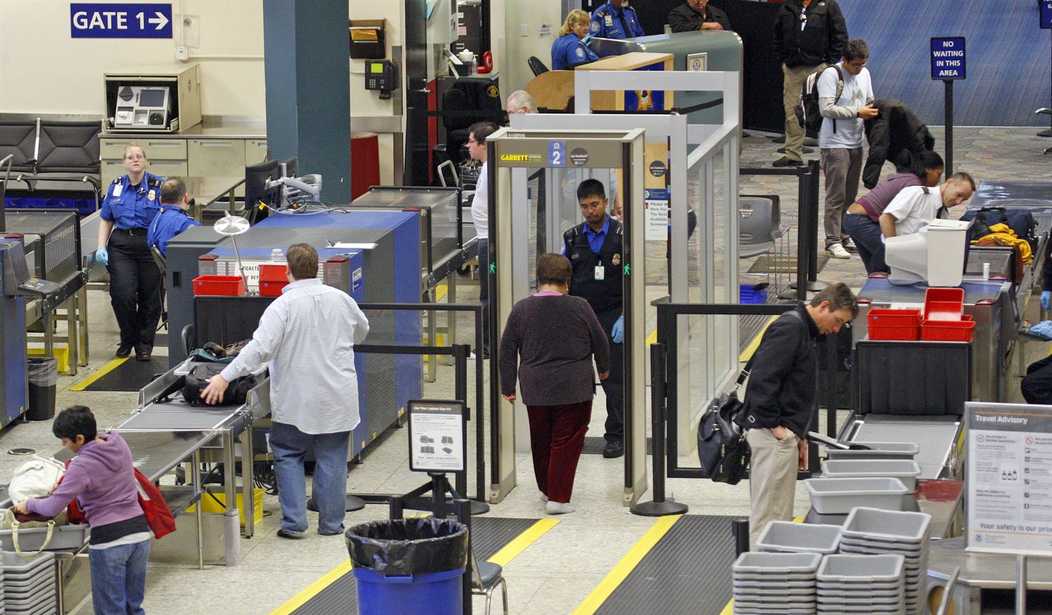
The Transportation Security Administration (TSA) announced a major airport policy change on Tuesday, which will no longer require travelers to remove their shoes before going through security. The TSA worked alongside the Department of Homeland Security (DHS), which stated that it is “always exploring new and innovative ways to enhance the passenger experience.”
White House Press Secretary Karoline Leavitt said on X that ending the protocol is "big news from @DHSgov."
Big news from @DHSgov! ✈️👟 https://t.co/GJjd2UQMki
— Karoline Leavitt (@PressSec) July 8, 2025
The policy was first implemented in 2006 after "shoe bomber" Richard Reid, a British citizen with ties to al-Qaeda, attempted to detonate explosives he had hidden in his shoes on an American Airlines flight from Paris to Miami in December 2001.
Department of Homeland Security Secretary Kristi Noem spoke about the end of the nearly 20-year policy at Ronald Reagan Washington National Airport in Washington, DC.
"In those 20 years since that policy was put in place, our security technology has changed dramatically. It's evolved. TSA has changed," Noem said. "We have a multi-layered, whole-of-government approach now to security and to the environment that people anticipate and experience when they come into an airport that has been honed and it's been hardened."
"We took a hard look at how TSA does its business, how it does its screening processes, and what we do to make people safe, but also provide some hospitality as well," Noem added.
Ending the ‘Shoes-Off’ policy is the latest effort DHS is implementing to modernize and enhance traveler experience across our nation’s airports. We expect this change will drastically decrease passenger wait times at our TSA checkpoints, leading to a more pleasant and efficient…
— Secretary Kristi Noem (@Sec_Noem) July 8, 2025
According to One Mile At A Time, an internal TSA memo revealed that the new rule change is based on technological improvements and a thorough review of current threat levels. The TSA noted that today’s scanners are capable of identifying threats without passengers having to remove their shoes. However, the agency intends to keep liquid restrictions in place until 2040, despite the advancement of screening technology for liquids, which highlights a noticeable inconsistency in how security measures are applied.
The Trump administration has pushed forward major reforms to modernize TSA operations and boost airport security efficiency. One key advancement is the rapid rollout of Credential Authentication Technology (CAT) machines, which strengthen identity verification at checkpoints. By April 2025, more than 2,100 CAT units had been installed at 247 locations, utilizing optional facial recognition to match IDs with passengers, thereby streamlining the process. These machines also support Mobile Driver’s Licenses (mDLs) and Digital IDs (dID). TSA Administrator Ha McNeil has emphasized that privatization remains a possibility, leaving open the option for some airports to contract private firms for security screening. Under her leadership, the TSA is focused on embracing cutting-edge technologies, including the deployment of Computed Tomography (CT) scanners for enhanced threat detection and the rollout of biometric systems to expedite passenger screening.