





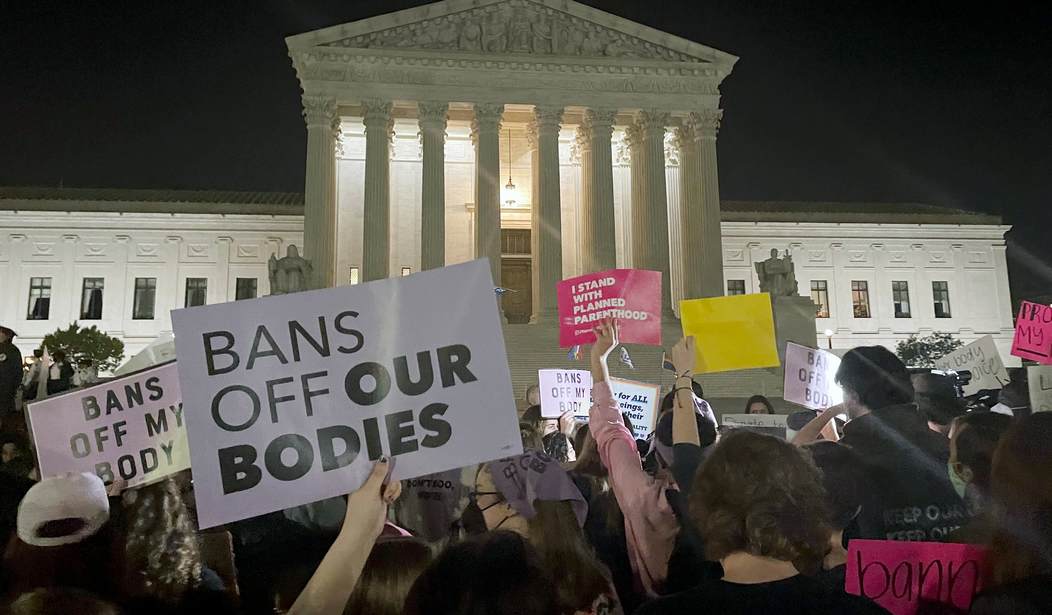
U.S. Marshals assigned to guard the Supreme Court Justice's home following the aftermath of Roe v. Wade being overturned last year were reportedly told not to make any arrests of violent protestors.
According to training documents obtained by the office of Sen. Katie Britt (R-Ala), "unless absolutely necessary," criminal enforcement action involving the protest or protestors, particularly in public space, was to be avoided.
Previously, Attorney General Merrick Garland claimed that U.S. Marshals "have full authority to arrest people under any federal statute, including that federal statute." However, the training documents suggested that the Department of Justice lawyers believed applying the statute to peaceful protests directed at the justices would violate the First Amendment.
"The 'intent of influencing any judge' language thus logically goes to threats and intimidation, not 1st [Amendment] protected protest activities," the training materials read, pointing out that arrests should only be made as a "last resort to present physical harm to the Justices and/or their families."
During a congressional hearing earlier this week, Britt presented those training documents to Garland, which he claims he has never seen before.
"There's nothing for me to amend because, as I said, I've never seen those slides before," Garland said.
At the time of the protests, even Left-wing Washington Post admitted that the protests occurring at Justice's home were most likely illegal.
"While protest is indeed ingrained in American democracy, legally speaking, the comparison between protesting a politician at home and a member of the judiciary at home is inexact. And experts say the latter category of protests is probably illegal regardless of how peaceful the demonstrations are," the Post said.
According to Title 18, Section 1507, of the U.S. Code, "with the intent of influencing any judge to picket or parade in or near a building or residence occupied or used by such judge, juror, witness, or court officer… or with such intent, to resort to any other demonstration in or near any such building or residence" is illegal.


Join the Conversation
VIP members get the ability to comment on articles.