


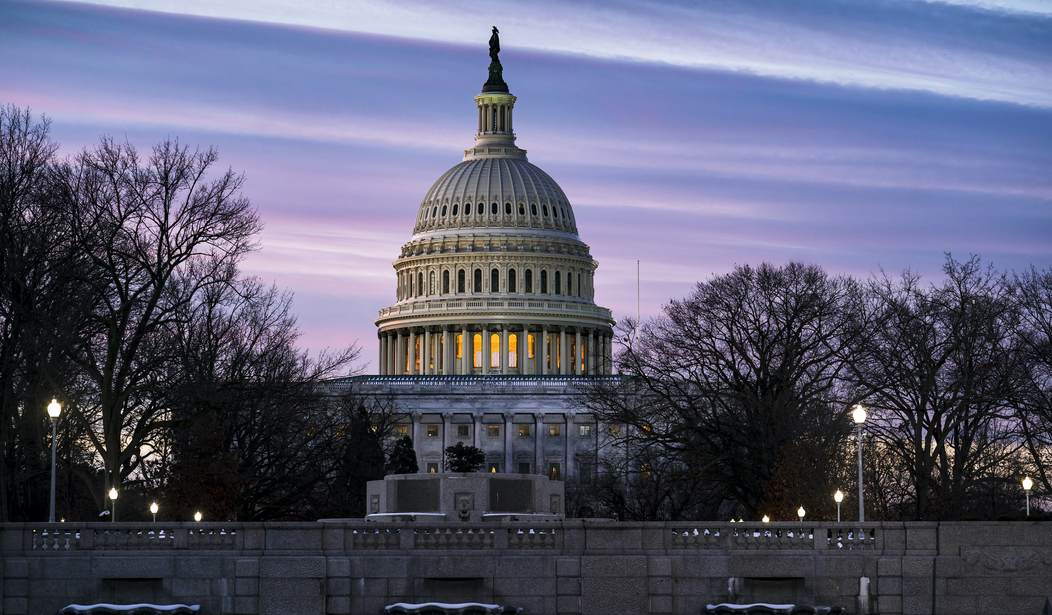
On Wednesday, the U.S. Senate was missing six Democrats, temporarily giving Republicans more votes in what's normally a 50-50 Senate. Democrats only have control of the body because Vice President Kamala Harris acts as a tiebreaking vote. As a result, the Senate was able to vote 44-49 to get rid of the Biden administration's vaccine mandate for health care workers at providers that participate in Medicaid and Medicare. The vote was forced under the Congressional Review Act, as Jordain Carney reported for The Hill.
The U.S. Supreme Court in January, as Katie reported at the time, upheld such a mandate. The Court did, however, strike down the Biden administration's vaccine mandate which required private businesses with 100 or more employees to mandate vaccines or regular testing.
"The Congressional Review Act sets up a fast track process in the Senate, but it does not greenlight the same procedure in the House," Carney explained. The bill is not expected to go anywhere in the House, which has a more cemented Democratic majority. The vote was thus seen as symbolic and ceremonial, but one that sends a clear message to the administration nonetheless.
Such is not the only effort Republicans have engaged in to make their opposition to vaccine mandates known. Amendments on vaccine mandates and passports have received votes in the Senate, particularly when it comes to amendments to spending legislation.
In December, the Senate voted 52-48 on a resolution from Sen. Mike Braun (R-IN) to do away with the Biden administration's vaccine mandate for the private sector. Last month, as part of passing a short-term continuing resolution (CR) to fund the government, the Senate also voted on a vaccine mandate amendment from Sen. Mike Lee (R-UT), though it failed. That CR will run out on March 11.
Rep. Chip Roy (R-TX), who has made his opposition to vaccine mandates quite clear, including in his conversations with Townhall, has also advocated for a government shutdown rather than fund these mandates.
Recommended
Don’t preach to me about unity, @JoeBiden after you used the power of government to force Americans to take a needle or get fired; after you accused Border Patrol agents of whipping Haitians; after you shut down American energy - harming us & empowering Putin. No quarter. #SOTU
— Chip Roy (@chiproytx) March 2, 2022
On Tuesday, President Joe Biden mentioned the Wuhan coronavirus during his State of the Union address, though he conveniently did not mention the vaccine mandates that divided the country and cost people their jobs.
No, the Wuhan coronavirus didn't keep us apart last year — Joe Biden and the Democrats tried to do that. #SOTU
— Spencer Brown (@itsSpencerBrown) March 2, 2022
Again, COVID never controlled lives. Joe Biden and Democrats across the country ruined the economy, damaged an entire generation of young people, and triggered a mental health and drug abuse crisis. #SOTU
— Spencer Brown (@itsSpencerBrown) March 2, 2022










Join the conversation as a VIP Member