



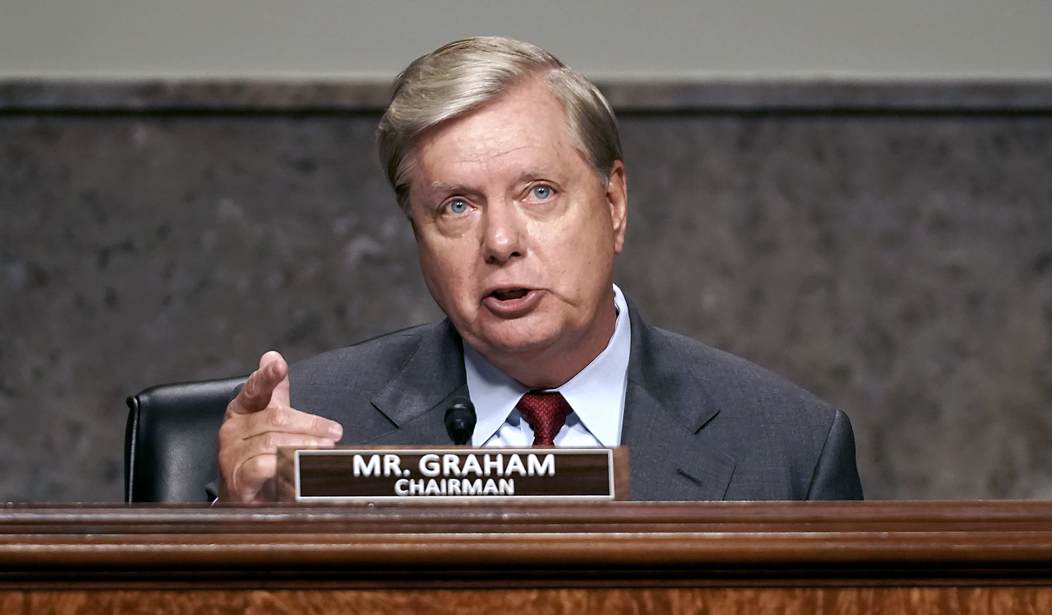
Senate Judiciary Chairman Lindsey Graham (R-SC) penned a letter to his Democrat colleagues on the committee, which will initiate the confirmation process for President Trump’s eventual supreme court nominee to replace Justice Ruth Bader Ginsburg, after Senate Majority Leader Mitch McConnell (R-KY) announced that the Republican majority will hold a vote for the nominee. Democrats are accusing Republicans of hypocrisy for proceeding with a confirmation in a general election year, despite the different circumstances regarding unified government.
“When the American people elected a Republican Senate majority in 2014, Americans did so because we committed to checking and balancing the end of President Obama’s lame duck presidency. We did so,” he wrote. “We followed the precedent that the Senate has followed for 140 years: since the 1880s, no Senate has confirmed an opposite-party president’s Supreme Court nominee during an election year.”
Chairman @LindseyGrahamSC to Committee Democrats: “After the Treatment of Justice Kavanaugh I Now Have a Different View of the Judicial-Confirmation Process” https://t.co/qzXgSbgW8S pic.twitter.com/IWAclmrQED
— Senate Judiciary (@senjudiciary) September 21, 2020
Graham addressed the “different set of rules” that he says are clear after the blisteringly partisan confirmation hearings for Justice Brett Kavanaugh in the Fall of 2018:
“Lastly, after the treatment of Justice Kavanaugh I now have a different view of the judicial-confirmation process. Compare the treatment of Robert Bork, Clarence Thomas, Samuel Alito, and Brett Kavanaugh to that of Ruth Bader Ginsburg, Sonia Sotomayor, and Elena Kagan, and it’s clear that there already is one set of rules for a Republican president and one set of rules for a Democrat president,” Graham continued. “I therefore think that it is important that we proceed expeditiously to process any nomination made by President Trump to fill this vacancy. I am certain if the shoe were on the other foot, you would do the same.”
Recommended

President Trump said earlier on Monday that he plans to name a pick to replace Justice Ginsburg by the week’s end.











Join the conversation as a VIP Member